













 HYPE-0.25%
Market Analysis
HYPE-0.25%
Market Analysis
SpaceX Joins Nasdaq-100 at $2Tn: What Float Mechanics Mean for QQQ
SpaceX entered the Nasdaq-100 on July 7 with a float-adjusted weight far below its $2Tn valuation — here's what that means for QQQ passive holders.


Editorial disclosureRead more
All reviews, research, news and assessments of any kind on The Tokenist are compiled using a strict editorial review process by our editorial team. Neither our writers nor our editors receive direct compensation of any kind to publish information on tokenist.com. Our company, Tokenist Media LLC, is community supported and may receive a small commission when you purchase products or services through links on our website. Click here for a full list of our partners and an in-depth explanation on how we get paid.
Space Exploration Technologies (NASDAQ: SPCX) was added to the Nasdaq-100 on July 7, 2026 – just 15 trading days after its June 12 IPO – triggering a mandatory buying obligation across every passive fund benchmarked to the index, including the Invesco QQQ Trust (NASDAQ: QQQ). Morgan Stanley, one of the underwriting banks on the IPO, simultaneously issued a $300 price target on SPCX, yet the stock declined on the day – a divergence that crystallizes the tension now embedded in every QQQ portfolio.
SpaceX entered the Nasdaq-100 with a market capitalization of roughly $2Tn, ranking it as the seventh-most valuable company globally, according to the primary source reporting. Its weight in the index, however, is not derived from total market cap – it is calculated as a multiple of the float, which stands at approximately 5% of the company’s full share count. That float-adjusted weighting substantially compresses SpaceX’s initial index footprint relative to its headline valuation, but the mechanics of how that float expands over the next 180 days will determine how quickly passive funds must scale their exposure.
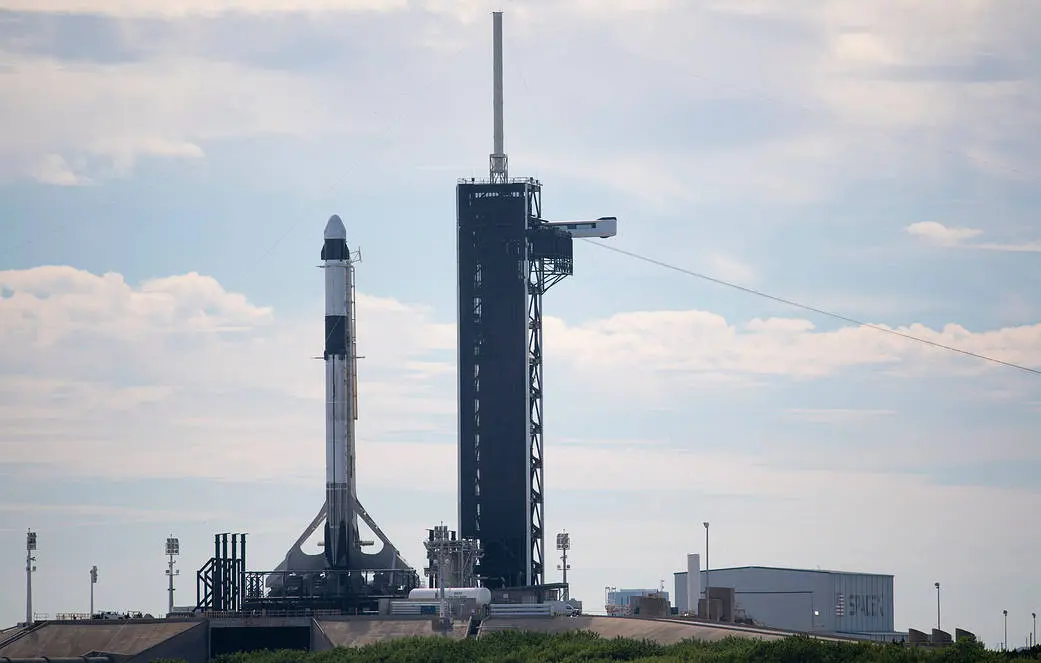
Nasdaq-100 Reconstitution Mechanics: What SpaceX’s Float-Adjusted Weighting Forces Every QQQ Fund to Buy
The Nasdaq-100 underwent rule changes specifically to accommodate mega-cap IPOs at the pace SpaceX required. Under the new fast-track criteria, any company with a market cap at least equal to the 40th-largest Nasdaq listing – a threshold currently around $121Bn – becomes eligible for inclusion after its 15th trading day. SpaceX, at $2Tn, clears that bar by a factor of roughly 16x, making the fast-track provision effectively purpose-built for listings of this scale.
When a company enters the Nasdaq-100, every passive fund benchmarked to it – QQQ being among the largest – must purchase shares proportional to the assigned weighting, regardless of any fund manager’s view on valuation. This is not discretionary buying; it is mechanical rebalancing governed by prospectus mandates. The relevant variable here is that SpaceX’s float-adjusted weight at entry is materially smaller than a $2Tn company would ordinarily carry, which means the immediate forced-buy quantum is compressed – but it will ratchet upward in tranches as insider lockups roll off.

SpaceX’s tiered lockup structure, as detailed by Motley Fool’s Daniel Foelber in the primary source, unlocks 20% of early-release-eligible shares two days after Q2 2026 earnings are released, with an additional tranche bringing the total to 30% if SPCX trades at or above $175.50 per share. Full 100% availability of early-release shares arrives on December 9, 2026 – 180 days post-IPO. Elon Musk and select major shareholders have agreed to a longer 366-day hold from May 20, the Securities and Exchange Commission (SEC) Form S-1 filing date. Each unlock event effectively increases the float, raises SpaceX’s float-adjusted Nasdaq-100 weight, and forces additional passive buying from QQQ and its peers.
EXPLORE: SpaceX Pre-IPO Hyperliquid Synthetic Trading
The historical pattern for large-cap index additions shows that forced passive inflows tend to compress in the days immediately around the effective rebalance date, with the more durable demand accumulation occurring over subsequent quarters as float expands and index weights are periodically recalculated. For SpaceX, those recalculation points map directly onto the lockup expiry schedule – making December 9, 2026, when 100% of early-release shares become available for trading, the more structurally significant date for passive accumulation than the July 7 entry itself.
Portfolio Exposure Implications: What QQQ’s Float-Constrained SpaceX Weighting Means for Passive Holders at Current Prices
At entry, SpaceX’s float-adjusted weight in the Nasdaq-100 is substantially below what a $2Tn company would carry on a full market-cap basis – given the roughly 5% float, the initial weighting is materially compressed relative to the index’s largest constituents such as Apple (NASDAQ: AAPL), Microsoft (NASDAQ: MSFT), and Nvidia (NASDAQ: NVDA). A standard QQQ position carries a relatively modest initial SPCX exposure at launch, but that figure will grow mechanically as float expands through the lockup schedule without any active decision on the holder’s part.
SpaceX is a new sector dimension – aerospace/defense-adjacent, capital-intensive launch and satellite connectivity – entering what has been a software, semiconductor, and consumer-internet-dominated index. For investors running sector-exposure models against QQQ, the addition marks a genuine composition shift, not just a new name on the list. The primary source notes that the S&P 500 is considered the “crown jewel” of index inclusion events, given that the largest ETFs in the world are linked to it, underscoring the longer-term demand trajectory if SpaceX eventually meets S&P 500 eligibility criteria.
EXPLORE: Goldman Sachs SpaceX AI Revenue Forecast 2030

SPCX at Sub-IPO Levels: How SpaceX’s Nasdaq-100 Entry Price Reflects the Expanding Float Overhang
SPCX went public on June 12, 2026, and as of the Nasdaq-100 entry date, the stock had fallen below its IPO opening price – a post-honeymoon reset that coincided with Morgan Stanley’s $300 price target, underscoring the gap between near-term price action and the bull-case valuation thesis. The stock’s decline on the same day it received a major index promotion and a high-profile analyst target reflects a specific structural dynamic: the market is pricing the approaching supply of unlocked shares against the present demand from passive funds.
The governance structure embedded in the IPO is a separate risk variable for every passive holder’s position. Investors in QQQ now carry exposure to a company where Elon Musk and other significant shareholders have agreed to hold for at least 366 days from the S-1 filing date, with no practical mechanism for index-holding shareholders to exert influence over capital allocation or strategic direction in the near term. Large institutional investors also participated heavily in the IPO, and their position-building alongside the passive ETF flows now being triggered by index inclusion will shape the float dynamics through the lockup schedule.
EXPLORE: BlackRock SpaceX IPO Order: What It Means for Retail Investors
Bull, Base, and Bear Case: What SpaceX Nasdaq-100 Inclusion Means for SPCX Price Action and QQQ Holders Through December 2026
Bull Case: Discretionary buyers interpret the Nasdaq-100 entry as a valuation signal and accumulate alongside forced passive inflows, compressing the float-adjusted supply overhang before the December lockup expiry. Morgan Stanley’s $300 target attracts institutional allocators newly eligible to hold SPCX through index-mandate products. SPCX re-rates above its IPO opening price by year-end, and QQQ holders benefit from a top-10 constituent performing in line with the index’s historical return profile.
Base Case: Passive buying at entry is absorbed quickly by IPO-stage profit-takers and early-round institutional sellers clearing positions. The stock stabilizes at or modestly above its IPO opening price as float-adjusted index weights build incrementally through each lockup tranche. Passive ownership climbs over subsequent quarters, creating a structural demand floor without a near-term catalyst for re-rating. QQQ holders carry a low-single-digit percentage SPCX position that tracks the index without materially distorting total fund performance.
Bear Case: Each lockup expiry through December 9 delivers waves of insider supply that consistently outpace passive inflows, keeping SPCX below its IPO opening price for an extended period. The capital-intensive launch economics and governance concentration risk draw additional scrutiny as quarterly earnings disclosures begin. QQQ holders find themselves with growing exposure, via rising float-adjusted weight, to the index’s worst-performing mega-cap constituent at precisely the point when insider selling pressure is most acute.
What to Watch: Lockup Expiry Dates, Q2 Earnings, and the Path to S&P 500 Eligibility
The immediate catalyst sequence begins with SpaceX’s Q2 2026 earnings release, which will trigger the first lockup unlock – 20% of early-release-eligible shares, expandable to 30% if SPCX holds above $175.50. December 9, 2026, when 100% of early-release shares become available for trading, represents the terminal point of the early-release share unlock schedule and will define the medium-term float trajectory that determines SpaceX’s sustained Nasdaq-100 weight. Note that Elon Musk and other significant shareholders remain subject to a separate 366-day lockup from May 20, extending well beyond December 9. The 13F filing cycle for Q3 2026 will provide the first systematic picture of which institutional allocators are accumulating SPCX alongside the passive index funds now mandated to hold it.

The longer-horizon variable is S&P 500 (SNPINDEX: ^GSPC) eligibility – the inclusion event that would trigger the largest passive buying quantum of all, given that, as the primary source notes, the largest ETFs in the world are linked to the S&P 500. S&P 500 eligibility involves profitability and other criteria, making the timing contingent on earnings disclosures that have not yet begun under public-company reporting standards. That event, if and when it materializes, would dwarf the Nasdaq-100 inclusion in terms of forced passive demand.
The author does not hold or have a position in any securities discussed in the article. All stock prices were quoted at the time of writing.

Tim Baker
Tim Baker is a Senior Market Analyst at Tokenist with over a decade of experience educating readers about traditional finance, crypto and DeFi. A former equity researcher turned on-chain analyst, Tim specializes in regulatory framework shifts and institutional DeFi adoption. His work focuses on distilling complex liquidity cycles and the macro environment into actionable intelligence for the modern DIY investor.


