














 BTC+0.59%
Market Analysis
BTC+0.59%
Market Analysis
Goldman Sachs’ $322Bn SpaceX AI Forecast: A 100x Revenue Jump by 2030?
Goldman Sachs: SpaceX AI Revenue Could Hit $322B by 2030

Editorial disclosureRead more
All reviews, research, news and assessments of any kind on The Tokenist are compiled using a strict editorial review process by our editorial team. Neither our writers nor our editors receive direct compensation of any kind to publish information on tokenist.com. Our company, Tokenist Media LLC, is community supported and may receive a small commission when you purchase products or services through links on our website. Click here for a full list of our partners and an in-depth explanation on how we get paid.
Goldman Sachs has projected that the SpaceX AI-related revenue will surge 100-fold to $322Bn by 2030, up from an estimated $3.2Bn in 2025, according to a research note shared with potential investors ahead of the company’s planned IPO, a forecast that would place SpaceX’s AI segment alone ahead of NVIDIA’s (NVDA) entire fiscal 2024 revenue of roughly $61Bn.
Total SpaceX revenue is projected to reach $474Bn by 2030, up from $18.7Bn in 2024, with the AI division accounting for well over half of that figure by decade’s end.
The projection arrives as SpaceX finalizes what would be one of the largest IPOs in stock market history, targeting $75Bn in proceeds at a $1.75 trillion valuation, with pricing expected June 11 and Nasdaq trading set to begin June 12.
Goldman Sachs is serving as an underwriter alongside Morgan Stanley, Bank of America, Citigroup, and JPMorgan Chase, a detail that adds a material conflict-of-interest caveat to the firm’s bullish revenue model.
The Orbital Compute Thesis: How Goldman Arrives at its SpaceX $322Bn Number
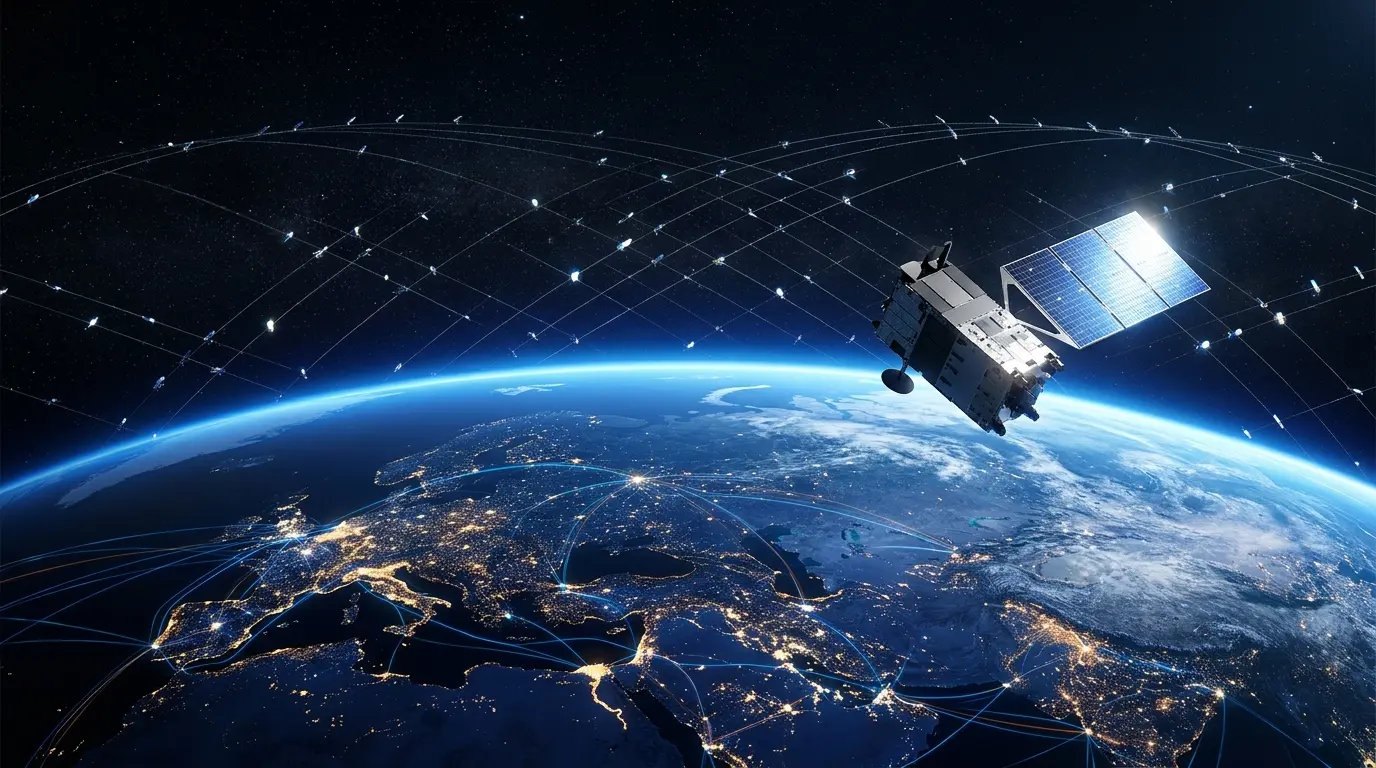
Goldman’s forecast hinges on the Starlink AI infrastructure thesis, which posits that SpaceX’s satellite constellation can deliver edge AI computing at scale, sidestepping terrestrial data center limitations.
The model predicts Starlink will generate around $144Bn in revenue by 2030, with AI projected to dominate growth at $322Bn, significantly larger than Starlink and SpaceX’s launch business, estimated at $8.3Bn.
The AI revenue thesis encompasses Elon Musk’s technology ecosystem, including xAI and the platform X, though Goldman hasn’t detailed revenue-sharing arrangements.
xAI aims for a $26.5 trillion market, while Starlink and SpaceX’s core operations are estimated at $2 trillion. Despite xAI’s reported $6.4Bn loss last year, they aim for a rapid turnaround to $322Bn in five years.
Goldman also projects the SpaceX EBITDA to rise from $6.6Bn in 2025 to $352Bn by 2030, primarily driven by AI. These estimates lack verification due to the absence of public registration, and Goldman’s roles as an analyst and underwriter may have influenced the favorable projections. The Financial Times reported on the note after obtaining materials that had been shared with potential investors.
SpaceX vs. Terrestrial AI Infrastructure: What $322Bn Actually Implies
Goldman Sachs projects that SpaceX could generate $322Bn in AI revenue by 2030, surpassing AWS’s $107Bn and NVIDIA’s $115Bn in their respective recent fiscal years, making SpaceX the largest AI infrastructure provider.
This potential stems from SpaceX’s unique orbital compute capacity, which offers low-latency global coverage through Starlink’s satellite mesh, ideal for autonomous systems in areas without fiber connectivity.
While Goldman sees this as a foundation for a massive market, analysts caution that this view may be premature, given the early stages of monetizing orbital computing.
EXPLORE: Goldman Sachs’ AI Crowding Warning and Portfolio Risk Assessment
IPO Valuation Context and Public-Market Implications
SpaceX’s IPO share price is set at $135, aiming for a $1.75 trillion valuation, which has drawn skepticism from Morningstar, which values the company at around $780Bn.
Morningstar cites risks in unclear AI monetization pathways and competition from firms like OpenAI and Anthropic.
Investors excluded from the IPO have limited options for direct exposure, though pre-IPO synthetic instruments are gaining retail interest.
The bullish view hinges on AI infrastructure as a core asset, while the bearish outlook raises concerns about Musk retaining 82% of the voting power, thereby limiting public shareholders’ influence.
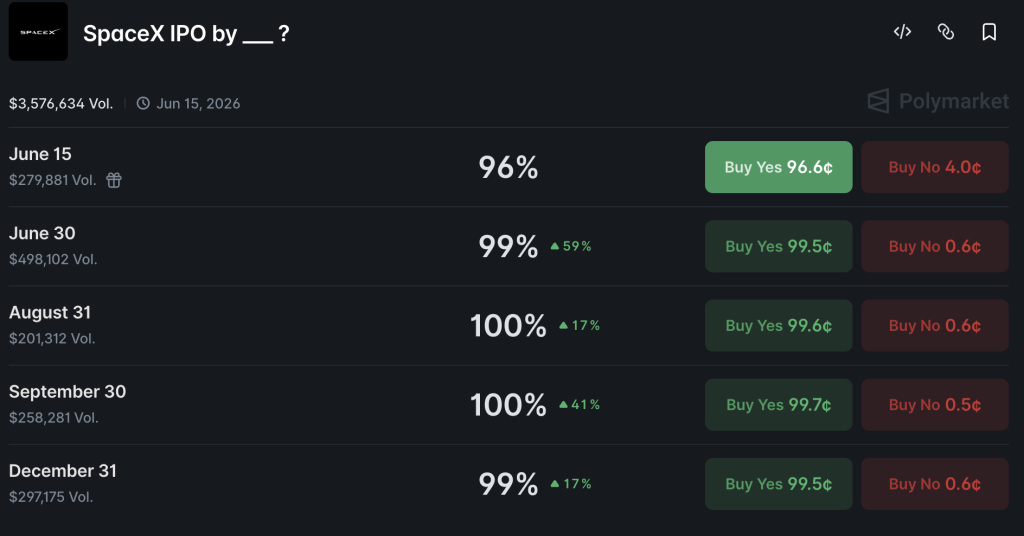
Prediction markets suggest a more than 98% chance that the IPO will proceed despite these debates. The Goldman forecast introduces competitive pressures for NVIDIA and Amazon, with no major sell-side analysts yet adjusting price targets in response to the SpaceX AI developments.
The author does not hold or have a position in any securities discussed in the article. All stock prices were quoted at the time of writing.

Tim Baker
Tim Baker is a Senior Market Analyst at Tokenist with over a decade of experience educating readers about traditional finance, crypto and DeFi. A former equity researcher turned on-chain analyst, Tim specializes in regulatory framework shifts and institutional DeFi adoption. His work focuses on distilling complex liquidity cycles and the macro environment into actionable intelligence for the modern DIY investor.
Related Stories
 Market Analysis
Gasoline Drives June CPI Data Down 0.4%, But Core Inflation Limits Fed’s Hand
 Market Analysis
HM Treasury’s Tokenization Push: £33bn Target, and a 54-Firm Coalition that Includes BlackRock
 Market Analysis