What Is Retention Ratio?


All reviews, research, news and assessments of any kind on The Tokenist are compiled using a strict editorial review process by our editorial team. Neither our writers nor our editors receive direct compensation of any kind to publish information on tokenist.com. Our company, Tokenist Media LLC, is community supported and may receive a small commission when you purchase products or services through links on our website. Click here for a full list of our partners and an in-depth explanation on how we get paid.
Why do some companies keep more profits for themselves and pay them out as dividends?
The retention ratio is an indicator of the extent to which a company decides to reinvest its earnings. This ratio is quick for investors to determine whether management is more interested in current income or future growth.
Dividend investors are interested in this ratio because it gives an indication of the amount of cash available for payouts. A low ratio usually indicates that most of the profits are distributed to shareholders. A higher ratio means that management is investing money in expansion, research or debt reduction.
Understanding the balance between retained earnings and dividends allows investors to gauge income stability and long-term potential. Via the retention ratio, dividend-focused investors may select companies that are in line with their income, growth, or balanced objective.

- Retention Ratio Meaning
- Formula and Calculation
- Why Companies Retain Earnings
- Comparing Retention Ratios Across Companies
- Implications
- Advantages
- Risks and Limitations
- Tools and Resources
- Conclusion
- FAQs
What the Retention Ratio Means
The retention ratio, or plowback ratio, shows how much of a company’s net income is retained in the company instead of being paid to stockholders. It shows management’s decision to reinvest earnings into the business, whether for investment, debt service, or financial reserves. For investors, it indicates what percentage of profit is going toward future earnings vs. cash flow.
This terminology is directly related to the dividend payout ratio, which indicates the portion of earnings that are distributed to stockholders. Together, the payout and retention ratios display the allocation of profits. If a company pays a payout ratio of 40%, then 40% of earnings will go to stockholders and the other 60% will be retained. In this sense, the retention ratio is simply the reciprocal of the payout ratio, and the two must always equal 100%.

For dividend focused investors, this ratio is important. A high retention ratio could indicate that a company is choosing to reinvest for long term growth, while a low retention ratio indicates that a company is returning the profits to the stockholders in the form of dividends and producing steady income. Neither approach is inherently right or wrong, but they reflect two different paths to value creation. Knowing the retention ratio can help investors determine if a company aligns with their objective of income, growth, or a combination of both.
Formula and Calculation Explained
The retention ratio can be calculated using a straightforward formula:

The retention ratio is the formula that explains how profits are shared between the shareholders and the company. Net income is the total profit after expenses and taxes and interest are paid. Dividends are the portion of that income that is paid to shareholders and, when dividends are subtracted from net income, what is left is retained earnings which are earnings retained for reinvestment.
To calculate the retention ratio, take the retained earnings, which is net income minus dividends, and divide that number by net income. For example, if a company makes 100 million and pays 30 million to shareholders, you would take 100 million – 30 million and divide the 70 million piece by the original 100 million. This would tell you that the retention ratio is 70%. This means that the company kept 70% of its profits and returned 30% to the shareholders.
A retention ratio that is higher means more profit is being reinvested back into the company, which may support future growth but limit income in the current time. Conversely, a lower retention ratio indicates a higher percentage of the earnings are being returned to shareholders, generating better returns in the short term but leaving less for expansion. Understanding the retention ratio gives an investor the potential to understand how a company is balancing the reinvestment and payout aspects and if that stance aligns with their viewpoint for income, growth or some combination.
Why Companies Retain Earnings
Companies keep some profits because reinvesting profits is a necessary component of a company’s long-term growth and stability. A common reason is to expand a company, whether through new products, new markets, or new facilities. Retaining profits in the company enables management to expand without relying entirely on outside financing, thus improving the company over time and leading to more value for shareholders.
Another major reason is to reduce debt. Companies that take on debt may channel retained earnings toward principal paydowns, which decreases the interest burden, something that becomes increasingly important during periods like we’re seeing now when borrowing costs offer little incentive for new financing. Decreasing financial obligations will allow the company to have a more subdued dividend policy in the future, since the company would be less exposed financially.
Retention offers a cushion in uncertain times as well. Retaining some profits allows management to build fortitude that will carry the company through difficult periods, especially if there is weaker demand, new regulations, or supply chain issues that mirror the growing complexity and disruption in 2025. A conservative approach supports continued operations despite a difficult environment and helps keep confidence in the shareholders and at the management level.
Comparing Retention Ratios Across Companies
Retention ratios are very different among industries because companies use their profits differently and have different lusts. For example, mature firms, especially in stable industries such as utilities and consumer staples, usually have low retention ratios because they have stable cash flow and limited growth opportunities, so they distribute a greater share of earnings to investors, even as some utility stocks have recently come under pressure following the AI power surge. These industries are attractive to income focused investors as low retention usually means consistent dividends.
In contrast, growth firms, especially technology and biotechnology companies, are typically high retention companies as they reinvest the majority of their earnings in research, development or growth. This may limit immediate dividend income, but long term there is real value in reinvestment if reinvestment increases revenue and scope. Growth-oriented investors may find more appeal in these firms.
Retention ratios also vary among younger companies in the same industry and older firms. A young firm may retain most profits to finance growth, whereas a newly established company may transition to a distribution phase and return earnings to investors. In general, understanding retention ratios among firms in the same sector can help investors understand management philosophy and income versus growth management priorities. This ultimately helps dividend investors understand which firms serve their investment style best.
Implications for Dividend Investors
Retention ratios give dividend investors a valuable perspective on how a firm is walking the line between present income and growth in the long run. Lower retention ratios usually imply the firm’s management is returning a larger share of profits to shareholders, which means stronger, more predictable dividend payouts. This can be appealing for retirees or anyone relying on their portfolio for income, including those who lean on expert share selection platforms to help identify dependable dividend payers.
On the other hand, higher retention ratios usually mean the firm is reinvesting more in its own growth. This can lead to smaller or less frequent payouts now, and the higher retention rate may reveal management is confident in the opportunity to grow earnings in the future. In the case of dividend investors, if the reinvestment leads to greater dividends and capital appreciation in the future, the firm is still attractive.
The crux is to evaluate retention ratios in context. A high retention ratio in a utility firm where assets are expected to remain relatively stable or slow growth could cause concern as to whether that capital is being effectively utilized, while the same ratio in a growing technology firm signals management wants to reinvest their profits. By looking at the retention ratios, payout ratios, trends in earnings, and the strength of cash flows, investors can evaluate whether a firm’s use of profits aligns to their goals for either income, growth or a combination.
Advantages of Monitoring Retention Ratios
By monitoring retention ratios, investors gain insight into management’s priorities regarding earnings. Measuring how much of a firm’s total income is paid out compared to how much is retained can give investors an understanding of management’s emphasis on either short-term shareholder returns or long-term growth. This perspective can highlight company strategy, enabling investors to position their portfolios into companies aligned with their objectives.
Retention ratios also indicate dividend payout stability. Companies that post consistently low retention ratios often demonstrate commitment to paying dividends regularly, making them appealing to investors who prioritize income generating shares. Firms that pay out a moderate amount to shareholders and maintain moderately low or variable retention ratios are taking a balanced approach, which allows management to reward shareholders with payouts while investing in themselves for gradual dividend growth. Monitoring these patterns over time informs the investor’s perception of dividend stability and whether management provides assurance.
Finally, retention analysis offers insight into ways long-term investors can balance income with appreciation potential. High retention may limit near-term payouts of cash to investors; however, this can create opportunities for future earnings and appreciate share prices. Low retention ratios pay out to investors sooner, but this can limit the ability to expand and grow. Comparing retention with firms in specific industries helps to build portfolios that fit the income-focused and long-term appreciation objectives of investors.
Risks and Limitations of Retention Ratio Analysis
While the retention ratio has some value, it is limited in important ways. For one, a high retention ratio does not mean growth will follow. Simply, a company could retain a substantial share of its earnings, but invest them poorly—or allow the cash to sit idle—and shareholders will not see any gains from reinvestment or meaningful dividends.
Context is also important. In certain areas such as utilities or real estate investment trusts, low retention is expected—those companies are structured to return as much profit to shareholders as possible. A spike in retention, however, may not signal growth potential, but rather raise concern about management. In rapidly growing sectors, such as technology, high retention is typical; a comparison of these types of companies with mature dividend paying companies could distort implications.
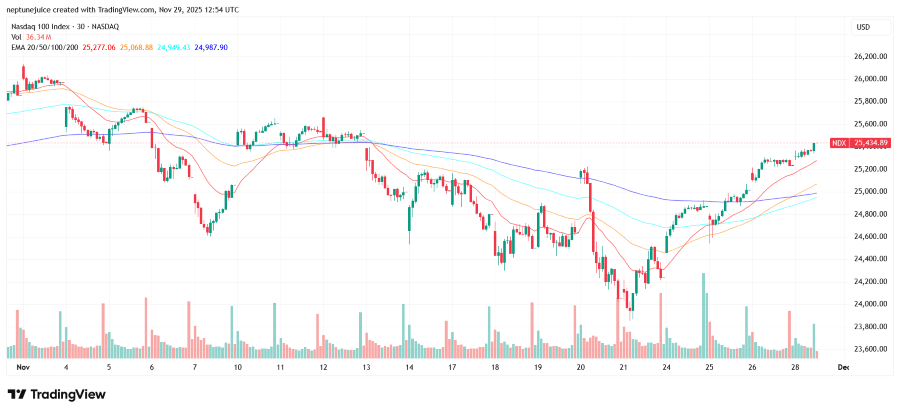
The retention ratio only tells part of the story. A retention ratio does not indicate how effectively retained earnings are being utilized, nor does it reflect the relative strength of debt, cash flow, or overall market conditions, which can shift quickly, as seen when the Nasdaq closed higher yet still ended the month lower despite the Thanksgiving week rally. Using it alone could lead to simplistic decisions. For dividend investors, a better practice is to combine retention ratios with payout ratios, trends in earnings, and overall financial performance, as seen when Deere recently warned of falling earnings and a tougher year ahead, to develop a more complete understanding.
Tools and Resources for Tracking Retention Ratios
Investors who wish to conduct a retention ratio analysis are fortunate to have a number of helpful resources at their disposal. The more obvious practice is simply looking at the company’s financial statements, especially the income statement and the retained earnings statement. If investors would like, they can calculate the ratio themselves, reinforcing their understanding by comparing net income to dividends and gaining a clearer sense of how profit allocation influences measures such as share income yield. As an added bonus, investors become familiar with the company’s overall financial structure.
To make the analysis even easier, many stock and screener performance and research platforms list retention ratios as standard metrics. Online brokerages and finance services such as Morningstar, Yahoo Finance, and Bloomberg include retention numbers on their company profiles, and updates from leading stock market newsletters can help highlight notable shifts. These tools make it simple to compare retention ratios across companies or industries and can draw attention to trends or outliers worth deeper investigation.
Additionally, retention ratios can benefit from a greater context when paired with other related metrics. Dividend growth rates (and dividend history), and payout ratios provide insight into how management weighs reinvesting in the business against providing returns for shareholders in the form of a dividend. Earnings reports and analyst reports may also provide additional context as to why a company is increasing or decreasing retention during a particular period. The ultimate analysis of retention ratios and metrics should always go deeper than documenting numeric representations, and it should be developed within the context of some understanding of income stability, growth, and overall financial health.
Conclusion
The retention ratio provides dividend investors with valuable insight into how companies deploy profits – measuring the balance between rewarding shareholders in the present and reinvesting in growth for the future. The retention ratio effectively lets investors see what earnings are kept versus paid out, allowing for a better understanding of managements’ priorities and long term strategy.
A low retention ratio often reflects a stronger commitment to a dividend, making dividends appealing to investors looking for a source of steady income. A higher retention ratio may indicate reinvestments to create value over the long term but profits that do not get paid out as dividends. Understanding retention ratios helps investors think through a companies’ choices in context of their own investment goals.
The retention ratio is most useful for dividend investors when considered along with other measures like payout ratios, earnings growth rates, and dividend history. Together these measures provide a framework for investors trying to balance reliable income versus growth.
Retention Ratio: FAQs
-
What Does the Retention Ratio Tell Investors?
The retention ratio indicates the proportion of company profits that are retained for reinvestment instead of as a dividend. This is relevant to the investor, as it suggests management is prioritizing long-term growth at the expense of immediate payouts to shareholders.
-
How Is the Retention Ratio Different From the Payout Ratio?
The payout ratio is simply the ratio of profits that are paid out as dividends, while the retention ratio represents the profits retained. Add those two ratios together, and they equal 100 percent, giving shareholders the complete picture of profits being withheld or paid out by each investment they own.
-
Do High Retention Ratios Mean a Company Is Bad for Dividend Investors?
Not necessarily. A high retention ratio may mean that dividends are not being paid to shareholders, but if management is using those retained profits effectively, the share price and dividends may one day improve if the retained profits have improved overall earnings.
-
Which Industries Usually Have the Lowest Retention Ratios?
Mature industries such as utilities and consumer staples generally have low retention ratios. These industries often provide a stable cash or earnings flow and pay dividends to shareholders at regular intervals, much like when Mitsui OSK recently signaled plans for more progressive dividends in its upcoming mid term strategy.
-
How Should Dividend Investors Use Retention Ratios in Stock Selection?
Dividend investors should view retention ratios as just one part of the analysis. To get the complete picture, the retention ratio should be compared to the payout ratio, earnings growth, and the history of dividends earned over time. This provides a clearer view of whether the company is managing profits in a way that supports the investor’s goals for income, growth, or a mix of both, and whether the stock offers meaningful intrinsic value from dividends.
All reviews, research, news and assessments of any kind on The Tokenist are compiled using a strict editorial review process by our editorial team. Neither our writers nor our editors receive direct compensation of any kind to publish information on tokenist.com. Our company, Tokenist Media LLC, is community supported and may receive a small commission when you purchase products or services through links on our website. Click here for a full list of our partners and an in-depth explanation on how we get paid.

 Back to