Residual Income Model Explained for Investors


All reviews, research, news and assessments of any kind on The Tokenist are compiled using a strict editorial review process by our editorial team. Neither our writers nor our editors receive direct compensation of any kind to publish information on tokenist.com. Our company, Tokenist Media LLC, is community supported and may receive a small commission when you purchase products or services through links on our website. Click here for a full list of our partners and an in-depth explanation on how we get paid.
How do you know when a company is truly creating economic value for its shareholders?
The residual income model (RIM) provides an answer, showing us the returns earned in excess of the cost of equity, returns above the minimum required by investors. RIM does not rely solely on the company’s reported profits or dividends as indicators of value. Instead, RIM provides investors with insight on whether the company is generating actual return on investment that meets their expectations as investors.
When considering dividend investors, RIM goes beyond yield; it takes on the additional role of highlighting which dividends are supported by sound fundamentals. The RIM complements and fills the gaps in methods like discounted cash flow (DCF) and dividend discount models (DDM) and can even provide a better picture of sustainable profitability for long term shareholder value.

- What Does RIM Do?
- Reviewing the Equation
- How the Model Connects to Dividends
- Assumptions of the Model
- Advantages
- Constraints and Risk
- Implementing the RIM
- RIM vs. Other Valuation Methods
- Conclusion
- FAQs
What Does Residual Income Model (RIM) Do?
RIM is a measure of a company’s real economic profit. Once an investor considers what they expect to earn as return for their risk, the investor establishes the cost of equity. Any after tax earnings that exceeds the cost of equity is potential residual income for the shareholders, indicating shareholder value exists. If earnings do not exceed the cost of equity, the reported profits can overstate performance.

Much of RIM’s purpose is to address a question: do the company’s fundamentals justify the stock’s price? RIM allows an investor to assess intrinsic value beyond simply looking at the numbers on the balance sheet. Unlike discounted cash flow models based on long term forecasts, or dividend discount models with various assumptions about the stability of payouts, RIM is appropriate for companies that do not pay regular dividends or have less predictable cash flows. This flexibility also makes it a good adjunct in conjunction with traditional valuation tools.
What distinguishes RIM is that it explicitly deducts the cost of equity from net income. This part of the analysis forces the investor to ask whether the returns generated by the company actually exceed market expectations. While the investor focused on dividends may find that analysis compelling, it is critical because it links profitability and sustainability in the payment of dividends. A stock may appear attractive on an earnings ratio basis, but if the company does not generate positive residual income, its payouts may be imperiled. This result makes RIM a better measure of actual value creation, as it informs the investor about companies that can grow, and therefore the shareholder returns.
Reviewing the Equation
The residual income model is built off one very simple equation: residual income equals the net income less the equity charge. The equation shows whether a company generated profits in excess of the minimum profit rate that the shareholder requires. Each part of the equation provides at minimum two important aspects: the amount of real value created by the company and also an idea of how much the company is likely to pay dividend income.
The net income is simply the profit year to year after paying expenses, taxes, and existing interest payments. It is a vital measure of performance, but on its own is not indicative of whether the returns are sufficient to justify holding the stock. The one thing that closes that gap is the equity charge.
How is equity charge computed? It’s equal to the book value of equity multiplied by the required rate of return, the minimum level of return an investor demands for the risk they undertake. This rate establishes a threshold which earnings must exceed to be considered value creating. If net income exceeds the hurdle, this would be considered residual income and this signifies that the firm has proven its ability to generate returns greater than the investor expected.
Dividend investors pay attention to this calculation. A company that reports a positive residual income has a greater chance of maintaining or increasing payouts because it generates profits above the cost of equity. A negative residual income may signal that dividends are being paid from an unsustainable base and carries a higher chance of a future dividend cut or broader financial strain.
How the Model Connects to Dividends
Residual income is a valuable measure of how much of a company’s dividends are being funded by economically sustainable surplus, rather than temporary sources of cash. When companies have consistently produced positive residual income, there is evidence they are covering expenses, yielding the cost of equity capital, and providing the company sustainable surplus. By achieving surplus, the company should be able to provide dividends without diluting the balance sheet or impairing its ability to invest in future profits. In well managed companies, dividends will increase or will be steadfast because they are based upon the predictable profits, not debt financed dividends and temporary cash surges.
The opposite is true for companies producing meager or negative residual income, as they are at risk of funding dividends going forward. This means they may be selling long-lived assets or borrowing to pay dividends. When the combination of funding is required, trouble is imminent which will rapidly depress share prices and reduce the income stream generated for investors. This makes measuring residual income beneficial for investors as a means to identify dividend payments funded by sustainable operational performance as opposed to dividends that carry risk.
The variability of residual income is beneficial for investors because it aids in identifying companies that will deliver sustainable returns versus companies that generate dividend yields while masking weaknesses in their respective businesses. The residual income model is an effective use of measuring dividends and the factors contributing to the ongoing sustainability of dividend opportunities which helps identify the companies that are most likely to maintain or grow dividends until any necessary future recompense occurs.
Assumptions of the Model
The residual income model operates off a set of assumptions, the output from the model is contingent on how well the inputs reflect the world. The first is the cost of equity. This is the return on equity that investors demand for accepting the risk of owning the company’s stock, and represents risk that capital is tied up more than lower risk alternatives. If the figure is set too low, the residual income could be overstated and leave investors with false confidence in dividends.
The second assumption is the required return on an equity investment, which is the performance standard the company must exceed to create an opportunity for returns above that expected level. The required return is shaped by interest rate movements, by the volatility present in the market, and by company specific risk, a mix that has become more noticeable as many retail investors have shown less conviction when buying recent market dips. A higher required return simply raises the hurdle for the company to maintain profitability and stable dividends.
The third assumption refers to the book equity value, which is the base used to calculate the equity charge. Book equity is based on accounting data and can be subject to derision based on writeoffs, intangible assets or outdated fair value data. As a result, book equity can often skew results.
These assumptions are significant beyond the technical, and assist in evaluating the soundness of any valuation. Underestimating risk or overvaluing book equity is possible and can overstate the confidence investors have in the dividend potential for the company. Taking great care of these inputs ensures that an investor is making decisions on realistic expectations and real long term value creation.
Advantages of Residual Income Model
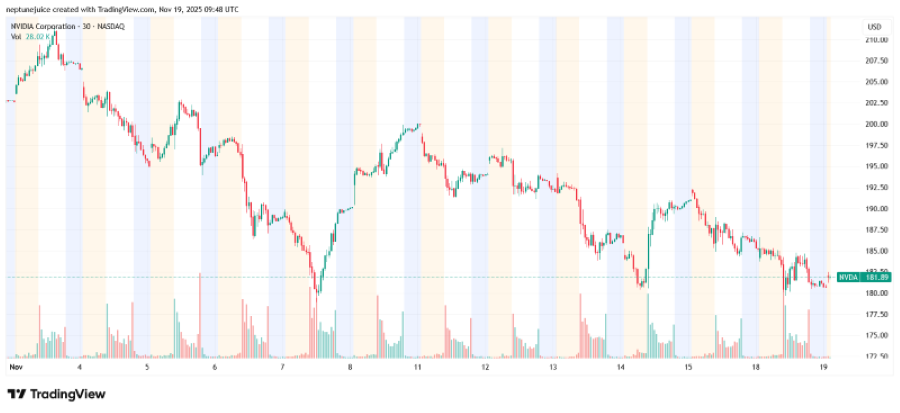
RIM value is tied to economic profit rather than reported earnings or dividend history. It measures the equity that remains once the cost of equity is covered. By seeing how much is left over, the model shows whether a company is truly creating value for shareholders, which matters even more in unsettled trading periods such as the recent market swings ahead of Nvidia results and incoming government data. This is significant for dividend investors because sustained and reliable payouts depend on real profitability, not on accounting figures.
A disclosed advantage of the RIM is the flexibility in the valuation conclusion. The dividend discount model assumes a constant range of dividend payouts can relate to the predictability of dividend income, however RIM can be used for irregular and no dividend paying companies. RIM can also analyse companies that are still evolving dividend policies. Investors can also use RIM to identify income opportunity before it becomes priced into equities.
RIM even has complementary value system methods. Discounted cash flow models project and assess future cash flows, while RIM is based on measuring current profitability relative to the expectations of the investor. This method supports the investor in filtering out the wheat from the chaff between investing in companies with good fundamentals versus bad fundamentals that hide behind high dividend yields.
For dividend based investors, increasing the reliance on residual income analysis will strengthen the overall stock selection process, especially when paired with reliable market advisory services. RIM will identify firms that can sustain dividends and continue to grow over time. Its greatest value lies in its ability to clarify which companies offer real, lasting shareholder benefits rather than short lived gains.
Constraints and Risk
The RIM offers a session of value, but it does have significant constraints. The most significant constraint to the RIM is its reliance on assumptions. Each RIM is not a validated method of evaluation. By virtue of the inputs that the equation calls for, cost of equity, required return rate and so on, it only takes an estimated error to lead the output evaluation astray. An overly optimistic assumption or overly pessimistic assumption can lead a company to look better or worse than it really is, which can lead to misplaced overconfidence or unnecessary caution.
Secondly, RIM generally seems to overemphasize accounting data, the book value of equity. These numbers may not represent the true economic values of their assets, or can change depending upon write downs to change a number of liabilities involved and perhaps introduce subjective intangibles or creative accounting. This can be deceiving for the dividend investor; in other words, in certain situations a distribution that looks safe could be in jeopardy.
Third, high growth or volatile firms can challenge their presence in the RIM model. If earnings swing widely and are reinvested, measuring residual income often becomes impossible. In that setting, especially when investors are debating whether to buy dips or lock in gains during recent market volatility, RIM can show limited near term capital potential or even overlook longer term value creation altogether.
Finally, the RIM is risky to recommend to dividend investors. It does provide a way to better understand profitability, but in many ways, it is better to think about the relationship alongside another tool like cash flow analytics and payment ratio checks. Using multiple tools will yield a more vital picture of financial health or sustainment.
Implementing the Residual Income Model
When utilizing the residual income model (RIM), one needs in order to implement the RIM net income, book value of equity (equity capital), and cost of equity which indicates risk to the firm. To get the equity charge, multiply the book value of equity by the cost of equity and subtract from net income. The amount left is the residual income, which indicates if the firm is truly generating enough income to meet shareholder expectations.
For example, a dividend paying firm that generated five hundred million dollars net income and had a book value of equity of two billion dollars with a cost of equity of ten percent will have an equity charge of two hundred million dollars and generate residual income of three hundred million dollars, which would provide a positive signal of economic profit, help support the dividends being paid or reserved for distribution, as well as future dividends.
Then investors can compare the present value of expected income, residual income, to the market or stock price. If the present value is greater than the current market price, it may imply undervalued stock. Furthermore, the connection between its present value of the residual income stream and market price creates an expectation for future income payouts that are supported by economic profit rather than transitory accounting gains.
When used in this way, RIM establishes a fairly systematic model, which identifies those undervalued dividend paying stocks that in the longer term have the financial strength for investors to focus on companies with an achievable sustainable ability to return capital to shareholders.
Comparing RIM With Other Valuation Methods
The residual income model (RIM) offers a middle of the road between precision and flexibility when compared with traditional Dividend Discount Model (DDM) and Discounted Cash Flow (DCF) analysis.
DDM determines the company value by calculating the present value of all future expected dividends. This works fine for those that pay traditional dividends regularly. However, once dividends are irregular or if there are none, it quickly loses its utility and limits the possible application with any valuation.

DCF is determined by discounting the expected cash flow to present value. Certainly a more exhaustive method than DDM, this method is very sensitive to the assumptions they built in relation to growth or discount rates, which could result in a much larger range of outcomes.
RIM by contrast is concerned with economic profit, the profit that remains after the cost of equity is deducted. RIM can be applied even to companies that do not pay steady dividends, including some singled out recently as offering stronger payout potential, and it relies on accounting data that is usually easier to access than more complex cash flow projections.
RIM is not a replacement for DDM or DCF, but it works best alongside them. Using all three valuation methods, including discounted dividend valuation, lets investors check their assumptions and feel more certain that healthy dividends come from solid earnings, especially during stretches of the reporting cycle when major names such as Nvidia and leading retailers shape the final results. This gives a clearer view of long term income potential and the company’s capacity to create value.
Conclusion
Residual income model, or RIM, is used to arrive at the true value of the company based on profits created in excess of equity costs. By focusing on true economic profits rather than simply earnings, it provides a lens to discern if dividends are supported by true, permanent value creation and is particularly useful to investors who depend on dividends.
However, RIM is only as good as the assumptions it uses, in particular the cost of equity and required returns. If the cost of equity or required return is misestimated, the outputs can be distorted so use with other valuation approaches rather than alone is piqued.
In conjunction with approaches such as the dividend discount model or discounted cash flow, RIM provides a comprehensive assessment of the financial health of companies as well as an indication of the sustainability of the dividends they pay. This balanced approach helps investors spot unsustainable payouts and highlight firms that offer dependable income and solid long term growth potential, as seen when established names like JNJ expand through strategic moves such as acquiring innovative drug developers.
Residual Income Model: FAQs
-
How Is the Residual Income Model Different From the Dividend Discount Model?
Residual income model, or RIM, estimates the value of a firm based upon net income less the cost of equity. The dividend discount model estimates value based solely upon future dividend payments. RIM captures economic profit and is therefore useful for firms that do not pay a steady dividend. DDM is more useful in estimating value for companies with consistent payout policies.
-
Can RIM Be Applied to Companies That Do Not Currently Pay Dividends?
Yes, RIM does not take dividends into consideration as it values the firm using earnings less the cost of equity. This would be appropriate for growth companies or companies that plow back profits. Hence it is broader based than a model that is predominantly dividend payment only.
-
What Assumptions Might Make Rim Less Reliable in Practice?
RIM is dependent on accurate estimation in the cost of equity, the required return and book value. Invalid or overly optimistic estimations of these assumptions can result in misvaluation. Accounting adjustments or one time accounting gains are also considerations of reliability degradation.
-
Why Is Residual Income Important for Dividend Sustainability?
Residual Income indicates that profits are greater than what the shareholders expected for return on their investment. Firms with positive residual income have the ability to maintain or increase dividends. Firms without positive residual income likely would struggle to maintain dividend payouts.
-
Is the Residual Income Model Appropriate for All Industries?
RIM is appropriate for companies with relatively stable and transparent earnings, generally mature firms, industry groups, or utilities, which are drawing added attention as rising data center demand pushes energy forecasts higher. This would not apply to companies with volatile earnings or those in early stage growth with significant uncertainty.
All reviews, research, news and assessments of any kind on The Tokenist are compiled using a strict editorial review process by our editorial team. Neither our writers nor our editors receive direct compensation of any kind to publish information on tokenist.com. Our company, Tokenist Media LLC, is community supported and may receive a small commission when you purchase products or services through links on our website. Click here for a full list of our partners and an in-depth explanation on how we get paid.

 Back to