DPS: Why It Matters in Investing


All reviews, research, news and assessments of any kind on The Tokenist are compiled using a strict editorial review process by our editorial team. Neither our writers nor our editors receive direct compensation of any kind to publish information on tokenist.com. Our company, Tokenist Media LLC, is community supported and may receive a small commission when you purchase products or services through links on our website. Click here for a full list of our partners and an in-depth explanation on how we get paid.
What’s the easiest way to tell how much income you’ll get from each share of a dividend stock?
That’s where dividend per share (DPS) comes in. DPS shows exactly how much a company pays out for each share, making it simple to compare different stocks or track changes over time. It’s a quick, clear measure for income-focused investors and a useful signal for traders watching for dividend news that can move prices.
Whether you’re after steady payouts or short-term opportunities, knowing DPS helps you make faster, smarter decisions with your portfolio.

- Defining DPS
- Calculating DPS
- DPS vs. Dividend Yield
- Factors That Influence DPS
- DPS for Stock Screening
- DPS in Day Trading
- Risks
- Tracking DPS
- Conclusion
- FAQs
Defining Dividend Per Share Clearly
DPS reflects the amount of dividend income earned per share, thus it is one of the simplest measures of income potential of a stock. It is computed by dividing the total amount of dividends paid during a certain period of time, say one year, by the number of outstanding shares. This reduces the total payout of a company to one figure per share so that a company can be easily compared to other companies without looking at the complete payout history.
Reporting dividends per share provides a uniform perception of the cash flow per share, and thus DPS is helpful to income-oriented investors who want to receive consistent cash flows and traders who need to understand how dividend announcements can potentially influence market attitudes. DPS also indicates how management distributes profits and shows that the management is confident in the financial standing of the company since it reflects the announced payouts.
The knowledge of DPS makes the portfolio income expectations realistic. To illustrate, a DPS of 2.00 implies that every share will give a dividend of 2.00 per year, provided that there are no adjustments. The metric is also the basis of other metrics such as dividend yield and is essential to screening, valuation, and strategy. Regardless of whether one is using it to plan long term or trade short term, DPS is one of the fundamental tools to measure the strength of a stock dividend.
How to Calculate Dividend Per Share
The DPS is calculated by determining the total amount of dividends that a particular company paid to the shareholders in an amount of time, which is typically one financial year. This amount can be found on the annual reports, earnings announcements or on SEC filings. The dividend paid subdivided with the shares outstanding at that time to give the per share payout.

Consider an example, when a firm pays a dividend of 50 million dollars and it has 25 million of shares outstanding then its DPS is 2.00 dollars. This comparable number allows investors to compare companies of varying amounts and monitor the dividend policy changes, which can reflect financial health changes or strategy changes.
When computing DPS, it is necessary to find out whether the numbers are annual or of shorter terms. A good number of companies pay quarterly or semi-annual dividends and therefore you might need to add these amounts to come up with annual figures to make comparisons. Annualized values also create a uniformity when comparing the stocks that payout at different times of the year. Such transparency is useful to both traders who need to know the market-moving signals, and to long-term investors who use reliable income forecasts as a part of dividend portfolio planning.
Dividend Per Share vs. Dividend Yield
DPS and dividend yield are not the same, but relate to similar aspects of dividend performance. DPS is a fixed dollar amount drawn by a shareholder on a share basis within a specific time of a year. It is the actual cash payout per share by the company, and is not affected by the stock price, thus is the pure measure of income per share and also a major indicator of stability and increases in dividends.

Dividend yield is the percentage representation of that income of the stock which is based on the current market price of the stock. It is computed by dividing DPS by the current share price times 100. Changes in yield are a direct response to movement in the market-movement in the share price lowers yield and movement in dividends raises yield. This yields to be useful in the measure of income potential against cost and therefore, tend to be valuable in the eyes of income-seeking traders who may be interested in getting a good priced entry.
Being able to identify the distinction is important in making good decisions. An increasing yield can be a consequence of decreasing stock price which is an indicator of trouble. Conversely, a low yield with stable increasing DPS can represent a healthy growing payout. The knowledge of the two metrics assists investors in determining whether the payout is rather the value on its own or in its correlation with the price or the difference between them.
Factors That Influence DPS
The number of DPS varies with time depending on the financial capability of a firm and its business strategies. One of the main vehicles is profitability, as dividends are derived out of the net earnings, an increase in profits can result in the increase in DPS, whereas a decrease will cause reduction or suspension. There are also payout policies, some companies pay out a certain percentage of profits and some have progressive policies that they want to eventually increase dividends even through temporary short term profit fall.
DPS may also be influenced by corporate actions such as stock splits and share repurchases. By splitting a stock, the number of outstanding shares is raised and the DPS decreases assuming the amount of the dividend pool remains constant. The share buyback lowers the number of outstanding shares, and thus can increase the DPS without having to pay out more cash to shareholders.
In the case of income-oriented investors and traders, this affects both short-term and long-run income expectations. Short-term changes can stem from shifts in profits or one-off company actions, while long-term trends are shaped by the stability of earnings—as seen when Applied Materials beat earnings estimates yet its stock still fell—the state of the industry, and how the company plans to reward shareholders. This understanding of what drives DPS helps market participants predict income changes, assess dividend viability, and decide whether to hold, buy, or sell dividend-paying stock.
DPS as a Tool for Stock Screening
DPS is a convenient screening instrument for both traders and long-term investors, helping narrow the field to dividend-paying stocks that meet specific income requirements. Examining the DPS of a company may bring into focus consistent dividend payers, which are often indicators of financial strength and discipline in managing cash flow. A steady or increasing DPS over time can also highlight companies committed to boosting shareholder value through regular payout increases.
Potential risks may also be identified with the help of DPS trends. An unexpected decrease can indicate a decline in profitability, a change in capital priorities, or financial stress. A sudden very strong growth, such as when the stock market rallies toward record highs following better-than-expected inflation data, may reflect temporary optimism that is not sustainable unless earnings continue to grow. For traders, these movements can serve as preliminary sentiment indicators, prompting closer examination before acting.
The integration of DPS into the overall stock selection will mean the income potential will be considered relative to other indicators. Although DPS in isolation cannot be used to make decisions, it is effective as a sieve when combined with other metrics such as payout ratio, earnings growth and dividend yield. In this way, traders and investors can strike a balance between the reliability of income and the overall performance to ensure that their picks are linked to the strategy and risk tolerance.
DPS in Day Trading and Short-Term Strategies
Although DPS is mostly a long-term income indicator, it may affect short-run market dynamics when conditions align. Pronouncements of a higher-than-anticipated DPS may lead to instant price improvement, often signaling good earnings, stronger cash flow, or management confidence. This can be of interest to those looking to buy shares ahead of a payout, especially in approaches similar to dividend capture investing, giving traders a narrow window to capitalize.
On the other hand, declines or unanticipated decreases in DPS can trigger sharp sell-offs. These events can also help forecast volatility and shape trades for day traders who track corporate earnings and dividend announcements. While the actual dividend payment may hold little direct value to traders closing positions within hours, market reaction can still create opportunities, and some traders incorporate simplified dividend discount valuation concepts to gauge whether price moves are justified.

Sentiment analysis is also caused by DPS shifts. A consistent or positive growth in DPS can enhance the bullish mood and attract institutional attention; on the other hand, volatile and moving downward payout can put a drag on the expectations. Short term traders can use DPS to identify set-ups within a larger news and price action framework to identify possible sentiment-driven movements. Although not a major determinant of the intraday decisions, DPS could be utilized as a valuable indicator of the timing of the entry/exit around important announcements.
Risks of Relying Solely on DPS
As much as the DPS is a good indicator of potential income from stocks offering dividends, it should be used with caution. DPS does not account for stock price movement, so a high payout per share can still result in poor returns if the share price is falling. In turbulent markets, price fluctuations can outweigh dividends, making this disconnect particularly risky.
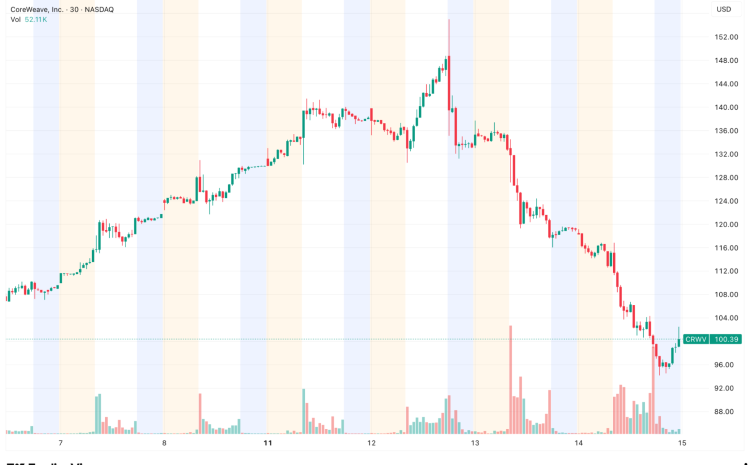
DPS does not provide any information about the sustainability of payouts. Financial weakness may be concealed by a company that maintains a high DPS by drawing on reserves or issuing debt. Investors can be misled into believing a company can maintain or increase dividends without checking payout ratio, earnings stability—as in cases like CoreWeave reporting strong revenue yet seeing its stock drop sharply—and cash flow, only to have payouts cut or suspended later.
Also, DPS is not representative of general market and sector pressure. High per-share payout can be undermined by industry recession or other unfavorable economic shifts, sometimes hinted at by unusual indicators, such as declining cardboard box sales suggesting a slowdown in the US economy, that jeopardize earnings and dividend sustainability. Because of this, DPS should be complemented with other financial indicators and market research to gauge not only income potential but also capital risk. A multi-metric approach reduces the danger of focusing too much on a single number and supports better investment and trading decisions.
Tracking DPS Through Reliable Sources
Following the DPS correctly is one of the most important factors in informed dividend investing and trading, and there are reliable sources of such information. The most convenient are usually the brokerage platforms that provide up-to-date DPS figures in the stock profiles along with other metrics. Most also contain historical trends, which assist traders in determining the consistency of dividend growth, and some investors use reputable investment newsletters to help interpret this data and identify promising opportunities.
Another reliable source is annual reports and corporate filings, including SEC documents. These include accurate dividend announcements, dividend history, and policy changes that influence DPS. They are more accurate since they are provided by the company itself rather than estimates. This information is collected into databases and dividend-focused websites, such as Nasdaq, MarketBeat, or Dividend.com, which frequently provide analyst commentary and payout schedules, and many stock picking platforms integrate this data to streamline research.
Precision is important, particularly in those traders who make fast decisions. The slightest mistakes may distort yield calculations or have false premises of income potential. It is especially significant during high-return dividend stock screening or timing trade with ex-dividend dates. The cross-reference of several sources means that the information is reliable, the possibility of time-wasting mistakes is minimized, and an informed choice is made with regard to proven figures.
Conclusion
Dividend per share is an indicator of rewarding the shareholders of a company and provides a clear picture of the potential income per share. To an investor, it eases comparisons between companies and gives an indication of dividend increase trends; to a trader, it can be used to determine the consistency of the payout and its effect on the market attitude.
DPS can best be used in conjunction with other measures such as dividend yield, payout ratio, and earnings growth. Depending on it alone may overlook factors like price volatility, the broader economic climate—as illustrated by recent reports on Russia’s struggling war economy and its political implications ahead of the Trump summit—and shifts in profitability. A balanced approach helps ensure decisions consider both income potential and the sustainability of payouts.
Integrating DPS into your own analysis can give you some great opportunities, identify high quality stocks that you can rely upon, and prevent some potential pitfalls. Be it long-term stability of long-term payers or short term responses to dividend announcements, correct DPS data can enhance any approach.
Dividend Per Share: FAQs
-
How Is Dividend per Share Different From Dividend Yield?
DPS is the amount of dollars per share that is paid over a certain time, generally an annualized basis. Dividend yield is expressed as a ratio and this can be calculated by dividing DPS by current share price. DPS gauges the actual payout whereas the yield gives the value of the payout in comparison to the stock price.
-
Does a Higher DPS Mean a Better Stock To Buy?
Not necessarily. A company with a high DPS will have bigger dividend payments per share, but it does not imply that it is financially healthy and can sustain the dividends. Before the investors find a high DPS attractive, they should take into consideration earnings stability, payout ratio and growth prospects.
-
Can DPS Change During the Year?
Yes. Firms may vary the dividend policies at any point in time depending on profits, cash flow, or strategic objectives. Broader economic or policy changes can also play a role, as with the Trump tariffs potentially rewiring market psychology and influencing management’s payout decisions.
-
Where Can I Find a Company’s DPS Information?
The data of DPS can be found in annual reports, official declaration of dividends, brokerage websites and other trusted financial websites. A lot of dividend instruments also give past DPS trends to study.
-
Is DPS Useful for Short-Term Trading Decisions?
DPS changes are mostly applicable on longer term income strategies, but still have the potential to affect short term sentiment. Raising could bring price appreciation and selling of cuts can bring profit-making opportunities to trade.
All reviews, research, news and assessments of any kind on The Tokenist are compiled using a strict editorial review process by our editorial team. Neither our writers nor our editors receive direct compensation of any kind to publish information on tokenist.com. Our company, Tokenist Media LLC, is community supported and may receive a small commission when you purchase products or services through links on our website. Click here for a full list of our partners and an in-depth explanation on how we get paid.

 Back to