Why the Dividend Coverage Ratio Matters in Investing


All reviews, research, news and assessments of any kind on The Tokenist are compiled using a strict editorial review process by our editorial team. Neither our writers nor our editors receive direct compensation of any kind to publish information on tokenist.com. Our company, Tokenist Media LLC, is community supported and may receive a small commission when you purchase products or services through links on our website. Click here for a full list of our partners and an in-depth explanation on how we get paid.
How safe is a company’s dividend?
The dividend coverage ratio (DCR) gives you the answer by showing whether profits are enough to support ongoing payouts. A high ratio signals stability and the ability to maintain dividends, while a weak ratio raises the risk of cuts that often send share prices lower. For income investors, that means peace of mind.
For traders, it can spark short-term volatility around announcements. By understanding dividend coverage, you can quickly judge which stocks offer dependable returns and which ones carry more risk.

- Dividend Coverage Ratio Defined
- Why Dividend Coverage Matters?
- Calculating the Dividend Coverage Ratio
- Interpreting High vs. Low Ratios
- Dividend Coverage and Market Reactions
- Dividend Coverage Across Sectors
- Use in Day Trading Strategies
- Limitations
- Conclusion
- FAQs
Defining the Dividend Coverage Ratio
Dividend Coverage Ratio (DCR) is a definite indicator of the dividend sustainability. It is computed by taking the ratio of the net income of a company and the amount of dividends paid during the same period: DCR = Net Income ÷ Dividends Paid. The outcome indicates the amount of times earnings will cover the dividend payments providing investors with the feeling of whether dividend payments can be sustained by earnings.

The example of DCR = 2 implies that the company is earning twice as much as it pays out leaving a safe margin of protection. A ratio close to 1 indicates that most of the profits are being distributed and little cushion in case of a fall in the earnings. It is a red flag when ratios are lower than 1 since it means there is a payout of dividends that are higher than the earnings- a trend that is hardly sustainable.
In addition to establishing whether a company is able to sustain the current payouts, the ratio also indicates future potential. Companies with high and steady coverage can easily increase their dividends whereas dividends may need to be cut in a slowdown by companies with low coverage. Investors can use this measure to evaluate more accurately the tradeoff between profitability and shareholder compensation, whether the dividends are both stable and growing.
Why Dividend Coverage Matters to Traders
Dividend coverage is important in that it shows the strength of the payments that companies make in terms of dividends and whether these payments will increase, stay the same, or be reduced. To investors, dividends are dividends but to traders, especially short-term traders, the consistency of those payments is a key consideration in sentiment and price action.
A robust coverage ratio indicates that dividends are easily covered by earnings, a fact that will put investors at ease and in most cases adds demand to the stock. This confidence can stabilize prices or even generate momentum when combined with steady dividend growth. A weak ratio, on the other hand, signals risk. Recent moves, such as Anglo American cutting its dividend during ongoing restructuring, show how quickly income-focused investors can sell off. Traders who monitor coverage will be able to pre-empt these changes and act before the broader market responds.

To day traders, the ratio is particularly effective in the case of an earnings announcement and dividend declaration. Consistent and positive coverage can be the factor that creates optimism, whereas a decline can cause volatility due to the re-evaluation of the stability of a company. Through this, the dividend coverage acts as a basic safety barometer and a short-term trading indicator. Monitoring this indicator helps traders to get an advantage in forecasting how dividend-related news may affect price movement and can optimize approaches to dividend-paying stocks.
Calculating the Dividend Coverage Ratio
The processing of the dividend coverage ratio is not complicated but requires the focus on the financial statements of a company. The calculation is easy: Net Income/ Dividends Paid. Net income, or the bottom line, is a figure that is presented in the income statement and it shows profit after taxes, interests, and expenses. Payments in dividends are normally presented in the financing section of the cash flow statement or in the notes to financial statements. Dividing the two indicates the number of times that earnings can pay dividends
An example of coverage ratio is as follows: A company declares $200 million as net income and $50 million in dividends, thus the coverage ratio is 4.0. It implies that the earnings are four times greater than the dividend commitments which is an indication of high sustainability. A ratio that is nearer to 1.0 implies that the profits are allocated mostly to dividends and there is hardly space to grow or to experience a decline in earnings.
This ratio is very important to calculate and accuracy is paramount here. Traders must always compare figures of the same reporting period and compare whether dividends are quoted as per share or cumulatively as payouts. Combining incomparable data can be the cause of false conclusions. When used consistently, the formula can give credible information on the stability of dividends and show possible risks that can be encountered in the future payments.
Interpreting High vs. Low Ratios
A good dividend coverage ratio is an indicator of financial strength and dividend safety. When profit easily surpasses dividend payments, it shows the company has funds to support or even increase dividends. This instills investor confidence, which brings in buying and trading activity of income-oriented buyers, traders, and those focused on income producing stocks. The heavy coverage can be used as a bullish indicator since stability boosts demand and helps support the price.
On the other hand, a low coverage ratio implies that majority or all the earnings are being paid and very little leeway to any challenge. Ratio values of less than or near to 1.0 are red flags signalling a possible dividend cut in case of earnings decline. Markets tend to respond harshly to cutbacks or cancellations and develop a bearish tone and drive share prices down as investors re-evaluate stability.
Short term trading sentiment is also determined by the coverage levels. The announcement of good ratios is likely to have price jumps, whereas low margins between earnings and dividends can cause sell-offs, particularly in the case of income oriented investors. These changes can provide day traders with a chance to seize the momentum but the success is in the balance between payout sustainability and market reactions to prevent the wrong steps.
Dividend Coverage and Market Reactions
The changes in dividend coverage ratios are usually the cause of stock volatility due to the expectations of investors concerning the security of income. Heavy coverage is an indicator that dividends are backed by good earnings and this enhances confidence among shareholders. This is a frequent cause of short-term purchases when investors and traders hedge before any rise or stable payouts. The sense of power tends to underline the rising trend in the share prices.
The decreasing coverage, however, creates uncertainty. A low ratio shows earnings may not cover dividends, raising the likelihood of cuts. Genuine reductions or suspensions almost always trigger sharp selloffs as income-focused investors exit. Traders often look to trade the volatility or take short positions to capitalize. In sectors like energy, where debates such as recent claims linking renewable power to rising electricity prices have added to market tension, dividend cuts during earnings declines have historically led to swift and negative reactions.
These are reactions that extend beyond long-term fundamentals and that directly influence short-term trading psychology. The news of dividend coverage can create speculative purchases or intraday volatility, which can be increased by stop-loss orders, and algorithmic trading. Major earnings announcements have demonstrated how swiftly the sentiment can change when dividend strength or growth expectations take centre stage, like Nvidia after a Fed-induced rally. To day traders, such movements offer momentum opportunities, but they have to be timed well because price changes can be abrupt. Ultimately, dividend coverage is one of the best sentiment indicators and fundamental elements of volatility-based-strategies.
Comparing Dividend Coverage Across Sectors
Dividend coverage ratios are quite variable across industries and therefore, context is important. In steady, cash generating industries such as telecoms or utilities, the companies tend to keep the ratios low since the earnings are smooth and consistent. The focus of the investors in these industries is on stable income rather than growth and therefore payouts are higher and moderate coverage is usually considered sustainable. A ratio that may appear risky in other places may be acceptable in this case, especially for cash distributing stocks.
Conversely, industries that are propelled by growth like technology or biotech tend to invest a lot back in research and growth. Dividend coverage ratios tend to be far higher, or no dividend may be paid at all. The introduction of payouts means that investors anticipate good coverage so that dividends do not impair the growth capital. In these industries, coverage that is lower than usual may be an indication of financial distress or misplaced priorities.
To the traders, it is important to understand these differences based on the sectors. A lower ratio does not necessarily mean instability in a utility company, but it is considered skeptical in a tech firm thus leading to selling pressure. A comparison of coverage ratios across industries can be misinterpreted when it is not placed into context. Mitigating expectations by aligning them to sector norms can help traders take better advantage of coverage ratios, by including them as part of a broader analysis in terms of dividend sustainability, market sentiment, and dividend trading.
Using Dividend Coverage in Day Trading Strategies
Dividend coverage ratio is a useful indicator that day traders can use to predict short term price fluctuations, especially around earnings or dividend announcements. A good ratio signals confidence in maintaining or increasing payments, which often generates a bullish mood. Early notice of such announcements can enable traders to act quickly and capture buying momentum from income-focused investors seeking stability and intrinsic value from dividends.
The poor ratio, on the other hand, can be a precursor of reduced dividends, which are often followed by steep sell-offs. Day traders who monitor these indicators can take advantage of downward volatility by shifting positions or going short ahead of negative sentiment, especially in a market where questions are being raised about how long such an uncanny rally led by giants like Nvidia can last. Dividend news can serve as a catalyst, and having a quick read on coverage levels can be a key edge for those pursuing quick payout investing as part of intraday strategies.
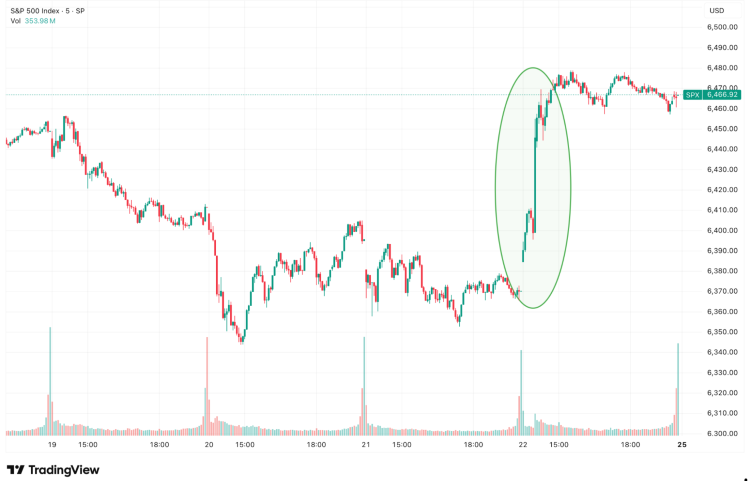
Besides reactions, dividend coverage is also applicable as a screening tool. Adding firms with an almost constant high ratios to watchlists points to names that have a reliable dividend backstop and may be of interest to institutional or retail buyers. On the other hand, abating low ratios will eliminate the possibility of low payouts. With DCR analysis and market sentiment, coupled with technical indicators, traders can fine tune strategies, taking advantage of short term opportunities, but keeping risk associated with dividend related volatility under control.
Limitations of Dividend Coverage Ratio
The dividend coverage ratio is resourceful, but when used in isolation, it will give an incomplete conclusion. A high ratio might be showing because a company is currently doing well in earnings but the earnings may be unstable or unsustainable. Even a decent ratio would not be enough to avoid dividend cuts in the future in case profits decline. The traders who pay attention to the ratio only can miss these broad dynamics, which is why many rely on expert investing bulletins to place the numbers in a broader context.
Another blind spot is a level of debt. A company with a high leverage may be capable of high coverage but much of the cash flow may be used up in the payment of interest. In declines, this increases the vulnerability of dividends despite the ratio reported. The amount of cash flow is also important as dividends are paid not in profits of the accounting kind. A company can appear solvent on the basis of net income and be in trouble of liquidity posing a risk of payout.
There is added complexity in corporate policy and strategy. The management can choose to reinvest, make acquisitions or give debt repayments priority instead of increase in dividends even when the coverage appears strong. The recent news of China contemplating supporting the debt of Vanke illustrates how the financial commitments can override the calls of payout. Investors and traders must see the dividend coverage ratio as a segment of a greater whole that encompasses debt, cash flow, perspectives of top equity research services, and the capital allocation decisions of the management. This enlarged perspective gives a more definite feeling of dividend sustainability.
Conclusion
One of the easiest measurements to employ in assessing the soundness of company dividends is the dividend coverage ratio. Comparing net income with payouts will help an investor to know whether the earnings are supporting shareholder returns comfortably and help an investor to avoid the embarrassment of a sudden reduction of payouts.
Its true value is when used in combination with other indicators. Dividend security is determined by debt levels, cash flow, and priorities of the management. Traders by factoring in these factors have an upper hand when it comes to predicting market reactions to dividend and earnings announcements.
Long-term investors and day traders should combine dividend coverage with a wider analysis to make sure that the dividends are not only attractive at face value but are anchored by the overall strength of the company. In a market, where payout stability is a major sentiment and price driver, this ratio is an important indicator of informed decision-making.
Dividend Coverage Ratio: FAQs
-
What Is a Good Dividend Coverage Ratio for Most Companies?
To the majority of businesses, a dividend coverage ratio within the range of 2 and 3 is healthy. This implies that the company is getting at least twice or three times the amount required to pay its dividends, and this makes it stable and less likely to cut on dividends. A ratio less than 1.5 can be considered a potential red flag on dividend sustainability, especially when compared against other measures like share income yield.
-
Can a Company Still Pay Dividends With a Low Coverage Ratio?
Yes, companies may continue to pay dividends at a low coverage ratio, but it is risky. A low ratio implies that a majority of the profits are spent on dividends, leaving no room to re-invest or cushion against a decline. In the long term, this may compel management to cut or freeze dividends in case earnings weaken, which can undermine a growth focused dividend strategy.
-
How Does the Dividend Payout Ratio Differ From the Dividend Coverage Ratio?
The dividend yield ratio and the dividend coverage ratio are the reverse of each other (Dividends ÷ Net Income, and Net Income ÷ Dividends). Both emphasize on dividend sustainability, albeit differently. Traders tend to combine them to have a better understanding of the financial strength of a company.
-
Why Is Dividend Coverage Important for Short-Term Traders?
To short-term traders, dividend coverage acts as an indication of the reaction that the market would have on announcement. A high ratio can increase confidence and attract buyers whereas a low ratio can evoke a volatile situation when investors expect retrenchments. It is also possible to monitor coverage before earnings or dividend announcements and use that to generate valuable trading opportunities.
-
Do All Industries Have the Same Ideal Dividend Coverage Ratio?
No, ratios vary industry to industry. Investments in utilities and consumer staples are typically less covered because of the stable cash flows, though recent attention on rapidly rising utility bills in some states shows how even stable sectors face pressure. High coverage ratios, meanwhile, are common in technology and innovation to finance reinvestment. Traders need to consider such norms in calculating dividend coverage, particularly in sectors such as tech where concerns about an AI-driven bubble and its ability to disrupt the markets only increase the risk.
All reviews, research, news and assessments of any kind on The Tokenist are compiled using a strict editorial review process by our editorial team. Neither our writers nor our editors receive direct compensation of any kind to publish information on tokenist.com. Our company, Tokenist Media LLC, is community supported and may receive a small commission when you purchase products or services through links on our website. Click here for a full list of our partners and an in-depth explanation on how we get paid.

 Back to