Trader’s Guide to Dividend Aristocrats


All reviews, research, news and assessments of any kind on The Tokenist are compiled using a strict editorial review process by our editorial team. Neither our writers nor our editors receive direct compensation of any kind to publish information on tokenist.com. Our company, Tokenist Media LLC, is community supported and may receive a small commission when you purchase products or services through links on our website. Click here for a full list of our partners and an in-depth explanation on how we get paid.
What makes a company so dependable that it can raise its dividend every year for a quarter of a century?
That’s what defines a Dividend Aristocrat—a select group of companies that have increased payouts for at least 25 straight years. Their record shows discipline, strong financials, and a long-term focus on rewarding shareholders through every type of market.
For income investors, Dividend Aristocrats offer a rare mix of reliability and steady growth. They generate consistent cash flow, often operate in stable industries, and use compounding dividends to build wealth over time.
In this guide, you’ll learn what qualifies a company as a Dividend Aristocrat, why the 25-year streak matters, and how these stocks can strengthen a dividend-focused portfolio.

- Defining Dividend Aristocrats
- Why the 25-Year Standard Matters
- Criteria
- Dividend Aristocrats List
- Benefits
- Potential Limitations
- How They Fit into Portfolios
- Tracking Tools
- Conclusion
- FAQs
Defining Dividend Aristocrats
A Dividend Aristocrat is a company that is known for being a consistent rewarder to its shareholders. To qualify, a firm must have increased its dividend for a minimum of 25 consecutive years – a sign of financial strength and long term discipline. That one single rule weeds out most public companies and only leaves those companies that generate steady cash flow and that manage capital wisely.
The definition is not limited to the dividend record. A company must also be part of the S&P 500 index, which makes sure that only large, established businesses with huge market capital and liquidity earn the title. Thus, Dividend Aristocrats are not only steady dividend growers, but they are also some of the most reputable and most widely held companies in the market which is good for investor confidence.
Together, these criteria make Dividend Aristocrats extremely appealing to investors focused on income. Their S&P 500 membership signals financial stability, and their long dividend history shows a lasting commitment to shareholders through all market cycles. Even as Goldman Sachs CEO David Solomon warns that a potential market drawdown could leave investors uneasy, Dividend Aristocrats stand out for their ability to weather volatility. For those seeking stability, quality, and reliable income, the Dividend Aristocrat label remains a mark of excellence—identifying companies that have endured both economic expansions and downturns.
Why the 25-Year Standard Matters
The 25-year norm is more than a rule; it points to a company’s ability to not only survive during economic downturns but also to thrive when the economy is at its peak. A company that has raised dividends for more than two decades has endured recessions, inflation, and shifting market conditions—even as economists now project stronger U.S. growth but warn of weak job gains and stickier inflation, challenges that test corporate resilience. Reaching this milestone reflects financial strength and the capacity to generate consistent earnings and free cash flow to sustain operations and continue rewarding shareholders.

Also, it points out disciplined management. Year over year growing dividends requires vision, debt management and prudent capital management. Companies that can make this claim send a message to investors indicating that they would rather be stable and provide long-term results than short-term gains. Their approaches are driven by sustainable outcomes supporting dependable dividend growth.
Finally, the 25-year threshold highlights true durability. Many companies cut or suspend dividends during recessions, and economists have noted that feeling like you are in a recession can often depend on where you live. Dividend Aristocrats, however, maintain their streaks even when conditions worsen. That reliability strengthens investor confidence through consistent income, regardless of market volatility. For long-term investors, a company that meets this demanding standard remains a dependable choice that provides stability and steady compounding returns over time.
The Criteria for Aristocrat Status
In order to be a Dividend Aristocrat, one must have 25 or more years of dividend growth. In addition to this, the company must also pass through stringent criteria that confirm the financial capability of a company, their market presence, and their authenticity. A criterion of membership to the S&P 500 index which must be met would result in a much smaller list of large cap companies that are influential in the U.S. economy. In this way only the well-established reputable companies are entitled to the Aristocrat title.
Another key driver is market capitalization. Companies need to be fairly large to be eligible for the S&P 500 – usually worth billions of dollars – meaning smaller or less stable businesses are probably not going to make the cut, as well as not being able to keep up with dividend growth. Liquidity is also a factor as Dividend Aristocrats have to trade in high volumes for investors to have the ability to buy and sell shares without any drastic changes in price.
These strict requirements make the Dividend Aristocrats list very selective. The combination of persistent dividend growth, strong balance sheets, and active trading volume tells us exactly what companies are the most reliable in the market. By achieving these benchmarks, Aristocrats demonstrate their capability to reward shareholders sustainably and remain competitive and resilient over time. For investors, the designation implies financial resilience and sustainable income.
Dividend Aristocrats List
In order to be a Dividend Aristocrat, one must have 25 or more years of dividend growth. In addition to this, the company must also pass through stringent criteria that confirm the financial capability of a company, their market presence, and their authenticity. A criterion of membership to the S&P 500 index which must be met would result in a much smaller list of large cap companies that are influential in the U.S. economy. In this way only the well-established reputable companies are entitled to the Aristocrat title.
A selection of top Dividend Aristocrats illustrates the caliber of businesses that make up this elite group:

Another key driver is market capitalization. Companies need to be fairly large to be eligible for the S&P 500 – usually worth billions of dollars – meaning smaller or less stable businesses are probably not going to make the cut, as well as not being able to keep up with dividend growth. Liquidity is also a factor as Dividend Aristocrats have to trade in high volumes for investors to have the ability to buy and sell shares without any drastic changes in price.
These strict requirements make the Dividend Aristocrats list extremely selective. The combination of persistent dividend growth, strong balance sheets, and active trading volume helps investors and trusted stock recommendation providers identify which companies are the most reliable in the market. By meeting these benchmarks, Aristocrats prove their ability to reward shareholders sustainably while remaining competitive and resilient. For those who follow cash flow investing, the designation signals both financial strength and dependable income across market cycles.
Benefits of Investing in Dividend Aristocrats
Another major advantage of investing in Dividend Aristocrats is that they provide predictable income. These companies have paid dividends for at least 25 years, delivering consistent cash flow regardless of market conditions. This reliability creates intrinsic value from dividends, giving investors tangible returns even when stock prices fluctuate. Such stability becomes especially important during downturns, when many other companies reduce or suspend payouts, leaving income-sensitive investors exposed.
“Another feature is that it is relatively safe.” Many Dividend Aristocrats operate in defensive industries such as consumer staples, healthcare and utilities-ones that are less affected by economic cycles. Solid business fundamentals allow them to maintain consistent earnings and continue to increase dividends even in market downturns. This uniformity reduces portfolio volatility and is a source of comfort for long-term investors.
Dividend Aristocrats are also good at wealth compounding. By reinvesting dividends, shareholders are taking advantage of the snowball effect of compounded returns, slowly increasing income as well as the portfolio’s overall value.
With a solid foundation in income-oriented portfolios, Dividend Aristocrats offer steady income with good pay-outs, low volatility and long-term compounding potential. They offer a rare combination of stability, growth potential, and resilience – attributes that make them a pillar of strength for individuals seeking long-term financial security.
Potential Limitations of Aristocrats
While Dividend Aristocrats are revered because of their dependability, they are not without fault. They tend to have lower dividend yields than riskier income stocks. Because these companies are regarded as safe and reliable, the share prices of these companies trade at a premium, compressing the yields. Investors who are looking for higher income in the near term may find Aristocrats less appealing than stocks that pay larger payouts – although those tend to be more risky.
Another limitation is slower growth potential. Many Aristocrats are big, established companies in mature industries. Their steady earnings provide for steady dividend increases but less for the opportunity for fast capital gains. In strong bull markets they may trail behind smaller or faster growing companies making them less attractive to investors seeking aggressive growth.
Valuation may also be a problem. The stability and reputation of Aristocrats often drive strong investor demand, sometimes causing prices to rise above fair value. Paying too much for even the most reliable dividend stocks can reduce future returns, especially if dividend growth slows. However, periods of market correction can create opportunities to identify undervalued dividend stocks within the Aristocrat group, allowing long-term investors to lock in attractive yields at better entry points.
These constraints don’t make them any less important but they point to the need for balance. Including Dividend Aristocrats as the solid bedrock of a portfolio – with other investments that have more yield or growth potential – helps deliver both income consistency and long-term performance.
How Dividend Aristocrats Fit into Portfolios
Dividend Aristocrats are the mainstay of dividend portfolios. Because of their long history of dividend growth, they serve as solid core holdings that provide steady income in all market conditions. PepsiCo (PEP) is a strong example—its consistent performance over decades shows how stable, dividend-growing companies can preserve capital during downturns and still deliver gradual, compounding growth over the long term.
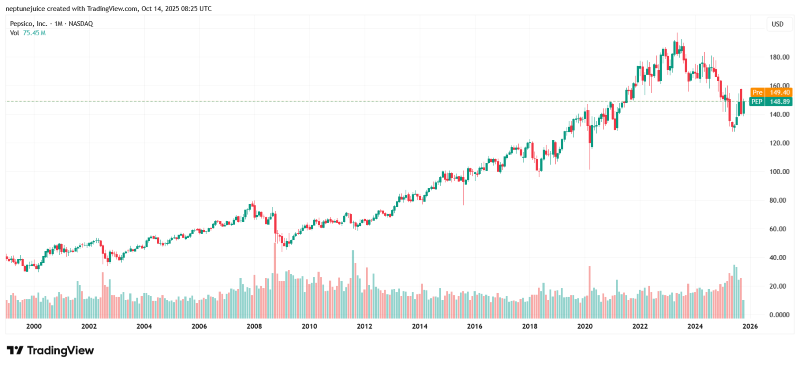
In reality, Aristocrats can secure a portfolio’s income strategy by generating steady cash flow that can be either reinvested to compound portfolio gains or used to offset expenses. However, the use cases should not comprise the entire portfolio. They do not yield that much and have a lower growth rate than more aggressive opportunities. To maintain balance, investors often will combine Aristocrats with assets which have higher yields, such as utilities or REITs, and with growth-oriented stocks that provide capital appreciation.
This mixture has both reliability and potential. Dividend Aristocrats are the rock-solid foundation while complementary holdings add yield and growth. Together, they create a diversified portfolio that can weather the storms of the markets and create sustainable wealth over time. To long-term investors, including Dividend Aristocrats, the addition brings stability and consistent progress to their financial goals – making Dividend Aristocrats an essential part of a well-rounded dividend strategy.
Tools for Tracking Dividend Aristocrats
Investors who want to track and analyze Dividend Aristocrats have a number of handy tools at their disposal. The easiest choice is an exchange-traded fund (ETF) that targets this group, such as the ProShares S&P 500 Dividend Aristocrats ETF (NOBL). Owning shares of this ETF offers diversified access to the entire index and allows investors to easily track trends of performance and dividends.
Stock screeners are another must have. Most brokerage platforms, popular investing publications, and financial websites allow investors to filter stocks by dividend growth history, payout ratio, yield, or sector, making it easy to identify companies that meet Aristocrat criteria. These tools also highlight important metrics such as valuation and earnings strength, helping investors determine whether a stock is attractively priced before investing.
Dividend centric research services provide additional analysis. Platforms like Simply Safe Dividends, Sure Dividend and several dividend calendars provide detailed payout histories, safety scores and growth projections.
By combining these tools, investors can keep an eye on which companies are eligible as Dividend Aristocrats, pay attention to how these companies continue to perform, and watch for early signs of risk. Regular use of these resources means investors keep an unwavering picture of their consistency to confidently build these high quality stocks into a steady, long term dividend strategy.
Conclusion
Dividend Aristocrats have earned the trust of investors for decades of steady dividends. Their grades for being able to increase payouts for 25 or more consecutive years demonstrates both good financial health and commitment to shareholders. For the dividend investors they offer a rare combination of reliability, resilience as well as consistent income growth.
Dividend Aristocrats are a good addition to a portfolio, as they provide a firm base of stability to balance more volatile or speculative investments. They may not provide the highest stock yields or fastest growth, but their value comes in their dependable performance through market cycles, making them ideal positions of the core in a dividend strategy.
Ultimately, Dividend Aristocrats are a compromise between having a stable income and long term growth. When combined with complementary investments, they work to create diversified portfolios to provide predictable income and steady capital appreciation. For those who are more interested in building wealth through dividends, these companies are some of the most trusted and long-lasting ones there are.
Dividend Aristocrats: FAQs
-
What Qualifies a Stock as a Dividend Aristocrat?
A stock qualifies as a Dividend Aristocrat if it is part of the S&P 500 and has increased the dividend for a minimum of 25 consecutive years. This rule ensures that only big, stable and financially strong companies get the title. The companies are also required to follow standards for market cap and liquidity, another layer of credibility.
-
How Are Dividend Aristocrats Different From Dividend Kings?
Dividend Aristocrats require 25 straight dividend increases, while Dividend Kings have accomplished 50 years or more. Both groups are indicators of stability but Kings indicate even longer records of rewarding shareholders. In short, all Kings are Aristocrats but all Aristocrats are not Kings.
-
Why Are Dividend Aristocrats Popular Among Long-Term Investors?
Long-term investors prefer Dividend Aristocrats because they offer a combination of steady income and proven resilience. Their ability to increase their dividends through several market cycles is an indication of their strong fundamentals and disciplined management. For income-focused investors, they are a reliable way to build wealth through compounding.
-
Are Dividend Aristocrats Always Safe Investments?
Although Dividend Aristocrats are considered to be safer than most stocks, there is no such thing as a risk-free investment. Some Aristocrats can grow more slowly, make trades at higher valuations or be hampered by industry specific challenges. Investors should still study fundamentals, payout ratios, and general market conditions before making a commitment.
-
How Can Investors Easily Track Dividend Aristocrats?
You can follow Dividend Aristocrats in ETFs such as the ProShares S&P 500 Dividend Aristocrats ETF (NOBL), which includes the entire list. Stock screeners and dividend-focused research platforms make picking the right companies easier by letting investors track payout history, valuations, and yields. Many financial websites also post regular updates of current Aristocrats for easy reference.
All reviews, research, news and assessments of any kind on The Tokenist are compiled using a strict editorial review process by our editorial team. Neither our writers nor our editors receive direct compensation of any kind to publish information on tokenist.com. Our company, Tokenist Media LLC, is community supported and may receive a small commission when you purchase products or services through links on our website. Click here for a full list of our partners and an in-depth explanation on how we get paid.

 Back to