What is the Implied Dividend Growth Rate?


All reviews, research, news and assessments of any kind on The Tokenist are compiled using a strict editorial review process by our editorial team. Neither our writers nor our editors receive direct compensation of any kind to publish information on tokenist.com. Our company, Tokenist Media LLC, is community supported and may receive a small commission when you purchase products or services through links on our website. Click here for a full list of our partners and an in-depth explanation on how we get paid.
How fast can a company realistically grow its dividends from here?
That’s the question most dividend investors want answered – and the market already hints at it. One of the clearest ways to see those expectations is through the implied dividend growth rate. This metric uses today’s stock price and dividend to estimate how much growth investors are pricing in right now.
Unlike past dividend growth, which only shows history, implied growth focuses on the future. It reveals whether the market expects steady increases, aggressive growth, or slowing payouts ahead.
For income investors, this insight matters. It helps you judge whether a dividend stock is fairly priced, overly optimistic, or quietly undervalued – before you commit your capital.

- What Is the Implied Dividend Growth Rate?
- Formula Behind the Metric
- How It’s Calculated
- Why It Matters
- Advantages
- Limitations and Assumptions
- Real-World Application
- Implied Growth Rate vs. Actual Dividend Growth
- Conclusion
- FAQs
What is the Implied Dividend Growth Rate?
The implied dividend growth rate reflects an investor’s expectation of how quickly a company will increase its dividends over time. It does not rely on past performance or what management forecasts. It is calculated using available market data such as stock prices, current dividend payments, and required rates of return. In other words, it estimates the rate of growth that investors currently anticipate.
The implied dividend growth rate is derived from the Gordon Growth Model, which calculates the present value of future dividends with a constant growth rate. When using this model to find the implied dividend growth rate investors can rearrange the formula to solve for the growth rate that would provide a stock price equal to its current price when paired with its current dividend amount and desired return.

The fact that the implied dividend growth rate indicates the expectation the market has for future dividend growth makes it unique as an investment evaluation tool. When an investor sees a high implied dividend growth rate, it indicates that the investors believe there will be robust increase in future dividends, and a low implied dividend growth rate signifies caution or doubt regarding future profitability.
Unlike historical dividend growth, the implied dividend growth rate provides forward-looking information. The implied dividend growth rate reveals how the marketplace currently considers risk, return, and growth potential, thus providing investors with a means of assessing if the price of a dividend-paying stock is based on realistic future dividend growth expectations.
The Formula Behind the Metric
The implied dividend growth rate is calculated using a simple formula that links a company’s dividend, stock price, and investors’ required rate of return:
Implied Growth Rate = (Required Return × Price – Dividend) / (Price + Dividend)
The stock price reflects investors’ expectations for future earnings and dividends, upon which their price quotations are based today. Assuming all other factors remain constant, investors with greater faith in a company’s long-term growth potential will tend to price that company at a higher level, resulting in a higher implied growth rate for the stock.
The dividend is the annual cash return a shareholder receives for each share they have owned during that year. If dividends are high relative to the price of the stock, the implied growth rate tends to be lower, as the investor’s total rate of return is derived from current income rather than future increases. Conversely, the lower the dividend, the greater variance of implied growth rates, as the market assumes investors expect more rapid future increases in earnings.
The required rate of return reflects the risk premium demanded by investors when investing in stocks. Higher required returns raise the growth rate needed to justify a stock’s price, particularly for companies viewed as riskier or operating in changing economic conditions, even during periods of unexpectedly strong growth that can shift expectations around interest rates and future policy.
Thus, all of these variables together show the level of dividend growth necessary for a stock to trade at fair value based on current conditions in the marketplace. There are three components in determining whether the implied growth rates by the stock market are rational or overly optimistic.
How it’s Calculated in Dividend Valuation
Investors in dividend-paying stocks often want to know what the marketplace believes about the future dividend growth rate for that stock. The implied dividend growth rate, which is calculated by manipulating an equation relating price, dividends, and required return to solve for the growth rate at which the present value of future dividends will equal today’s price, can provide investors with this information. Instead of projecting forward, this approach works backward from the market price to determine the expected dividend growth.
To calculate the implied dividend growth rate, the current dividend and an estimated required rate of return must first be determined. These two numbers are used to determine the growth rate assumed by investors regarding future dividends, and together they help define the stock’s equity yield rate based on income and risk expectations. A stock trading at a high price compared to its dividend indicates that strong growth is expected, while a stock trading at a lower price relative to its dividend indicates the expectation of slower growth or a higher degree of perceived risk.
The real power of this technique lies in the ability to compare the implied growth rate of a particular stock against historical trends and/or future earnings estimates for that company in order to identify any discrepancies between what investors are pricing the stock based on their expectations of future growth versus what is realistic based on historical performance and/or projected earnings for the company going forward. This diagnostic capability makes dividends evaluation a diagnostic tool for determining whether an investor’s future growth assumption(s) regarding a stock are well-founded, cautious or overly optimistic.
Why the Implied Dividend Growth Rate Matters
The implied dividend growth rate represents an investor’s expectation of future performance for a company. For dividend investors, determining what the current stock price indicates regarding future dividend growth is critical to making sound investment decisions. In conjunction with the company’s actual historical dividend growth and earnings power, investors can use the implied growth rate to see if the company’s prospects align with the market’s view.
When investors place high expectations for dividends, those dividends may not be sustainable due to many factors including earnings, company’s dividend payout ratios, and competition. Therefore, if a dividend paying stock has high implied growth rates, any unfavorable news that occurs could result in a sharp drop in the share price as investors reset their expectations. Conversely, when implied growth rates are lower than expected, it indicates that investors have realistic yet optimistic expectations of the company continuing to raise dividends consistently.
Investors can also use the implied dividend growth metric to compare similar companies within their respective sectors. Companies operating under similar market conditions but trading at much higher implied growth rates may suggest overvaluation, while lower implied rates can point to more conservative pricing or unrealized potential. Finally, the implied dividend growth rate helps investors make more disciplined decisions about their dividend investment strategies, including distinguishing long-term income approaches from short-term dividend strategies such as dividend capture, by directing attention away from stock price excitement and toward valuation and realistic growth expectations.
Advantages of Using This Approach
Dividend investors can benefit from a number of aspects of using an implied dividend growth rate in the valuation of stocks. One of the strongest advantages is that it provides a quantitative way to represent market sentiment. By deriving the implied growth rate from the stock price, an investor can evaluate the market’s expectations regarding a company’s future prospects. The implied rate provides a means of assessing investor sentiment without relying on either investment analysts’ stories or short term price movements.
Additionally, by evaluating a company’s historical dividend growth and earnings history against the implied growth rate, investors can determine the sustainability of a company’s dividends. If the implied growth rate exceeds what a company has achieved in the past or what it can reasonably support moving forward, it is likely an indicator of excessive bullishness by the market and potential downside pressure on future dividends. Conversely, if the implied growth rate is modest while a company has excellent fundamentals, it could indicate that the market is not recognizing the potential dividend growth that is possible from that company.
The ability to evaluate multiple companies based on a single growth assumption makes it easier for investors to compare companies within the same industry or sector. When doing so, an investor is able to determine which stocks are priced for higher than average growth versus those that are priced lower than average growth. Overall, employing an implied dividend growth rate within dividend analysis creates greater structure and discipline for an investor when weighing dividend yield versus growth versus risk.
Limitations and Assumptions
Although useful, the implied dividend growth rate is dependent upon multiple assumptions that investors should be aware of. The greatest source of uncertainty surrounding this calculation is the required rate of return. The fact that this input relies on estimates and judgment can result in drastic differences in the implied growth rate from minimal changes. An excessively high assumption will lead to an undervalued stock, while a low-assumption would indicate an unreasonable expectation of growth.
Another factor affecting the metric is its sensitivity to stock price volatility. Price movements are driven by many forces beyond dividend growth, including shifts in interest rates, new economic data, and changes in investor confidence – especially when concerns emerge that policy may stay too tight and slow the economy. These forces can temporarily distort the implied growth rate even when a company’s fundamentals remain unchanged. For this reason, long-term investors should interpret the metric cautiously during periods of sharp price fluctuations, when macro-driven volatility can obscure the underlying signal.

The final limitation worth mentioning is the assumption that dividends will experience constant, perpetual growth. In reality, businesses do not experience constant growth rates; rather, companies move through cycles of expanding and contracting earnings due to factors such as industry shifts or dividend cuts, a pattern frequently discussed in popular investing publications during periods of changing market conditions. Therefore, the implied dividend growth rate should be viewed as an approximation and not a forecast, and used alongside other valuation techniques and fundamental analysis to develop a more complete understanding of a dividend’s ability to support future income.
Applying It to Real-World Dividend Analysis
Investors use the implied dividend growth rate to assess the price of a stock relative to the long-term income capacity of that company in real-world situations. For instance, AT&T prior to its dividend reduction in 2022, tended to trade at prices that reflected an assumption that dividends would continue to grow at a steady rate while earnings were stagnating and debt was being increased. Subsequently, those expectations were not justified given AT&T’s shift in cash flow priorities towards debt payment and restructuring. A growth rate substantially above sustainable earnings growth for AT&T may have acted as an indicator of that shift in priorities.
Combining the implied dividend growth rate with other financial measures allows investors to form a more complete view of a stock’s risk and valuation. At various points, Intel has shown a relatively high implied dividend growth rate alongside a rising payout ratio during periods of intensified competition, signaling concern around dividend sustainability. Those concerns were later reflected in earnings results and market reactions, as competitive pressure from Nvidia reshaped expectations and weighed on the stock. By contrast, Microsoft has historically maintained a lower payout ratio and consistent earnings growth, resulting in implied dividend growth expectations that have remained more closely aligned with its underlying financial strength.
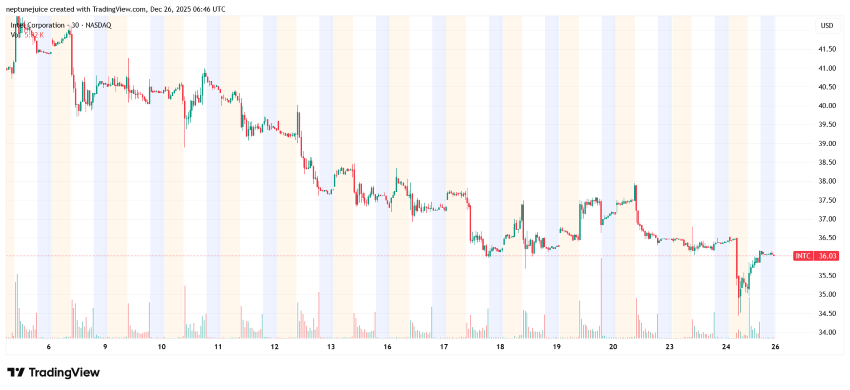
Thus, investors can evaluate the implied dividend growth rate to distinguish between companies with long-lasting dividend-paying potential versus those where market enthusiasm has begun to outpace reality. In this way, the metric supports more rational and better-supported decisions regarding dividend payments, reinforcing conclusions often highlighted by reliable market advisory services that focus on valuation discipline rather than short-term market excitement.
Comparing Implied Growth Rate With Actual Dividend Growth
A company’s implied dividend growth rate currently is derived from what investors expect based upon how much growing dividends will be! On the other hand, a company’s historical dividend growth indicates how much a company’s dividends historically have grown and what a company has done over time. When a company’s implied dividend growth rate closely matches its historical dividend growth, it suggests that the market is correctly estimating the future value of that company’s stock because of past performance. A large gap between a company’s implied and historical dividend growth rates could indicate either:
If a company’s implied dividend growth rate is dramatically higher than its historical dividend growth, investors are effectively assuming that future earnings or cash flow will justify a higher valuation. This kind of optimism can stretch prices to a point where even modest disappointments trigger sharp pullbacks, particularly after earnings reset expectations. Conversely, when a company’s implied growth rate sits well below its historical dividend growth, it suggests the market may be overly conservative – sometimes creating opportunities when short-term post-earnings weakness contrasts with longer-term income potential.
These two distinctly different ideologies create the opportunity to provide investors with sound decision-making based on evidence rather than emotional reasons. By comparing a company’s implied dividend growth rate to its actual dividend growth rate, investors will be able to identify dividend stocks that continue to produce a reliable source of passive income and enhance their wealth through consistent growth without having to rely on excessively optimistic expectations.
Conclusion
The expected dividend growth rate represents a tool for evaluating companies based upon their future earnings potential. The ability to connect dividend payments, stock prices and required return rates connects valuation with the emotional, environmental and opportunity costs of holding stock that may be mispriced.
When combined with payout ratios, past earnings growth, and the history of company dividends, the expected growth rate adds a new dimension to traditional stock analysis. It encourages developing an analytical approach to dividend trading based on the fundamentals; rather than on emotion or speculation.
As such, the expected dividend growth rate serves as a benchmark for determining what investors expect to happen in the future. Understanding the information contained within these benchmarks enables investors to better quantify both risk and opportunity, allowing them to make more educated decisions about long-term income generation and wealth accumulation.
Implied Dividend Growth Rate: FAQs
-
What Is the Implied Dividend Growth Rate and How Is It Calculated?
The anticipated growth rate in future dividends is known as the Implied Dividend Growth Rate (IDGR). It can be calculated from the current price of a stock as well as the current dividend and expected return, as per the Gordon Growth Model. The formula—(Required Return × Price – Dividend) / (Price + Dividend)—shows the growth rate already embedded in the stock’s price.
-
How Does the Implied Dividend Growth Rate Differ From Historical Dividend Growth?
While historical dividend growth shows numerically how much the dividends have increased in the past, the implied growth rate demonstrates how much an investor expects to see growing from today’s valuation of the company. Using both historical dividend growth and projected dividend growth rates helps an investor compare what the market expects (implied dividend growth) with what the company has actually produced in the past (historical dividends).
-
Why Is This Metric Important for Dividend Investors?
The IDGR can be interpreted as the market's valuation of the company's growth expectations for dividends. For example, if a company has a high Implied Dividend Growth Rate compared to a company's historical dividend growth rate, the market may be pricing the stock according to unrealistically high expectations. Conversely, if the IDGR is low, the market may believe the stock is undervalued or that there is not enough evidence to support the current dividend payment.
-
What Assumptions Can Make the Implied Growth Rate Misleading?
The implied dividend growth rate metric indicates that dividend growth will be steady and perpetual and assumes a constant required return to the investor. In addition, the required rate of return assumption may not be realistic. Furthermore, the implied dividend growth rate is reactive to price fluctuations that can negatively impact an investor’s expectations of long-term dividend growth.
-
Can Investors Use the Implied Growth Rate To Identify Undervalued Dividend Stocks?
There is a significant amount of sensitivity in the IDGR regarding short-term price volatility and this can impact the long-term growth expectations of a company. Therefore, combining the IDGR with payout ratios, revenue trend analysis, and cash flow analysis is recommended to obtain a comprehensive view of how well the market values a company's future dividend payment capability within a diversified dividend portfolio.
All reviews, research, news and assessments of any kind on The Tokenist are compiled using a strict editorial review process by our editorial team. Neither our writers nor our editors receive direct compensation of any kind to publish information on tokenist.com. Our company, Tokenist Media LLC, is community supported and may receive a small commission when you purchase products or services through links on our website. Click here for a full list of our partners and an in-depth explanation on how we get paid.

 Back to