Yield on Cost: What It Means and How to Calculate It


All reviews, research, news and assessments of any kind on The Tokenist are compiled using a strict editorial review process by our editorial team. Neither our writers nor our editors receive direct compensation of any kind to publish information on tokenist.com. Our company, Tokenist Media LLC, is community supported and may receive a small commission when you purchase products or services through links on our website. Click here for a full list of our partners and an in-depth explanation on how we get paid.
What helps dividend investors understand how much their income has actually grown since the day they bought a stock?
Yield on cost gives a simple answer. It shows how much dividend income you earn today based on your original purchase price, not the stock’s latest market value. This makes it a useful metric for anyone following a long term dividend strategy. As payouts rise over the years, yield on cost climbs too, even when prices move around.
With this metric, investors can see whether their dividend plan is working and how time and steady increases shape real income growth.

- Understanding Yield on Cost
- Formula
- YOC vs. Current Dividend Yield
- Why YOC Matters
- Benefits
- Limitations
- Practical Applications
- Strategies to Improve Yield on Cost
- Conclusion
- FAQs
Understanding Yield on Cost
Yield on cost determines the dividend income an investor is earning based on the price it paid for a stock. In contrast to current dividend yield, which compares today’s dividend to a market price, yield on cost always relates back to the price paid for the stock position. As such, it is a personal number for each investor based on the entry price and the market price when they entered the position.

The calculation is simple. Take the annual dividends per share that you are receiving today, divide by the price that you paid per share, and convert to a percentage. For example, if you paid fifty dollars for a stock and it now pays three dollars per share in annual dividends, your yield on cost is six percent. Even if it now trades around a hundred dollars and has a market yield of three percent, your yield on cost is based on your own purchase price and not the current market price.
While an investor’s yield on cost will be different from the market price and market yield, this measure of dividend increases against a purchase price is intriguing for long term investors. When companies raise their dividends, your yield on cost will climb and demonstrate how a position entered years ago is becoming more profitable, a pattern seen recently in companies whose improving outlooks and strategic updates have helped fuel strong gains. Your yield on cost allows you to assess the advancement of a dividend growth strategy and also to pull away from the short term fluctuations of the stock price to recognize the long term accumulation that comes from owning great dividend paying stocks.
Formula for Yield on Cost
Calculating yield on cost is simple: You take the annual dividends you are receiving and divide it by the original purchase price of the stock and multiply by 100. This indicates how much income your investment is generating in the present time, and it sets your baseline for how much the dividend has grown since the original purchase of the shares.
Annual dividends are defined as the total payout a company pays in one year, generally listed per share. For example, if a stock pays seventy five cents a quarter, that equals three dollars per year. Your original cost is simply the price you bought per share when you opened the position. If you bought each share for fifty dollars, that serves as your baseline from which to calculate.
In this example, you take three dollars and divide by fifty dollars, and that equals 0.06 or 6 percent after multiplying by 100. This is your yield on cost, and it is not influenced by the price in the market. In other words, if a company raised the dividend to five dollars a year, your yield on cost would then be 10 percent, illustrating the value of the growing power of your original purchase.
Yield on cost compares today’s dividend payout against your original purchase price. It emphasizes the long term value of a growing dividend for the benefit of the income stream rather than short term effects in the market.
Yield on Cost vs. Current Dividend Yield
Yield on cost and current dividend yield are related but serve different roles in evaluating dividend stocks. Current dividend yield is calculated by dividing the annual dividend by the stock’s market price today. It shows the income a new buyer would receive at the current valuation and is the figure most commonly displayed on financial platforms. This makes it useful for judging whether a stock offers appealing income right now.
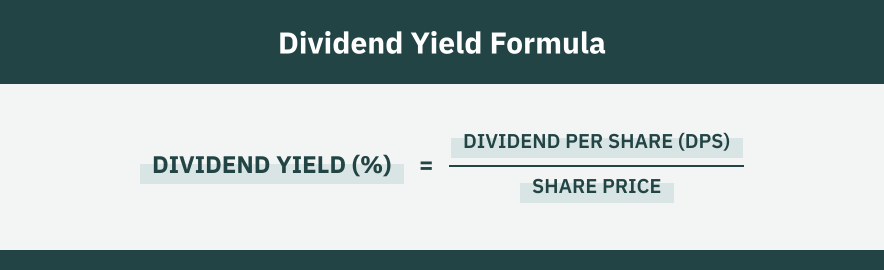
Yield on cost focuses on dividends compared with the price an investor originally paid. Since it uses the entry price rather than the present one, it shows how much the dividend stream has grown in relation to the initial investment. As a result, two investors holding the same stock may have very different results depending on when they bought their shares and at what cost.
The difference is important. Current yield helps investors evaluate a stock’s present income potential, while yield on cost measures the progress of a long term dividend strategy. For instance, a stock might show a current yield of three percent, yet an investor who purchased years earlier could now have a yield on cost of eight percent or more due to steady payout increases.
Understanding both metrics helps investors distinguish between assessing a new opportunity and tracking the performance of their own long term holdings, giving a more complete view of dividend investing.
Why Yield on Cost Matters
The significance of yield on cost is that it provides the long-term benefit of growing dividends that is not evident with current yield. For income oriented investors, the power of a dividend strategy is built on the ability to grow their payouts over the years. Each annual increase in the dividend results in an increase in an investor’s yield on cost, relative to their initial investment, even if the current yield appears low to new investors. This metric is an obvious portrayal of how well a stock has rewarded long-term patience.

Yield on cost also illustrates the impact of reinvesting dividends. When dividends are reinvested through programs such as DRIPs, investors are accumulating additional shares of stock. Those additional shares will also create dividends, which results in compounding growth that is noticeable over the long-term. By tracking yield on cost, investors are provided a simple way of viewing how powerful the compounding can be over the long-term with companies they consider to be good stable investments, in terms of growing their dividend.
This metric also provides motivation for long term investors. Seeing yield on cost rise from 3 percent at purchase to 8 percent or more after years of growth continually reinforces the value of remaining invested through the market’s fluctuations, even when recent headlines about corporate battles, AI shifts, or pricing pressures remind investors how quickly conditions can change. It reflects the strength of the company as well as the benefits from a plan of investing in a dividend paying company. For any individual with a goal of building long term income, yield on cost provides a straightforward way of seeing progress over time.
Benefits of Using Yield on Cost
Yield on cost has a primary advantage in that it will allow investors to follow the long term trajectory of their dividend income. Instead of focusing on the yield a new buyer would realize, yield on cost will provide the return the person earned, based on the original price they paid. This allows for a clearer representation of the growth of the income stream since the position was opened.
Yield on cost can also provide strong motivation while going through the process of investing. Monitoring the figure as dividends are increased provides justification for maintaining commitment during volatile swings in the market price, especially as recent bouts of sharp movement underscore how quickly global risk can build. For instance, it is particularly rewarding to see yield on cost rise from a small starting number to a much larger number a number of years later. Yield on cost demonstrates the value of perseverance and disciplined investing, illustrates the power of compounding, and transforms long term progress into a visible metric.
Yield on cost is also a valuable metric for evaluating a dividend strategy. By comparing yield on cost across holdings, investors are able to monitor which companies have been the most successful in building income, over time. This can help influence portfolio decisions, supporting and reinforcing which stocks are living up to expectations, and which stocks no longer hold a position in a portfolio. By connecting original investment decisions to current yield on cost, this useful metric becomes a performance measure and offers practical insights to develop your future dividend strategies.
Limitations of Yield on Cost
Yield on cost can provide valuable insights, but investors should be aware of its limitations. The most prominent issue is opportunity cost. Just because a stock has a strong yield on cost today does not mean the same money could not earn more elsewhere, especially when many current market options offer yields that now exceed traditional benchmarks such as Treasuries. By focusing only on the original entry price of an investment, investors can easily overlook stronger opportunities available in today’s market.
When we consider yield on cost, we must also consider that yield on cost does not indicate current value. The stock may return well internally, but the current yield may pale when compared to other opportunities. And these disparities may create a misperception of the overall attractiveness of the investment since yield on cost is based on past performance, not current income potential. If one is analyzing a new investment, the metric indicates very little.
Moreover, yield on cost can be deceptive if considered in isolation. Although it can indicate income growth, it does not address dividend safety, payout ratios, or the strength of the company’s balance sheet. If a dividend yield is on the rise, that information becomes irrelevant if there is an imminent risk of the dividend being reduced. For these reasons, prepend with cash flow analysis, trends, and earnings stability to create context with yield on cost. Context is all important, but the decision should never hinge entirely on yield on cost reliability.
Practical Applications in Dividend Portfolios
Yield on cost could be beneficial when managing a dividend portfolio. One of the most common uses of the output is for checking on long term positions, including stocks that have been held for several years. When yield on cost is estimated for a stock, the investor better understands how much the total return has increased from dividends greater than the original price paid. That is also a beneficial way to quickly assess companies that have established their dividend policy by increasing the yield return over time.
This metric can also be used when making reinvestment decisions. When considering reinvesting dividends, the investor can look to compare the yield on cost of the existing position to the income return of the investment itself. If the yield on cost indicates significant personal return then the original position may offer viable value for the long term, even if the current pondering yield has declined.
Another benefit of yield on cost is that it encourages patience. Much of the benefit in dividend investing comes from compounding, and a positive yield on cost helps factor in increases of the original yield and also any future investment opportunities available. Yield on cost can be seen in a simple way to show real progress.
Yield on cost can lend a perspective on dividend growth and income potential, yet it should not be the only measure used. Other measures such as payout allocation of the original capital working the investment, cash flow trend and safety of the dividend should also be used to better gauge both income potential and overall health of the portfolio. On balance, yield on cost can certainly be a valuable measure contributing to standard cohort checks on dividends.
Strategies to Improve Yield on Cost
Optimizing your yield on cost is about patience, consistency, and selecting companies that pay dividends you can count on for growth. Dividend reinvestment plans, or DRIPs, are a great way to accomplish this. When you join a DRIP, your payout (also) automatically in your shares without you having to add new capital. This ultimately increases your share count over time, which also increases your future stream of dividends and enhances the rate at which your yield on cost increases.

Select companies based on a strong historical record of dividend growth. When companies raise their payout on a consistent basis, they possess a solid track record of financial discipline in generating value for their shareholders. They may not have the highest dividend yield on a current basis, but a steady and growing stream of dividends will increase your yield on cost in a short period of time. And during periods when recent policy shifts, such as Fed rate cuts, make income producing stocks more appealing, these companies often benefit even more from investor demand. Most likely, with these types of companies there is consistently growing income and the potential for increasing the share price, which contributes to building a long term portfolio.
It also seems beneficial to have the same companies working for you over the long term. Dividend strategies work best when the investor is committed to letting compounding work itself out, not actively trading or discussing the dividends. Selling a stock regularly disrupts the process of steadily building the income the dividends provide. The benefits of compounding arise from the total dividends you receive on the original investments for a long term time horizon without interruption.
Combining dividend reinvestment, diligent company selection, and a “long holding” status will help you on your way to yielding both greater asset growth and creating improved streams of income for your future financial goals.
Conclusion
Yield on cost provides an easy way to understand how a dividend strategy has increased through income compared to the original amount invested. Having the ability to visually capture the invaluable lesson of patience and reinvesting dividends while investing in companies that ideally increase dividends consistently is special. For longer-term investors, yield on cost is an easy tool that helps measure how past decisions provide present-day benefits.
However, investors should not solely rely on yield on cost. In and of itself, yield on cost does not represent present-day market value or loss of opportunity cost as it does best when interpreted alongside current yield, the payout ratio, and company earnings strength.
When utilized as part of wider analysis, yield on cost supports the fundamental premise of dividend investing: consistent income growth over time. It also keeps investors focused on building sustainable cash flow and wealth.
Yield On Cost: FAQs
-
How Do You Calculate Yield on Cost for Dividend Stocks?
To determine yield on cost, use the formula: annual dividends per share divided by the price paid, multiplied by 100. This tells you what your investment will produce in income today.
-
Why Is Yield on Cost Different From Current Dividend Yield?
Yield on cost uses the price you paid for the stock, and current yield uses the current price today. Current yield represents what a new buyer would receive and is the figure most often highlighted in leading stock market newsletters, while yield on cost reflects the long-term growth of income based on your original investment.
-
Does Reinvesting Dividends Improve Yield on Cost?
Yes. When you reinvest dividends, the amount held in shares grows, which increases the future dividend income. This compounding effect can make yield on cost grow faster over time, especially with the company increasing its dividends as well.
-
What Are the Drawbacks of Focusing Too Much on YOC?
Yield on cost does not consider the current market value, and it can also disguise better opportunities out there. It can also create an emotional attachment to weaker stocks because of the personal yield on cost, as opposed to evaluating based on current fundamentals.
-
How Can Dividend Growth Strategies Impact Yield on Cost Over Time?
Usually, you will have consistent increases in dividends that increase the annual payout on your purchase price, thus yield on cost continues to move higher. After a period, what begins as a mediocre yield on cost, compounded along with increased dividends, becomes a strong income when compounded.
All reviews, research, news and assessments of any kind on The Tokenist are compiled using a strict editorial review process by our editorial team. Neither our writers nor our editors receive direct compensation of any kind to publish information on tokenist.com. Our company, Tokenist Media LLC, is community supported and may receive a small commission when you purchase products or services through links on our website. Click here for a full list of our partners and an in-depth explanation on how we get paid.

 Back to