BTC-0.59%
Crypto
BTC-0.59%
Crypto
Multi-CBDC Platform Could be the New International Settlement Standard
An multi-CBDC platform could offer faster, cheaper, and more secure international settlements according to the Bank of International Settlements (BIS).

Editorial disclosureRead more
All reviews, research, news and assessments of any kind on The Tokenist are compiled using a strict editorial review process by our editorial team. Neither our writers nor our editors receive direct compensation of any kind to publish information on tokenist.com. Our company, Tokenist Media LLC, is community supported and may receive a small commission when you purchase products or services through links on our website. Click here for a full list of our partners and an in-depth explanation on how we get paid.
Project Dunbar, an international settlement scheme led by the BIS Innovation Hub, has successfully developed working prototypes to prove the viability of the multi-CBDCs concept. It is still early to speculate what this could mean for international settlements. However, if launched successfully, it could significantly challenge the current international transaction providers like SWIFT.
Experiment Proves Multi-CBDCs Could Enable International Settlements
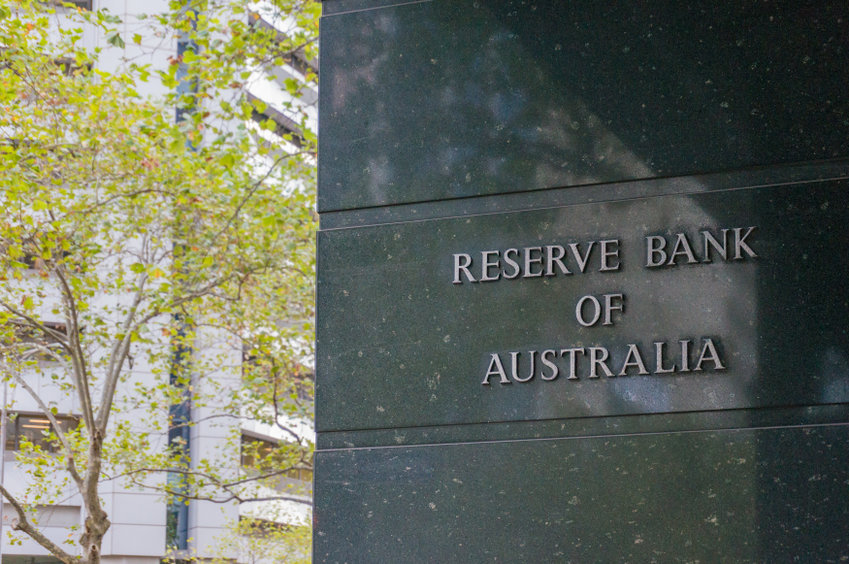
Project Dunbar, a technical experiment that involved the Reserve Bank of Australia, Central Bank of Malaysia, Monetary Authority of Singapore, and South African Reserve Bank, has turned out to be a success, proving that financial institutions can use CBDCs to transact on a shared platform.
The joint effort initially started in 2021. According to a report by the Bank of International Settlements (BIS), the project developed two prototypes for a shared platform that could enable international settlements using CBDCs issued by different central banks, which was the project’s first phase. The BIS said:
“This initial phase of the project successfully developed working prototypes and demonstrated practicable solutions, achieving its aim of proving that the concept of multi-CBDCs was technically viable.”
The BIS argued that the need for such a system arises since cross-border payments are currently very inefficient. For instance, to complete a single cross-border transfer, a number of banks may be involved. Each of these banks would need to record transactions on multiple ledgers on multiple systems built using different technologies, all of which contribute to making transactions slower and more expensive.
Moreover, the bank claimed that cross-border payments currently fail to meet user expectations of cheaper, faster, and more transparent cross-border payments. This describes why the G20, an intergovernmental forum comprising 19 countries and the European Union, pledged in 2020 to enhance cross-border payments around the world.
Project Dunbar Developed Using DLT Platforms Corda and Quorum
In terms of design, the project faced challenges related to governance, process, and technology.
For a multi-CBDC platform shared by different central banks, governance is a key consideration to properly assign each participant the right amount of privileges and modes of access. In the first place, participants will gain access to the platform through the nodes they host or the nodes hosted by others. Also, each participant would have a different level of access.
Technologically, the project’s technical prototypes were developed on two different DLT platforms—Corda and Quorum. The Corda platform development was led by the technology provider R3 while the Quorum platform development was led by Partior, an open industry platform.
Moreover, R3’s prototype deployed on the Azure cloud infrastructure while Partior has deployed its prototype on Amazon Web Services (AWS).

Join our Telegram group and never miss a breaking digital asset story.
Multi-CBDC Payments to Challenge Traditional Settlement Methods like SWIFT
Unlike traditional payment settlement methods, which rely on intermediaries and correspondent banks, a multi-CBDC platform would enable participants to transact directly with each other using different CBDCs. This would significantly decrease the time required for a settlement, thus increasing speed.
Moreover, currently, a single cross-border transfer requires multiple ledgers to be updated on different systems, making the process time-consuming. However, since transfers are recorded on a single ledger on a multi-CBDC platform, the settlement process is simplified and costs are reduced.
It is also worth noting that a multi-CBDC platform would reduce duplicative processes and automate operations through smart contracts. Furthermore, using smart contracts, banks can also offer conditional payments, enabling customers to receive payment upon the fulfillment of predefined conditions.
In a nutshell, a multi-CBDC platform could be a game-changer for international settlements considering that it could significantly cut costs and increase speed. Therefore, it can significantly challenge traditional financial transaction providers like SWIFT.
Do you think multi-CBDC platforms would be the future of cross-border payment settlements? Let us know in the comments below.

Ruholamin Haqshanas
Ruholamin Haqshanas is an accomplished crypto and finance journalist with over two years of experience writing in the field. He has a solid grasp of various segments of the FinTech space, including the decentralized iteration of financial systems (DeFi), and the emerging market for non-fungible tokens (NFTs). He is an active user of digital assets for remittances.