USDC+0.00%
Market Analysis
USDC+0.00%
Market Analysis
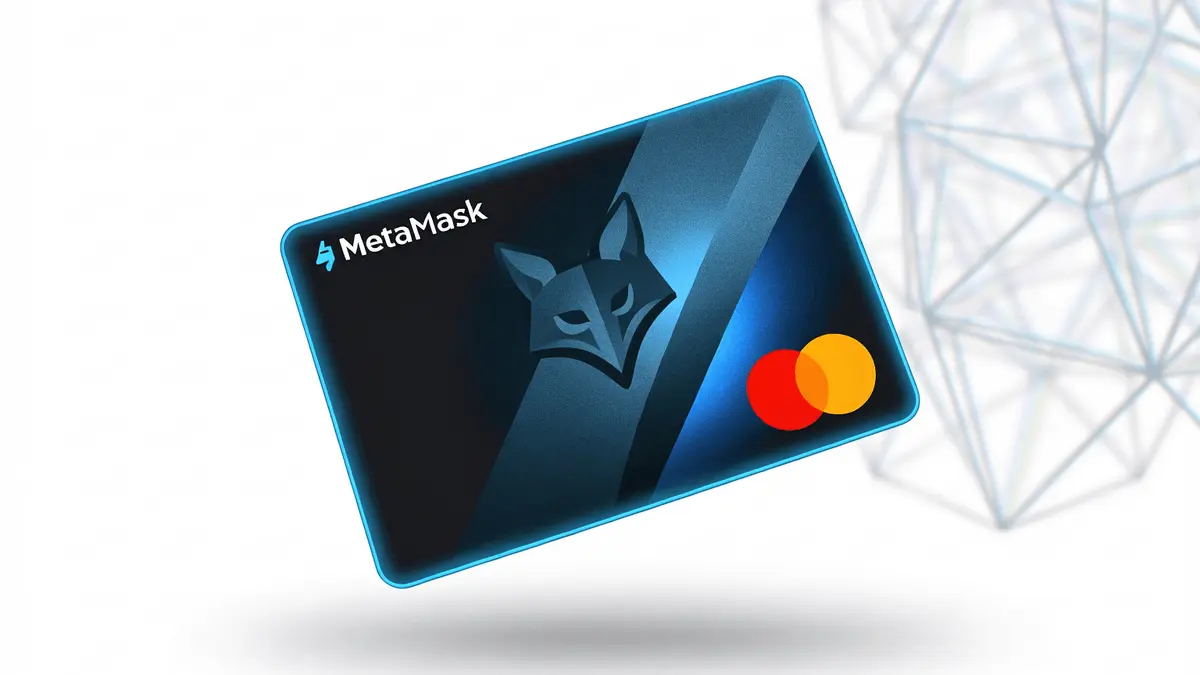
MetaMask Card Goes Live in 49 States With Self-Custody Spending on Mastercard
Consensys launches MetaMask Card across 49 US states, letting users spend self-custodied crypto via Mastercard at 150M+ merchants with mUSD cashback.

Editorial disclosureRead more
All reviews, research, news and assessments of any kind on The Tokenist are compiled using a strict editorial review process by our editorial team. Neither our writers nor our editors receive direct compensation of any kind to publish information on tokenist.com. Our company, Tokenist Media LLC, is community supported and may receive a small commission when you purchase products or services through links on our website. Click here for a full list of our partners and an in-depth explanation on how we get paid.
Consensys launched the MetaMask Card for general availability across 49 US states on February 26, 2026, marking the first time a self-custodial crypto card has reached mass-market scale in the American payments market, including New York, which had been excluded from the ETHDenver 2025 pilot.
The card is issued by Cross River Bank, runs on Mastercard’s global network of 150 million-plus merchant locations, and requires no pre-loading of funds to an exchange at any point in the transaction flow.
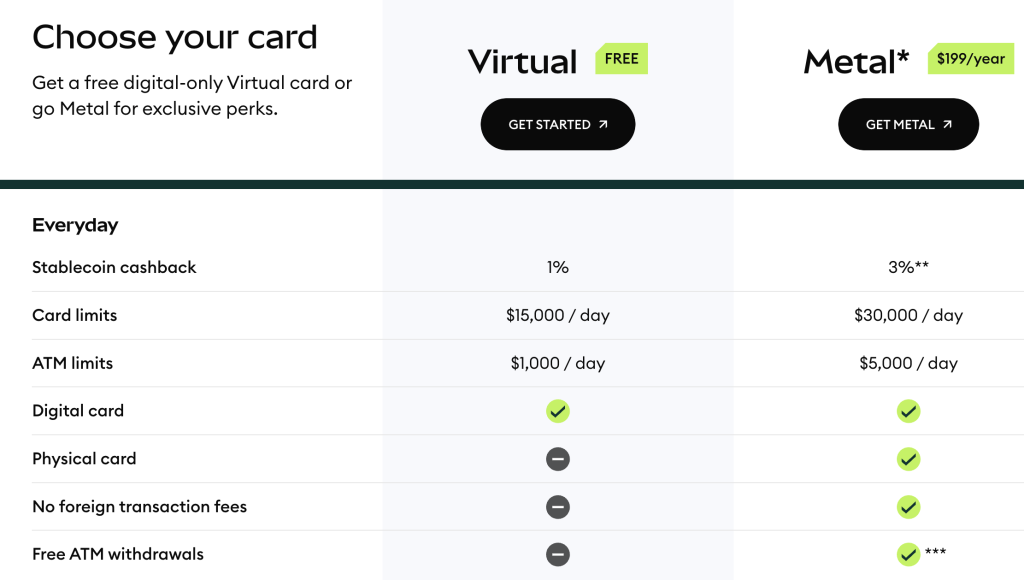
Two tiers are available at launch: a free virtual card earning up to 1% cashback in mUSD, and the MetaMask Metal Card at $199 per year, which earns up to 3% cashback on the first $10,000 spent annually, adds no foreign transaction fees, and raises both spending and ATM limits.
The structural significance is direct: Consensys is using regulated payment rails to route self-custodied on-chain assets into a $150M merchant-acceptance network, a combination that no US crypto card product has previously delivered in this geography.
MetaMask Card Mechanics: Two Tiers, mUSD Cashback, and How Self-Custody Spending Works at the Point of Sale
The self-custody mechanic is central to the MetaMask Card, allowing users to retain control of their private keys until a transaction executes. It converts supported on-chain assets to local fiat at Mastercard points of sale.
Supported tokens include mUSD, amUSD, wETH, EURe, GBPe, USDC, aUSDC, aBasUSDC, and USDT across Linea, Base, and Monad, with Solana unavailable in the US and Base restricted in New York and Texas.
Users earn cashback in mUSD, with standard cardholders getting up to 1% on all purchases and Metal subscribers up to 3% on the first $10,000 spent annually. Both tiers support Apple Pay and Google Pay, and card access is nearly instant post-KYC approval.
The DeFi yield layer allows users holding aUSDC or aBasUSDC in their MetaMask wallet to passively earn yields without leaving self-custody. Product Lead Gal Eldar emphasized the goal of integrating crypto seamlessly into daily life, blurring the lines between on-chain and off-chain experiences.
Self-Custody vs. Custodial Exchange Cards: Why the Architectural Difference Matters for Users and Regulators
The MetaMask Card differs from traditional custodial exchange cards like the Coinbase Card or Crypto.com Visa in that users maintain control of their private keys, whereas competitors hold funds on their balance sheets until they are spent.
This self-custody model raises regulatory challenges for anti-money laundering, as wallet histories are pseudonymous.
To address this, ConsenSys implements mandatory KYC enrollment under Cross River Bank’s insured framework, positioning MetaMask within regulatory oversight.
This setup offers resilience against platform freezes, a risk seen with Celsius and Voyager, but comes with the downside of potential fund loss if a user forgets their seed phrase.
According to Sherri Haymond from Mastercard, the partnership aims to connect decentralized finance with everyday finance, but it requires users to manage their own security, unlike traditional debit cards.
Market Context and Timing: US Regulatory Clarity, the MetaMask User Base, and What the Consensys IPO Narrative Needs
The February 2026 launch was strategic, as US regulatory clarity around stablecoin and crypto payment products has improved significantly, giving Consensys a competitive edge before others can match its self-custodial architecture.
With a presence in 49 states (Vermont being the only exception), the card’s distribution is unmatched by custodial competitors. Consensys cites around 100 million MetaMask users, which helps overcome the cold-start issue seen in previous crypto card launches.
Thousands have already used the card during the pilot phase, ensuring the US launch taps into existing user behavior and the kinks can be ironed out prior to full release.
This distribution advantage supports Consensys’s monetization strategy ahead of its planned public offering, now pushed to late 2026, enhancing the revenue narrative tied to the card.
The author does not hold or have a position in any securities discussed in the article. All prices were quoted at the time of writing.

Tim Baker
Tim Baker is a Senior Market Analyst at Tokenist with over a decade of experience educating readers about traditional finance, crypto and DeFi. A former equity researcher turned on-chain analyst, Tim specializes in regulatory framework shifts and institutional DeFi adoption. His work focuses on distilling complex liquidity cycles and the macro environment into actionable intelligence for the modern DIY investor.