NEAR-0.79%
Forex
NEAR-0.79%
Forex
Goldman Sachs Targets USD/JPY at 165, in Boost for the Yen Carry Trade
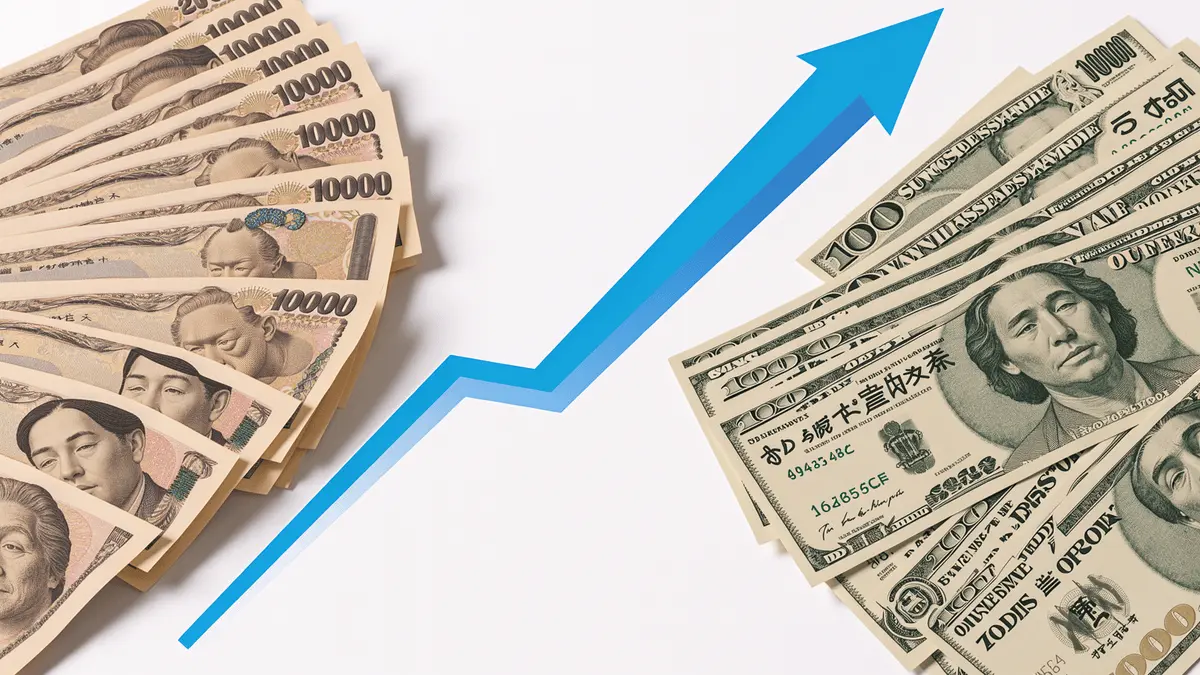
Goldman Sachs raised its 12-month USD/JPY target to 165, citing Japan's fiscal pressures and elevated US Treasury yields driving persistent yen weakness.

Editorial disclosureRead more
All reviews, research, news and assessments of any kind on The Tokenist are compiled using a strict editorial review process by our editorial team. Neither our writers nor our editors receive direct compensation of any kind to publish information on tokenist.com. Our company, Tokenist Media LLC, is community supported and may receive a small commission when you purchase products or services through links on our website. Click here for a full list of our partners and an in-depth explanation on how we get paid.
Goldman Sachs revised its 12-month USD/JPY forecast to 165 from 155 on July 6, 2026, placing it among the most bearish calls in Bloomberg’s surveyed consensus, as strategist Karen Reichgott Fishman cited Japan’s fiscal pressures, persistently elevated US Treasury yields, and only gradual Bank of Japan rate hikes as the structural drivers of continued yen depreciation.
The yen was trading at 161.79 per dollar in early Asian trading that Monday, down 0.3% on the session and near its weakest level since 1986, cementing its position as one of the worst-performing major currencies in 2026.
Goldman’s three-month target moved to 162 from 160, and its six-month target to 163 from 158 – a consistent upward shift across the entire forward curve that signals conviction rather than a single-point revision.
Foreign exchange options markets are aligned: traders assign roughly a 72% probability that USD/JPY reaches 165 by June 2027, per Bloomberg data, while hedge fund net short positioning on the yen hit its most extreme level since 2017 last month.
Goldman Sachs News: How Japan’s Debt Dynamics and Higher-for-Longer US Treasury Yields Drive the 165 Call
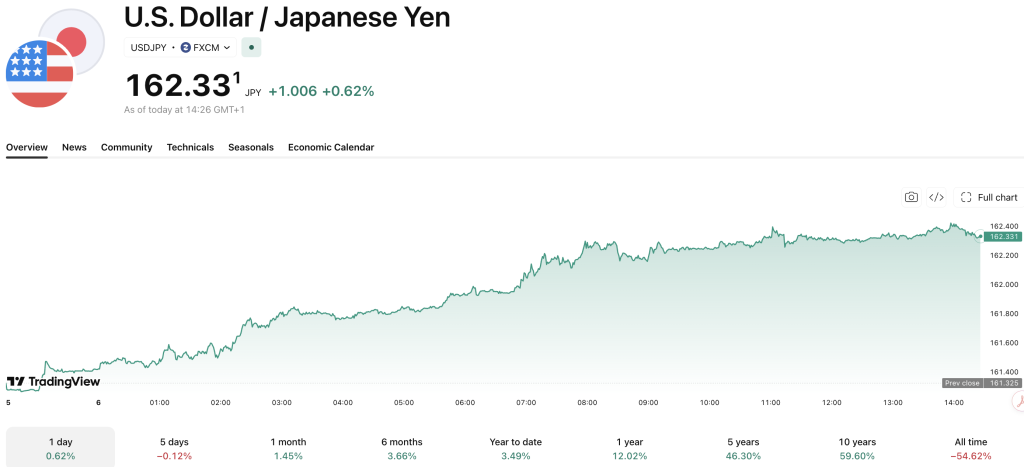
Goldman Sachs outlook hinges on the rate differential between US Treasuries and Japanese Government Bonds, suggesting continued depreciation pressure on the yen despite its current undervaluation.
With the Federal Reserve maintaining high rates and elevated Treasury yields, capital is shifting from yen-denominated to dollar-denominated assets, exerting ongoing selling pressure on the JPY.
Japan’s fiscal challenges worsen the situation, as high debt servicing costs limit policy flexibility and undermine efforts to defend the yen.
Mark Cranfield from Bloomberg highlights that investors remember the significant drop in USD/JPY in the 1980s, indicating that the current 160–165 range isn’t unprecedented.
Gradual Bank of Japan Hikes: Why the Tightening Path Is Too Slow to Close the Rate Gap and Arrest Yen Weakness
The Bank of Japan ended its negative-rate policy and yield-curve control in early 2025 but maintains a near-zero policy rate, emphasizing gradualism to protect growth.
A modest 25-basis-point hike does not close the gap with US rates, keeping the yen a low-yield funding currency. Goldman Sachs believes the BOJ’s tightening will remain too slow to impact its 12-month forecast.
The August 2024 rate surprise showed that such assumptions can lead to rapid yen rallies, compressing USD/JPY and triggering volatility across equities and crypto.
This incident highlighted the risks of crowded yen short positions, making Goldman Sachs 165 target a cautious base case with significant tail risks.
Yen as Funding Currency: Goldman Sachs Carry Trade Endorsement and the Risk-Asset Implications of Extended Yen Weakness
Goldman endorses the yen carry trade, leveraging low JPY borrowing to invest in higher-yielding assets, expecting this strategy to remain viable through mid-2027 due to persistent yen weakness.
This scenario supports broader risk-on behavior in equities, credit, and crypto markets. However, the significant short-yen positioning among hedge funds raises concerns; any sudden yen strength could lead to a disorderly unwinding of carry trades.
This is reminiscent of the sharp crypto volatility seen in August 2024, with the potential unwind now greater due to extended positioning.
Official Intervention: Why Goldman Expects Any Ministry of Finance Defense of the Yen to Be Short-Lived Against Macro Headwinds
Japan’s Ministry of Finance is believed to have intervened in late April and early May when USD/JPY briefly exceeded 160, with BOJ data showing a drop in current account balances consistent with FX support operations totaling about ¥9.8 trillion (around $62 billionBn).
Fishman notes that while such interventions may buy time, they do not change the yen’s structural weakness. Goldman’s view suggests that macro headwinds, yield gaps, and the BOJ’s limited pace of easing will overwhelm policy efforts over the next year.
While interventions can temporarily compress USD/JPY by several hundred pips, without significant shifts in interest-rate differentials, such actions historically reverse. The 165 target reflects potential intervention without suggesting a lasting trend reversal.
The author does not hold any position in the securities discussed in the article.

Tim Baker
Tim Baker is a Senior Market Analyst at Tokenist with over a decade of experience educating readers about traditional finance, crypto and DeFi. A former equity researcher turned on-chain analyst, Tim specializes in regulatory framework shifts and institutional DeFi adoption. His work focuses on distilling complex liquidity cycles and the macro environment into actionable intelligence for the modern DIY investor.