NEAR+5.71%
Crypto
NEAR+5.71%
Crypto
UK Tax Authority: Cryptocurrencies Are Not Money

Editorial disclosureRead more
All reviews, research, news and assessments of any kind on The Tokenist are compiled using a strict editorial review process by our editorial team. Neither our writers nor our editors receive direct compensation of any kind to publish information on tokenist.com. Our company, Tokenist Media LLC, is community supported and may receive a small commission when you purchase products or services through links on our website. Click here for a full list of our partners and an in-depth explanation on how we get paid.
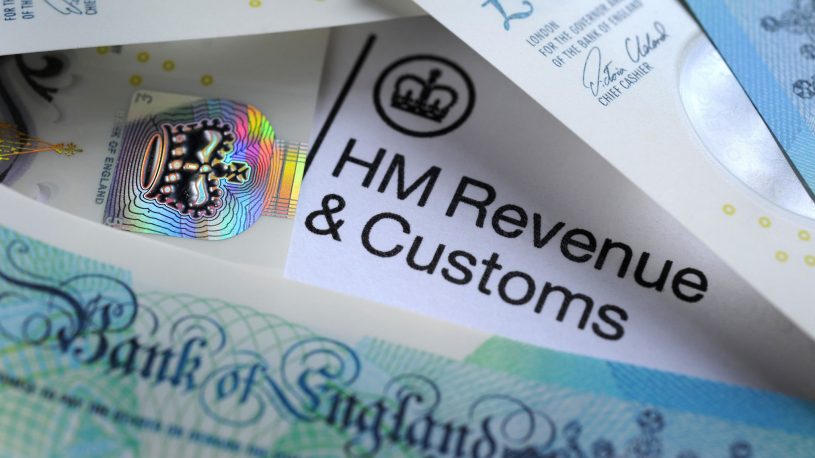
The United Kingdom’s (UK) tax, payments, and customs agency — Her Majesty’s Revenue and Customs (HMRC)— has updated its stance on digital asset taxation. Notably, cryptocurrencies will not be taxed as money, though certain taxes will still apply on a case-by-case basis.
Crypto Taxes in the UK Explained
HMRC has released a digital asset tax framework for both businesses and individuals. The frameworks not only outline how specific transactions will be taxed, but provides guidance on filing tax returns as well.
Most importantly, HMRC says cryptocurrencies are neither money nor currency, and will not be treated as such.
Taxes will still be paid, however.
Companies which purchase, sell, trade, or mine digital assets — or accept such digital assets in exchange for goods and services — must pay taxes. Depending on the specific transaction, the tax could be capital gains, income tax, corporation tax, stamp taxes, or National Insurance contributions.
HMRC also recognized a quickly advancing digital asset space and noted that it will consider each case on a case-by-case basis, instead of a forced black-and-white approach.
Previously, cryptocurrency trading was put in the same tax category as gambling, which is no longer the case.
Earlier this year, HMRC reportedly asked cryptocurrency exchanges to provide a history of user identities and corresponding transactions for the previous three years. HMRC was trying to recover unpaid taxes, suggesting the regulator is only trying to gather those from the past three years.
HMRC said guidelines for both security tokens and utility tokens will be published in the near-future.
The situation differs from that in the United States, where cryptocurrencies are treated as property and subject to capital gains tax. However, the most recent official update from the IRS was in 2014, which has prompted US Congress to urge the IRS for an updated clarification.
In an official response, the IRS says an update is coming.
What do you think about HMRC providing an updated tax framework for digital assets? How should cryptocurrencies be taxed? Let us know what you think in the comments section below.
Image courtesy of the Financial Times.

Tim Fries
Tim Fries is the cofounder of The Tokenist. He has a B. Sc. in Mechanical Engineering from the University of Michigan, and an MBA from the University of Chicago Booth School of Business. Tim served as a Senior Associate on the investment team at RW Baird's US Private Equity division, and is also the co-founder of Protective Technologies Capital, an investment firm specializing in sensing, protection and control solutions.