U.S. House Proposes Legislation for Contactless, Cashless Payments

Editorial disclosureRead more
All reviews, research, news and assessments of any kind on The Tokenist are compiled using a strict editorial review process by our editorial team. Neither our writers nor our editors receive direct compensation of any kind to publish information on tokenist.com. Our company, Tokenist Media LLC, is community supported and may receive a small commission when you purchase products or services through links on our website. Click here for a full list of our partners and an in-depth explanation on how we get paid.
When it comes to direct payments with paper currency and touchpoints during points-of-sale (POS), paranoia is increasing. This has prompted banks, financial authorities, and now governments to introduce more effective means of financial transactions.
Cash Paranoia in the Time of COVID-19
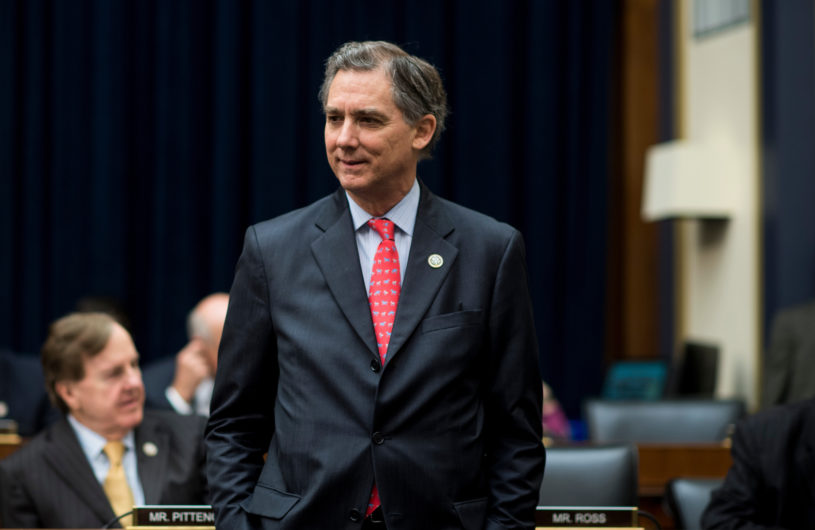
Congressman French Hill, a member of the US House Financial Services Committee, is proposing a bill titled the “Touchless Transactions Act of 2020” which will eliminate the need to touch a terminal for a point-of-sale (POS) transfer. Any swipe, dip, or tap transaction at a merchant POS terminal won’t require a signature.
The coronavirus pandemic has made the general public extremely paranoid about physically handling cash. A recent report by the Switzerland-based Bank of International Settlements states that while the probability of COVID-19 transmission through paper money and coins is comparatively low, general consumer anxiety and panic could accelerate the trend towards cashless, touchless payments.
Even if they may not be the biggest carriers of coronavirus, a 20-year-old study on the bacterial contamination of paper currency showed that 94% of dollar bills tested carried many pathogens, including staphylococcus. Plus, the common flu virus, bacteria, and fecal matter can stay on for days and even weeks.
Debit and Credit Cards Aren’t Any Better Either
According to the BIS report, COVID-19 survives best on non-porous materials, such as plastic or stainless steel. This is why debit or credit card terminals or PIN pads could be way more potent carriers than paper currency.
The Electronic Transactions Association (ETA) noted that many experts believe that the coronavirus can remain active to as much as five days on plastic and four days on paper. This makes the use of credit cards, debit cards, terminals, and receipts potentially dangerous.
Touchless Transactions Act of 2020 Explained
Congressman Hill told Roll Call that the bill will transition America into a more cashless system and help mitigate the spread of the pandemic. He said:
“The purpose of my legislation is to lessen the amount of direct person-to-person contact that happens during point-of-sale transactions to help mitigate the spread of COVID-19. [The bill] will not only help the short-term effects of the pandemic, but can also have longer-term impacts by bringing awareness and potential modernization to our current payment infrastructure.”
North Carolina’s Rep. Patrick T. McHenry, the top Republican in the Financial Services Committee, fully backs Hill’s legislation, saying that modern problems require modern solutions. The Representative said in a written statement:
“We can’t take on a new threat with old tactics. We need to take a 21st century approach to combating the impacts of a public health crisis in our modern world.”
The virus has undoubtedly taken its toll on economies around the world. From individual retirement accounts to the housing market, many people have suffered. Now, FinTech is seeing an increased rate of adoption as people place a priority on safety by reducing human-to-human contact.
Countries Embracing the Touchless and Cashless Approach
BIS researchers noted that financial authorities, banks, and card networks in Austria, Germany, Hungary, Ireland, the Netherlands, the United Kingdom and elsewhere have started taking steps to reduce the number of touchpoints a consumer must make at the point of sale. Researchers noted that European and Asian countries had experienced a sharp increase in contactless card payments, i.e., consumers don’t need to enter their PIN for small transactions.
The payments sector in the US is also experiencing a shift towards the contactless payments approach, as per ETA CEO Jodie Kelley. As per a survey of merchants conducted by the association between March 27 and March 30, 27% of small businesses accept touchless payments.
The Downside of the Contactless, Cashless Movement
A move towards a contactless, cashless payments system can hurt lower-income groups, who don’t have access to credit or mobile payment options. The BIS notes that can potentially open up a “payments divide”:
“A realistic assessment of the risks of transmission through cash is particularly important because there could be distributional consequences of any move away from cash. If cash is not generally accepted as a means of payment, this could open a ‘payments divide’ between those with access to digital payments and those without. This, in turn, could have an especially severe impact on unbanked and older consumers.”
Kelley acknowledged that this is a genuine problem and pointed out that the US alone has 55 million unbanked or underbanked citizens. However, she argued that digital payments can actually go a long way in banking the unbanked and envisions a future where the contactless, cashless payments will become the norm.
Do you think that the contactless, cashless approach is going to outlive the pandemic and become the norm in the future? Do you feel that this bill will allow the USA to take a huge step in the contactless direction? Let us know in the comments below.
Image courtesy of Roll Call.

Tim Fries
Tim Fries is the cofounder of The Tokenist. He has a B. Sc. in Mechanical Engineering from the University of Michigan, and an MBA from the University of Chicago Booth School of Business. Tim served as a Senior Associate on the investment team at RW Baird's US Private Equity division, and is also the co-founder of Protective Technologies Capital, an investment firm specializing in sensing, protection and control solutions.