













 ETH+1.56%
Market Analysis
ETH+1.56%
Market Analysis
US Treasury Sanctions Sinaloa Cartel Over Crypto-Fueled Trafficking
US Treasury Sanctions Sinaloa Cartel Over Crypto Use


Editorial disclosureRead more
All reviews, research, news and assessments of any kind on The Tokenist are compiled using a strict editorial review process by our editorial team. Neither our writers nor our editors receive direct compensation of any kind to publish information on tokenist.com. Our company, Tokenist Media LLC, is community supported and may receive a small commission when you purchase products or services through links on our website. Click here for a full list of our partners and an in-depth explanation on how we get paid.
On May 20, 2026, the US Treasury’s Office of Foreign Assets Control (OFAC) sanctioned individuals and entities linked to the Sinaloa Cartel, adding six Ethereum addresses to the Specially Designated Nationals (SDN) list for converting fentanyl trafficking proceeds into cryptocurrency.
The action targeted the network head, Armando de Jesus Ojeda Aviles, and his associate, Jesus Alonso Aispuro Felix. This designation affects US-regulated exchanges and DeFi interfaces interacting with Ethereum.
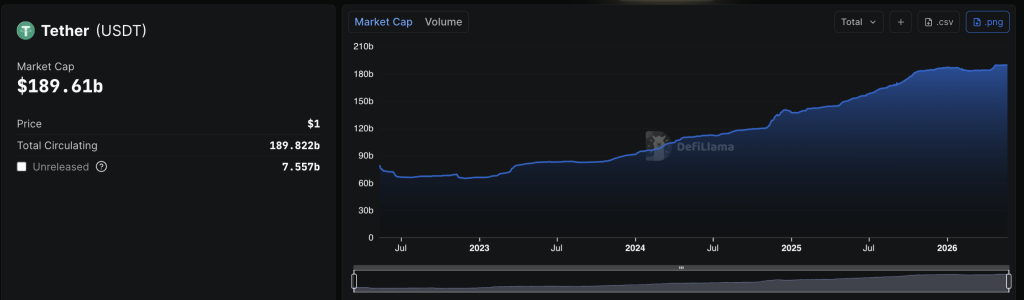
Notably, one previously inactive address transmitted $894 worth of Tether’s USDT on April 27, 2026, highlighting that even low-value transactions can attract scrutiny.
A July 2025 DOJ report confirmed the seizure of over $10M in crypto assets from the cartel that year, with this latest move continuing that crackdown.
OFAC Designation Mechanics: Dual Executive Order Authority and Immediate Blocking Obligations for US Persons
The designations arose from two executive orders: E.O. 14059, targeting illicit drug activities, and another for terrorists and their financial backers, officially recognizing the Sinaloa Cartel as a terrorist organization.
This classification allows for broader secondary sanctions against financial institutions compared to standard narcotics designations.
The immediate effect of an SDN listing is that US persons and financial institutions are prohibited from transacting with designated individuals and specified Ethereum addresses, necessitating asset blocking and reporting to OFAC.
For cryptocurrency exchanges, this means real-time screening of wallet addresses against the SDN list and legal review for any prior interactions with designated addresses.
The two sanctioned businesses, Gorditas Chiwas and Grupo Especial Mamba Negra, S. de R.L. de C.V., were linked to laundering narcotics proceeds and providing operational cover, broadening compliance requirements beyond just on-chain addresses.
Crypto’s Role in the Sinaloa Cartel Network: Stablecoin Rails, Ethereum Addresses, and the Surveillance Gap
Treasury’s action highlights a specific operational pattern where drug cash is converted into cryptocurrency by Ojeda Aviles’s network and then transferred via the Ethereum blockchain to Sinaloa Cartel leaders.
The use of USDT, a dollar-pegged stablecoin, is significant as it provides price stability for illicit value transfer without reverting to volatile tokens. TRM Labs noted that OFAC’s listing of long-dormant addresses indicates that compliance programs must screen beyond just recently active wallets.
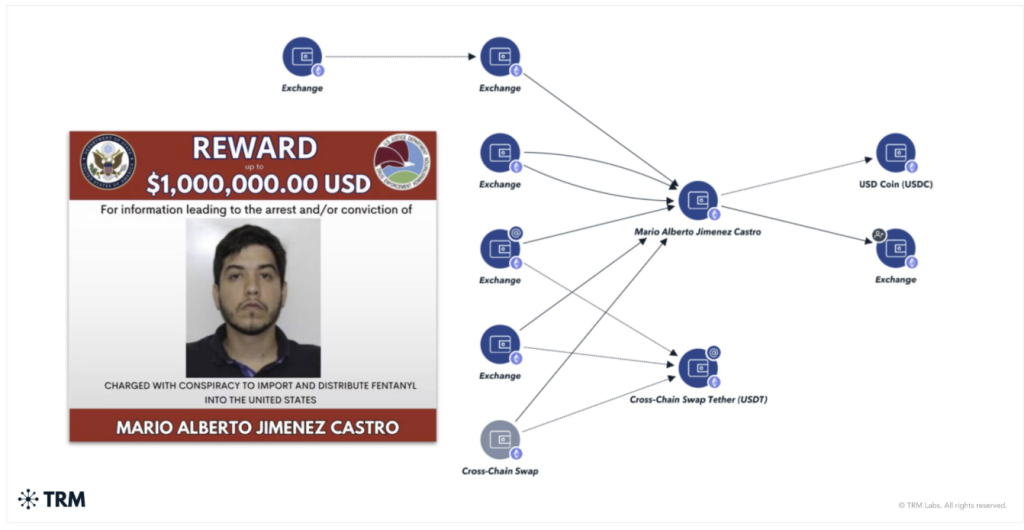
The cash-to-crypto conversion leading into Ethereum transfers parallels the September 2023 OFAC designation of Sinaloa Cartel money launderer Mario Alberto Jiménez Castro, whose Ethereum address received about $740,000 in fentanyl proceeds, establishing a template for the current action.
DISCOVER: IMF Warns Tokenized Finance Could Amplify Crises-Central Bank Settlement as the Fix
OFAC Action and the Crypto Compliance Calculus: Exchange Obligations, Analytics Demand, and Legislative Acceleration
For US-regulated exchanges like Coinbase, each addition to the SDN Ethereum address registry requires immediate updates to transaction-monitoring systems and retroactive reviews of prior interactions involving those addresses.
Compliance experts have highlighted an $894 USDT transaction from the reactivated “e27cb” address as an indication that OFAC is monitoring sub-$1,000 transactions in sanctioned networks, a threshold lower than that of typical AML programs.
This increases the costs of maintaining compliant Ethereum screening, especially since cartel-linked addresses may remain dormant for years.
Blockchain analytics firms, such as TRM Labs and Chainalysis, benefit from enforcement actions requiring wallet-level evidence.
Each OFAC designation drives demand for services like address clustering analysis and transaction tracing, which these firms provide to exchanges, banks, and government agencies.
A 2025 DOJ report on the Sinaloa Cartel finances highlighted that US authorities rely on Suspicious Activity Reports from banks to trace crypto off-ramps, emphasizing that on-chain surveillance tools complement traditional financial intelligence rather than replace it.
The author does not hold or have a position in any securities discussed in the article. All stock prices were quoted at the time of writing.

Tim Baker
Tim Baker is a Senior Market Analyst at Tokenist with over a decade of experience educating readers about traditional finance, crypto and DeFi. A former equity researcher turned on-chain analyst, Tim specializes in regulatory framework shifts and institutional DeFi adoption. His work focuses on distilling complex liquidity cycles and the macro environment into actionable intelligence for the modern DIY investor.
Related Stories
 Market Analysis
Russia Crypto News: EU’s 21st Sanctions Package Bans 14 Crypto Platforms and Introduces Country-Level Block Tool
 Market Analysis
Is Putin Set to Legalize Crypto in Russia? What Next for BTC?
 Market Analysis