














Editorial disclosureRead more
All reviews, research, news and assessments of any kind on The Tokenist are compiled using a strict editorial review process by our editorial team. Neither our writers nor our editors receive direct compensation of any kind to publish information on tokenist.com. Our company, Tokenist Media LLC, is community supported and may receive a small commission when you purchase products or services through links on our website. Click here for a full list of our partners and an in-depth explanation on how we get paid.
 By Tim Baker
Selecting the best no-KYC crypto exchange in 2026 is no longer just about convenience; it has become highly personalized based on a trader’s need for privacy. In a time where data breaches are common and regulatory overreach feels standard, finding a platform that lets you bypass the KYC gauntlet while preserving institutional-grade liquidity is non-negotiable.
With international frameworks like MiCA shifting the regulatory landscape and the SEC intensifying its oversight through dedicated digital asset task forces, your choice of trading venue dictates your structural privacy. We’ve vetted the top-tier platforms that allow you to trade, swap, and execute without trading your real-world identity for a seat in the 2026 cycle. Let’s break down the winners.
Best Wallet – Best for Mobile KYC-Free, Self-Custody, Crypto Swaps & Token Presales
Understanding the No-KYC Landscape in 2026 💡
To effectively navigate this space, a core operational truth must be clarified: transactions on No-KYC platforms are not strictly anonymous; they are **pseudonymous**. Your activity is broadcast across public ledgers linked to cryptographic public keys rather than your legal name.
The primary hurdle for non-verified trading is the fiat gateway. While platforms like Best Wallet or GhostSwap offer direct integrations to acquire assets with local currencies or methods like Apple Pay and PayPal, localized financial regulations often mandate third-party payment processors to enforce identity checks during fiat-to-crypto onboarding. For absolute privacy, seasoned market participants prioritize pure crypto-to-crypto swaps or peer-to-peer (P2P) desks to completely circumvent banking system telemetry.
The Leading No-KYC Platforms Reviewed 🏆
1. Best Wallet – Best for Mobile Self-Custody & Token Presales
Best Wallet is a non-custodial Web3 app that combines private key ownership with its own built-in swap engine. Setting up an account takes about thirty seconds because you only need an email address. From there, you get a seed phrase, biometric locks, and 2FA functionality, all without handing over a single piece of government ID.
What makes it actually useful for anyone trying to avoid the standard centralized exchange tracking is how it handles cross-chain logistics. Instead of forcing you to jump through multiple browser extensions or bridge portals, the app lets you swap between different networks directly from the main interface. It is decentralized custody paired with a streamlined UX, which means you keep control of your keys while avoiding the friction that usually defines non-custodial software.
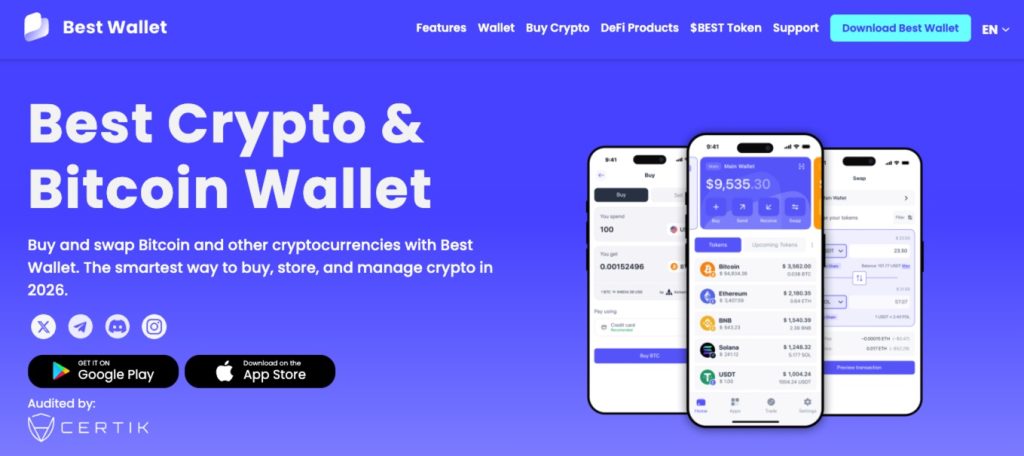
Our deployment of the app highlighted its decentralized exchange engine (BEST DEX), which aggregates quotes across 60+ chains. Beyond pure swapping, it acts as a gatekeeper to early-stage capital allocations, allowing users to participate in highly anticipated ICO drops and presales directly inside the wallet app before assets hit legacy retail listings.
Pros
- Comprehensive non-custodial multi-chain wallet engine
- Direct access to vetted early-stage ICO launches
- Native DEX functionality across dozens of dominant chains
- Biometric parameters and multi-wallet pairing
Cons
- Currently limited to iOS and Android deployment
- Advanced analytical charting modules are still pending
2. BloFin – Enhanced Trading Experience with Bots
BloFin targets quantitative and systematic retail traders who want to run automated strategies without hitting a mandatory KYC wall. On the security side, the exchange uses Fireblocks for its custody infrastructure and integrates Chainalysis for real-time transaction monitoring to keep user funds secure.
During testing, BloFin’s built-in automation stood out. The platform features a straightforward signal bot that links directly to TradingView Webhooks, which lets you automate your futures strategies without manual intervention. It also includes a Time-Weighted Average Price (TWAP) protocol that breaks up large orders into smaller, scheduled trades, giving you a built-in way to avoid moving the market and getting eaten alive by slippage.
Pros
- Native TradingView signal bot integration for automated futures loops
- TWAP algorithmic order engine minimizes market slippage
- Optional KYC verification leaves asset movement unrestricted
- Integrated demo paper trading sandbox for strategy backtesting
Cons
- Automated grid and signal bots are entirely limited to futures markets
- No native support for non-fungible tokens or on-chain Web3 galleries
3. Margex – Trade and Invest Anonymously
Margex is built specifically for trading perpetual derivatives with high leverage while keeping your identity to yourself. The trade-off is straightforward: as long as you stick entirely to crypto, you don’t have to upload a single ID document.
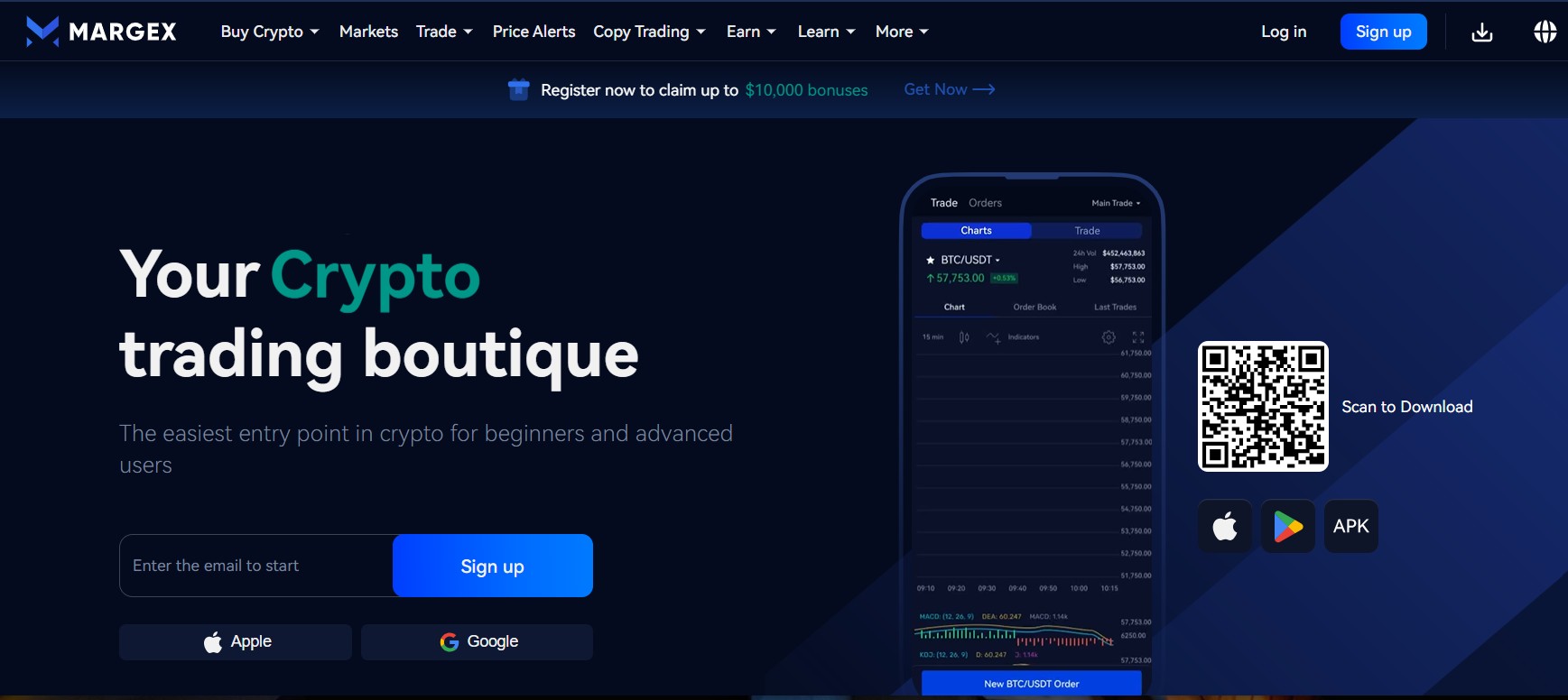
The exchange pulls liquidity from over 12 primary providers to keep execution fast and spreads tight. To protect accounts from cascading liquidations during flash crashes, Margex uses a custom protocol called “MP Shield.” The system cleans incoming data by cross-referencing prices across multiple feeds, which filters out localized anomalies and artificial market manipulation before it can trigger bad liquidations.
Pros
- Up to 100x leverage margins on major perpetual futures contracts
- MP Shield technology protects accounts from artificial liquidation spikes
- Integrated copy trading dashboard targeting high-performing accounts
- Native yield staking options with daily reward distributions
Cons
- Transitioning to fiat credit card processing instantly triggers third-party KYC
- Complete geo-restriction blocks users originating from the United States
4. BingX – Create Your Personal Trading Strategy
BingX lets you run automated grid strategies and copy-trade without completing mandatory KYC, though you will hit strict volume and withdrawal limits on unverified accounts. The exchange stands out for its transparency, publishing a 100% verified proof-of-reserves alongside independent security audits of its code.

BingX is useful primarily for its automation tools. You can set up spot or futures grid systems through a basic macro interface without uploading documents. For social trading, the platform links you to over 17,000 active accounts, letting you pull historical risk metrics, max drawdowns, and exact profitability data before you mirror anyone’s trades.
Pros
- Robust automated spot and futures grid strategy builders
- Massive social ecosystem featuring 17,000+ tracked professional traders
- Deep derivatives liquidity with margin constraints stretching to 125x
- Verified 1:1 proof-of-reserves audited by external firms
Cons
- Strict daily capital withdrawal caps for unverified user profiles
- Significant geographic blocks limit access within several Western jurisdictions
5. KCEX – Top Choice for Trading Altcoin Futures
KCEX has carved out a quiet niche for altcoin derivatives traders who want deep liquidity without the paperwork overhead. The platform handles over a million users, running a fast matching engine paired with a strict no-KYC policy. It is one of the more reliable options left if you want to trade high-leverage altcoin pairs without a mandatory registration barrier blocking your first deposit.

During testing, KCEX handled trades quickly and made it easy to get into micro-cap assets. The interface includes full TradingView integration, depth charts, and standard technical indicators for more than 1,000 different tokens. If you trade derivatives, the platform supports up to 100x leverage on altcoin pairs and includes basic risk management options like trailing stops and post-only orders.
Pros
- 0% spot trading fees and highly competitive futures execution
- Expansive roster of 1,000+ assets across Base, Solana, and Ton networks
- No KYC verification obligations for core platform functionalities
- Advanced order execution mechanisms (trailing stops, triggers)
Cons
- Customer support triage times can slow down during high-volatility spikes
- Pure crypto-to-crypto environment; lacks direct localized fiat rails
Comparing the Top No-KYC Crypto Exchanges in 2026 📊
| Exchange | Supported Assets / Chains | Trading Fees (Spot/Futures) | Core Benefit |
| Best Wallet | 60+ Blockchain Networks | 0% Internal Swap Fees |
Presale Allocation Pipeline
|
| BloFin | 1,000+ Active Pairs | Tiered volume matrix |
TradingView Script Automation
|
| Margex | 55+ Top Crypto Assets | 0.019% Maker / 0.06% Taker |
MP Shield Liquidation Buffer
|
| KCEX | 500+ Altcoin Vectors | 0% Spot & Futures Maker |
Micro-cap Derivative Depth
|
| WEEX | 600+ Asset Metrics | 0.02% Maker / 0.08% Taker |
1,000 BTC Reserve Protection
|
| BingX | 700+ Verified Books | 0.045% Standard execution |
Automated Grid Engine Blocks
|
| Changelly | 1,000+ Coins / 185 Chains | 0.25% Fixed exchange rate |
Commercial API Matrix
|
| ChangeNOW | 1,400+ Standard Pairs | Variable rate optimization |
Limitless Corporate Scaling
|
Why You Should Consider Crypto Exchanges without KYC ⚖️
No-KYC crypto platforms offer a lot more than just a quiet place to trade. By keeping your personal information completely off centralized databases, you eliminate a massive chunk of systemic risk. If an exchange doesn’t hold your passport details, utility bills, or address, that data can’t be leaked, stolen, or handed over during a breach.
- Global Accessibility Blocks: For market participants located in regions undergoing strict financial insulation or lacking access to stable banking networks, offshore non-custodial swaps allow frictionless capital placement without national identity documents.
- Elimination of Centralized Identity Fraud: Centralized exchanges are attractive targets for sophisticated database intrusions. By keeping your legal name, driver’s licenses, and passports off their registers, you eliminate the risk of corporate data leaks turning into identity theft vectors.
- High-Velocity Dispatches: Without administrative verification layers holding up withdrawals, asset transfers settle instantly based on raw network speed rather than standard compliance auditing delays.
How to Select a Secure Non-KYC Exchange Platform 🛠️
Navigating the gray market requires a methodical checklist. When assessing a non-verified venue, do not compromise on these parameters:
Withdrawal Vault Ceilings
Most platforms balancing regulatory exposure implement strict capital velocity limits for unverified profiles. For instance, legacy order books may cap outbound transfers at designated points like 500,000 USDT daily. Pure Web3 self-custody frameworks like Best Wallet enforce zero transaction thresholds because they never take physical custody of your funds. Ensure the platform’s execution bounds comfortably exceed your macro transaction velocity requirements.
Cross-Chain Interoperability
Prioritize platforms that support native multi-chain operations over individual network wrappers. Your platform should manage disparate ecosystems (Solana, Base, Ethereum, Ton) smoothly under a unified interface, minimizing the friction of utilizing third-party bridges to execute simple conversions.
Technical Auditing & Execution Tools
For active derivative positioning, look past the basic layout and scrutinize the order execution depth. The platform must offer stable conditional triggers, precise trailing stops, and a suite of critical charting components (Moving Averages, RSI indicators, Bollinger Bands) backed by high matching-engine throughput to handle peak-volatility events.
The Structural Risks of Private Trading Environments ⚠️
While non-verified trading provides structural freedom, it demands absolute personal accountability. The absence of centralized oversight exposes users to specific architectural hazards:
The Execution Realities: Non-KYC networks lack sovereign backstops. If an offshore exchange faces structural insolvency or a targeted legal shutdown, retail accounts have no access to national deposit protection schemes or judicial reclamation processes. Furthermore, peer-to-peer (P2P) clearing desks are frequently targeted by malicious counterparties; users must rely heavily on automated smart-contract escrow safety rails to protect their settlements.
Regulatory Retaliation: The 2026 Macro Outlook 🔮
The structural playground for non-KYC exchanges is facing clear headwind vectors. Offshore entities are shifting strategies to stay ahead of international cross-border frameworks like the Financial Action Task Force’s (FATF) updated Travel Rule, which pushes virtual asset service providers to transmit user identity markers dynamically during cross-network movements.
At the same time, local mandates like the implementation of automated 1099-DA reporting frameworks within the United States are squeezing localized centralized platforms. This friction is driving a permanent structural division in the market: retail platforms will either transition into total compliance oversight or migrate fully into decentralized, non-custodial smart-contract systems that exist entirely outside legislative reach.
Wrapping Up: The Privacy Verdict 🏁
If you want complete control over your keys and real on-chain privacy, Best Wallet is usually your best bet. It functions as a clean, non-custodial multi-chain wallet while giving you direct access to decentralized liquidity networks.
On the other hand, if you need actual order books and want to trade derivatives, platforms like Margex, BloFin, and KCEX give you those advanced tools without forcing you through a KYC check.
But if you want to keep your risk as low as possible, the playbook is simple: use instant swap aggregators when you need to move between assets, and immediately send your core holdings back to an isolated hardware wallet or self-custodial setup you control.

Tim Baker
Tim Baker is a Senior Market Analyst at Tokenist with over a decade of experience educating readers about traditional finance, crypto and DeFi. A former equity researcher turned on-chain analyst, Tim specializes in regulatory framework shifts and institutional DeFi adoption. His work focuses on distilling complex liquidity cycles and the macro environment into actionable intelligence for the modern DIY investor.