













 ETH+0.77%
Market Analysis
ETH+0.77%
Market Analysis
Consensys CEO Joe Lubin: Ethereum Could Be Fully ZK-Proof-Based by 2030
Ethereum Could Be Fully ZK-Based by 2030, Says Joe Lubin


Editorial disclosureRead more
All reviews, research, news and assessments of any kind on The Tokenist are compiled using a strict editorial review process by our editorial team. Neither our writers nor our editors receive direct compensation of any kind to publish information on tokenist.com. Our company, Tokenist Media LLC, is community supported and may receive a small commission when you purchase products or services through links on our website. Click here for a full list of our partners and an in-depth explanation on how we get paid.
ConsenSys CEO Joe Lubin has said that Ethereum could become a fully zero-knowledge proof-based protocol within three to five years, placing the transition window between 2029 and 2031, citing real-time ZK proving already live on Layer 2 networks, including Linea and Gnosis, as proof that the underlying technology is ready to move to the base layer.
Lubin framed the shift not as speculation but as the logical continuation of a deliberate architecture: a rollup-centric divergence phase that seeded L2 ecosystems is now giving way to what he described as a convergence phase.
This is where zero-knowledge proofs unify execution across the full Ethereum stack and eliminate the liquidity fragmentation that has drawn persistent criticism from developers and researchers alike.
Joe Lubin on ZK Proving on L1: How the Technology Already Lives on Linea and Gnosis Would Be Integrated Into Ethereum’s Base Layer
Zero-knowledge proofs (ZK proofs) allow one party to validate computations to another without revealing data or redoing the work. This technology powers ZK rollups on Ethereum, such as Linea and Gnosis, which batch transactions off-chain and submit compact proofs of validity to the main chain for settlement.
Joseph Lubin claims that this proving infrastructure can be integrated directly into Ethereum’s base layer, enabling validators to verify blocks using ZK proofs rather than re-executing each transaction.
Ethereum Foundation engineer Sophia Gold proposed a phased approach to this integration, aiming for an optional L1 zkEVM client in 2024, in which validators would check three ZK proofs per block.
Justin Drake outlined a three-phase migration plan, starting in 2026, with up to 10% of validators verifying ZK proofs and targeting around 10,000 TPS on L1.
The proposed multi-prover model uses five independent proving systems per block, requiring three matching proofs to ensure reliability.
Integrating ZK into L1 would also solve current composability issues that plague rollups, enabling seamless asset movement across Ethereum networks without bridges, thereby unifying fragmented liquidity pools.
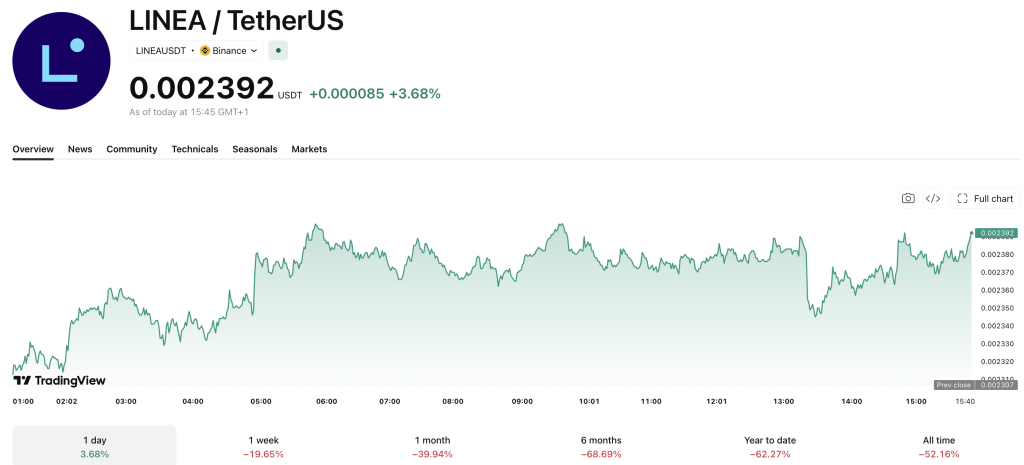
Rollup-Centric Roadmap Under Scrutiny: Lubin’s Divergence-to-Convergence Defense and the Open Questions Around the 2030 Timeline
Lubin’s comments address ongoing criticism of the rollup-centric roadmap. Vitalik Buterin pointed out that many L2s have become “branded shards,” facing challenges with interoperability and user experience. The Ethereum Foundation is now prioritizing improvements to L1’s speed and cost while utilizing L2s for features like privacy.
Joe Lubin defended the rollup approach, highlighting the significance of zero-knowledge proofs and recognizing liquidity fragmentation as part of exploration.
Currently, there are concerns about the 2030 timeline due to technical and political hurdles, including risks tied to current proving systems and centralization issues from hardware requirements.
Achieving a single verified prover remains a research challenge, with the transition of the ZK client depending on adoption rates and testnet security, factors outside Lubin’s and the Foundation’s direct control.
What a ZK-Native Ethereum Means for Consensys, L2 Operators, and the Broader Competitive Landscape
For Consensys and Joe Lubin, a ZK-native Ethereum is crucial. The company developed Linea as a ZK rollup and has established ZK infrastructure for institutional clients like Citi and BNY Mellon. A base-layer transition that validates Linea’s architecture could enhance Consensys’s position and valuation ahead of its public offering.
For other L2 operators, a ZK-capable L1 complicates things. It diminishes the rationale for optimistic rollups, and networks using this architecture may face migration challenges or limited competitive use cases. Lubin indicated that some Layer 2 technologies will survive, suggesting impending consolidation.
For ETH holders, the key implication is a scalable base layer capable of over 10,000 TPS without sacrificing decentralization, something Ethereum’s proof-of-stake transition aimed for but didn’t achieve.
EF leadership sees native ZK integration as vital to Ethereum’s competitiveness against L1s with higher throughput but lower decentralization. The future question is not if ZK will reach L1, but which chains will catch up by 2029-2031.
The author does not hold or have a position in any securities discussed in the article. All prices were quoted at the time of writing.

Tim Baker
Tim Baker is a Senior Market Analyst at Tokenist with over a decade of experience educating readers about traditional finance, crypto and DeFi. A former equity researcher turned on-chain analyst, Tim specializes in regulatory framework shifts and institutional DeFi adoption. His work focuses on distilling complex liquidity cycles and the macro environment into actionable intelligence for the modern DIY investor.
Related Stories
 Market Analysis
Russia Crypto News: EU’s 21st Sanctions Package Bans 14 Crypto Platforms and Introduces Country-Level Block Tool
 Market Analysis
Is Putin Set to Legalize Crypto in Russia? What Next for BTC?
 Market Analysis