















 NEAR-5.48%
Market Analysis
NEAR-5.48%
Market Analysis
Polymarket $1.9M Wins Were Staged and Scripted Losses
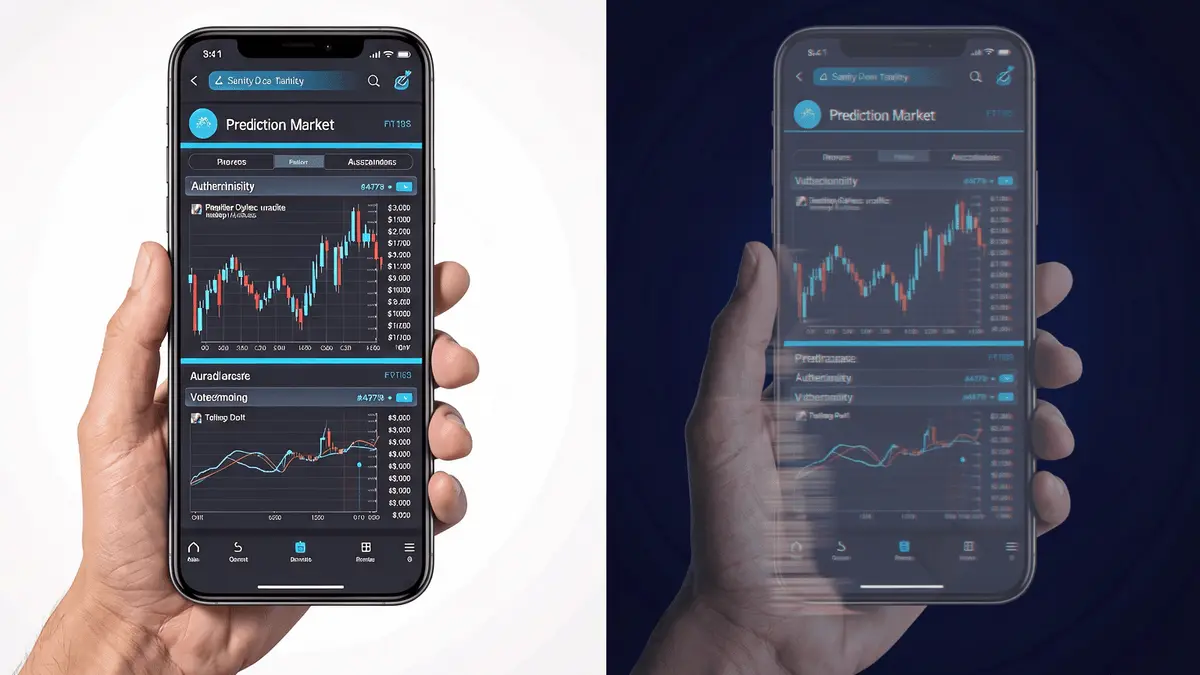
A WSJ investigation found Polymarket paid creators to film fake bets on dummy sites, with $1.9M in depicted wins that would have been real losses on the live platform.

Editorial disclosureRead more
All reviews, research, news and assessments of any kind on The Tokenist are compiled using a strict editorial review process by our editorial team. Neither our writers nor our editors receive direct compensation of any kind to publish information on tokenist.com. Our company, Tokenist Media LLC, is community supported and may receive a small commission when you purchase products or services through links on our website. Click here for a full list of our partners and an in-depth explanation on how we get paid.
A Wall Street Journal investigation published on June 21, 2026, found that Polymarket, the crypto-based prediction-markets platform, paid a cohort of predominantly college-aged creators between $2,000 and $3,000 per month to post videos depicting fabricated winning bets.
The videos were filmed on near-identical dummy websites, not the live platform, across 1,105 videos spanning December 2025 to mid-May 2026, with depicted wagers totaling roughly $1.9M that were never placed on any real market.
The Wall Street Journal’s review found that creators were explicitly instructed not to disclose their paid relationship with Polymarket, a direct violation of standard Federal Trade Commission (FTC) influencer disclosure requirements.
The deceptive advertising campaign, organized through a marketing contractor who assembled what the Journal described as a social-media army, surfaces at a moment when prediction markets broadly are pressing regulators and users for mainstream legitimacy.
Polymarket Fake Bet Mechanics: Dummy Sites, Creator Payments, and How 1,105 Videos Generated $1.9M in Fictitious Wagers
The Wall Street Journal investigation revealed that Polymarket created near-identical replica websites, like poiymarket.com, to stage fake betting activity.
Creators were instructed to simulate convincing betting sequences and film them without any real capital changing hands.
One notable example was college student George Makihara, who appeared in videos claiming to have placed 145 bets totaling nearly $410,000, including a $100,000 win on a wager involving President Trump.
However, the Journal confirmed none of these bets were real. The staged positions depicted in Makihara’s videos alone contributed to a broader total of $1.9M across 10 accounts, despite showing only fictional wins.
The Journal’s analysis found that 70% of the 1,105 videos reviewed included staged betting scenes, with 118 clips showcasing fictional wins that supposedly totaled $900,000, while real trades would have resulted in over $166,000 in losses.
Polymarket Credibility Impact: Zero Real Wagers Across $1.9M in Depicted Bets and What the Loss Math Reveals About the Fictitious Win Claims
Polymarket’s credibility has been damaged by its influencer marketing tactics, which misrepresent the real outcomes of prediction markets.
The WSJ found that celebrated wins in 118 videos would have resulted in over $166,000 in actual losses on the platform.
While Polymarket stated its commitment to accuracy and transparency and plans to audit its promotional content, it did not admit to the allegations. The deletion of videos and the removal of mirror sites could complicate future legal proceedings.
In contrast, the regulated rival Kalshi emphasizes compliance and transparency, highlighting a growing divide in the prediction market space over whether growth can be sustained through deceptive advertising or whether compliance will be a key differentiator.
FTC Disclosure Rules: Undisclosed Sponsorships, CFTC Enforcement History, and Why the WSJ Findings Land During an Already Active Scrutiny Window
Polymarket has a problematic regulatory history, having been fined $1.4M by the Commodity Futures Trading Commission (CFTC) in 2022 for offering illegal binary options to US users and subsequently ordered to block them.
In 2025, Polymarket acquired QCEX, a CFTC-designated contract market aiming for regulated status, but any findings of systematic misrepresentation could jeopardize that effort.
The FTC mandates that paid promotions be clearly disclosed across all platforms. Reports indicate that Polymarket instructed creators not to disclose sponsorships, highlighting a systematic issue rather than isolated creator errors. This poses a significant concern for potential FTC enforcement.
Additionally, Polymarket faces ongoing integrity issues, as seen in March 2026 when unverified claims were amplified on its social media, which has over 2 million followers.
An earlier incident involved a former Alphabet Inc. engineer allegedly placing $2.7M in bets on Polymarket using insider information, raising further credibility concerns.
This pattern of misinformation and staged activity continues to emerge within the crypto space, complicating Polymarket’s standing.
The author does not hold or have a position in any securities discussed in the article. All prices were quoted at the time of writing.

Tim Baker
Tim Baker is a Senior Market Analyst at Tokenist with over a decade of experience educating readers about traditional finance, crypto and DeFi. A former equity researcher turned on-chain analyst, Tim specializes in regulatory framework shifts and institutional DeFi adoption. His work focuses on distilling complex liquidity cycles and the macro environment into actionable intelligence for the modern DIY investor.
Related Stories
 Market Analysis
TEDPIX Hits 5.1M Points: What Iran Stocks Rally Tells Us About Bitcoin
 Market Analysis
Kalshi’s $22B Valuation Faces IPO Test as State Lawsuits Threaten Its Biggest Revenue Driver
 Market Analysis