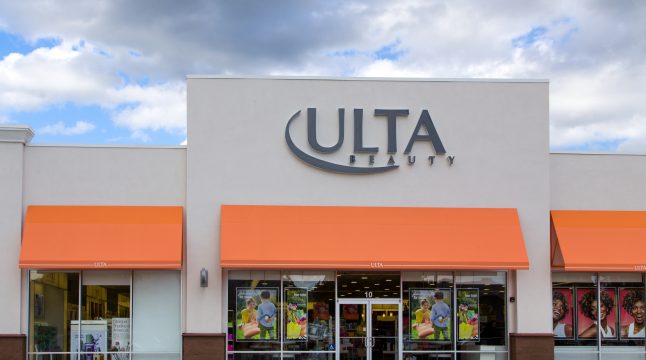
ULTA is Capturing the Dream of Moving up the K Curve

In a K-shaped economy, the upper arm of the K is composed of high-income consumers and asset owners, while the lower arm of the K is composed of low- to middle-income consumers. The latter category is under inflationary pressure, stagnant wages and high debt.
Case in point, although U.S. shoppers broke new records on Black Friday at $14.5 billion in sales, according to Shopify stats, they rely more on deferred credit. Through buy-now-pay-later (BNPL) financing, Adobe Analytics estimates that the month of December will see 11% increase in BNPL usage to $20 billion, $2 billion more than the year-ago period.
It is then not surprising to see that the upper arm of the K-shaped economy is making Ulta Beauty’s (NASDAQ: ULTA) business model thrive as a retailer of makeup, skincare, haircare, and fragrance products. Year-to-date, ULTA stock is up 40.16%, currently priced at $601.50, rapidly closing in on Wall Street Journal’s average price target of $613.25 per share.
Monetizing Aspiration and Status: ULTA’s Dual Model in a Two-Tiered Economy
As the repository of the world’s capital, the U.S. has by far the highest number of millionaires, at 23.83 million in 2024, representing 212% growth from 2000. According to UBS’s 2025 Global Wealth Report and World Bank data, this is 7% of the population, the same as in Australia. For context, the more populous rival China has 6.33 million millionaires, representing 0.4% of the population.
Although figures vary, it is safe to say that the overwhelming majority of millionaires are male. Moreover, both male and female millionaires are expected to increase in numbers. Further, a much greater proportion of female wealth is transferred, often through divorce, than being self-made, according to CoinLaw.
Given that Ulta Beauty’s core demographic is female at around 80%, Ulta’s business model benefits from the drive to climb to the upper arm of the K curve.
In particular, Ulta’s largest age cohort is 25-34, accounting for nearly a third of its customer base. This is one of the reasons why Ulta has a mass-to-prestige spectrum of products, ranging from so-called affordable luxury to prestige brands. Likewise, Ulta’s business pillar relies on a one-stop shop approach across all beauty categories, including in-store salon services.
Within the 25-34 life stage, purchasing power is typically increased, now even more for women than for men. Simultaneously, a brand loyalty is being established across both necessary value (mass) and discretionary status (prestige) purchases.
Altogether, this demographic dynamic allows Ulta Beauty to capture reliable, high-margin spending of the wealthiest segment – the upper K. In parallel, the company also monetizes the strong aspirational drive and self-care focus of the large, upwardly mobile female demographic.

Join our Telegram group and never miss a breaking digital asset story.
Examining Ulta Beauty’s Financials
On Thursday, following the Q3 earnings report, Ulta raised its full-year revenue guidance from the prior $12-12.1 billion range to $12.3 billion, having beaten the quarterly expected revenue of $2.72 billion at $2.86 billion delivered. For context, the company generated $11.3 billion in revenue last year.
For Q3 specifically, Ulta’s net sales grew 12.9% to $2.9 billion from the year-ago quarter. The company’s gross profit rose even faster, by 14.9% to $1.2 billion. In addition to the acquisition of British beauty retailer Space NK, Ulta opened 59 new stores during the year. This elevated the company’s short-term debt in Q3 to $551.7 million, 2.7x more than the year-ago quarter.
With a likely December rate cut, and more to come if President Trump replaces Jerome Powell with Kevin Hassett, the financing environment could become even more favorable for retailers with expansion-driven capex cycles. Such a macro backdrop would offset the near-term uptick in borrowing costs resulting from Ulta’s rapid store footprint growth.
With only one store closed, it appears that a recession is not on the horizon for this business model. On top of expansion, investors can look forward to Ulta’s generous stock buyback program. During 2025, the company repurchased $693 million worth of shares, with a $2 billion buyback budget remaining.
In addition to upgrading its revenue outlook for fiscal 2025, the company increased its operating margin range from 11.9%-12% to 12.3%-12.4%. Overall, Ulta beat Q3 earnings-per-share (EPS) expectations at $4.64 expected vs $5.14 achieved.
ULTA Price Targets
Over the last 52 weeks, ULTA stock averaged $453.68 per share, peaking at an all-time high of $567.18 in March 2024.
Given the Santa Claus rally effect, it is likely that the stock will soon cross the average price target of $616.25, but sell pressure is also expected as shareholders take in profits. The bottom ULTA range is expected at $450 while the ceiling price target is $690 per share.
Disclaimer: The author does not hold or have a position in any securities discussed in the article. All stock prices were quoted at the time of writing.

You may also like

 Back to