















Editorial disclosureRead more
All reviews, research, news and assessments of any kind on The Tokenist are compiled using a strict editorial review process by our editorial team. Neither our writers nor our editors receive direct compensation of any kind to publish information on tokenist.com. Our company, Tokenist Media LLC, is community supported and may receive a small commission when you purchase products or services through links on our website. Click here for a full list of our partners and an in-depth explanation on how we get paid.
 By Tim Fries
 Reviewed by Shane Neagle
The Foreign Exchange market, also known as the Forex or FX market, is where traders exchange currencies 24 hours, 5 days a week. With trillions of dollars worth of trades taking place daily, the Forex market is the largest and most liquid financial market in the world.
Depending on the jurisdiction, the Forex market can be subject to stringent regulation – or outright banned. Is Forex legal in Australia? Yes. The Australian Securities and Investments Commission is the governing body responsible for regulating Forex and CFD trading in Australia.
Forex trading in Australia has remained popular thanks to a mature financial services sector, strong retail interest, and a large number of online brokers competing for Australian clients.
But with an increase in the popularity of a profitable market comes an increase in those looking to take advantage. This makes regulation crucial for the safety and security of traders.
Brokers or firms not under regulation do not adhere to the same standards, which can lead to fraudulent and illegal behavior. Even worse, if something goes wrong, your funds are often not protected.
Forex broker regulations therefore are the cornerstone of the Forex market, holding brokers to standards that are in the best interests of traders.
Due to the global and decentralized nature of the Forex market, regulations vary across jurisdictions and impact trader eligibility. Brokers in the US must comply with different regulations to those in the UK or Australia. In essence, the protection you are given will depend on where the broker is based, and the regulatory body it is registered with.
Australia has historically offered an active retail trading environment, but ASIC has tightened protections for retail CFD clients in recent years. These include leverage limits, margin close-out rules, negative balance protection, and restrictions on certain inducements.
The market is also highly susceptible to volatility from economic turbulence, which regulations cannot fully protect traders from. That makes platform selection, risk management, and position sizing especially important.
Overall, while the Australian financial system does offer customers protection, Forex and CFD trading still carry high risk. Traders should choose carefully, confirm local availability, and avoid any broker that cannot clearly explain its regulatory status. 🦘
Note: The information on this page is not tax, legal, or financial advice. It is provided for informational purposes only.
Leading Forex Brokers in Australia
 Here’s our list of the top Australian forex trading platforms:
 Here’s our list of the top Australian forex trading platforms:
Top Australian Forex Platforms 🇦🇺
Don’t get caught up in low fees, bonuses, flashy websites, or advertising that a broker puts out there. It is every trader’s responsibility to determine how trustworthy and authentic a broker is.
An ASIC-regulated broker can provide stronger protections than an unregulated offshore platform, but regulation does not remove trading risk. Forex, CFDs, and crypto derivatives can all produce rapid losses, especially when leverage is involved.
Keep in mind — some of the following platforms made our list of the best Forex brokers across all jurisdictions. The following list, however, is focused on Australian traders and platforms that may be relevant to them.
1. Best for Copy Trading: eToro

Pros
- Excellent copy trading features
- Beginner-friendly platform and mobile app
- Multi-asset market access depending on region
- Useful demo account for practice trading
Cons
- Spreads may not be the lowest for high-volume traders
- Advanced charting tools are limited compared with specialist platforms
- Product availability varies by country
eToro is a strong choice for Australian traders who want a simpler route into online trading. The platform is best known for its social investing tools, particularly CopyTrader, which allows users to follow and copy the trades of other investors. That gives newer traders a more guided experience than they would get from a traditional professional terminal.
The platform is not aimed at highly technical forex traders who want raw spreads, complex order routing, or deep MetaTrader customization. Instead, eToro prioritizes accessibility. The web platform and mobile app are easy to navigate, and the demo account gives users a chance to test the platform before committing real money.
That said, copy trading does not remove risk. A copied trader can lose money, and past performance is not a reliable guide to future returns. eToro is best suited to traders who value ease of use and social features, rather than those who need the lowest possible trading costs.
Risk warning: Trading involves risk. CFDs and cryptoassets are volatile and may not be suitable for all investors. Copy trading does not amount to investment advice, and past performance is not a reliable indicator of future results.
2. Best Australian Forex Broker Overall: Pepperstone

Pros
- Low Forex and CFD fees
- Excellent platform choice, including MT4, MT5, cTrader, TradingView, and WebTrader
- Copy and social trading tools available
- No inactivity fees or withdrawal fees
Cons
- Limited proprietary news flow compared with some premium brokers
- Advanced platform choice may feel complex for beginners
When it comes to trading Forex in Australia, Pepperstone is one of the strongest routes you can take. The broker was founded in Melbourne and has built its reputation around tight spreads, fast execution, and flexible platform support.
Pepperstone is particularly useful for traders who want more control over the trading environment. Users can choose between MT4, MT5, cTrader, TradingView, and Pepperstone’s own WebTrader. That gives it broader platform coverage than many brokers that rely only on a proprietary system.
The broker is suitable for both beginners and advanced traders, though absolute newcomers may need time to understand the difference between Standard and Razor accounts. For active traders, the Razor account structure can be especially attractive because it separates tight spreads from commission costs.
- Regulated by: ASIC in Australia
- Highlight: Low fees and strong platform choice
- Best suited to: Beginners, active traders, and advanced traders
- Minimum deposit: No minimum deposit listed by Pepperstone
Risk warning: CFDs are complex instruments and come with a high risk of losing money rapidly due to leverage. You should consider whether you understand how CFDs work and whether you can afford to take the high risk of losing your money.
3. Best Multi-Asset CFD Platform: PrimeXBT
Pros
- Access to forex, crypto, indices, commodities, and other CFD markets
- PXTrader and MetaTrader 5 available
- Useful for traders who want one account for multiple markets
- Practice account available
Cons
- Not a traditional Australia-based forex broker
- Leveraged CFD trading is high risk
- Regulatory protections may vary by jurisdiction
PrimeXBT is a multi-asset trading platform that gives users access to forex, crypto, indices, commodities, and CFDs from one account. That makes it different from a traditional Australian forex broker, but relevant for traders who want broader exposure across leveraged markets.
The platform supports both PXTrader and MetaTrader 5, giving traders a choice between PrimeXBT’s own interface and a more familiar professional trading environment. PrimeXBT says users can access more than 100 CFD markets, including crypto, forex, shares, indices, and commodities.
PrimeXBT is best suited to traders who are already comfortable with leverage and multi-asset speculation. It is not the safest choice for absolute beginners, and Australian traders should check product availability and regulatory status carefully before opening an account.
- Regulated by: Varies by entity and jurisdiction
- Highlight: Multi-asset CFD access
- Best suited to: Experienced multi-asset traders
- Minimum deposit: Varies by funding method and account type
Risk warning: Trading CFDs, forex, crypto futures, and leveraged products involves significant risk. Losses can occur quickly, and these products may not be suitable for all traders.
4. Best for CFD Experienced Traders: Plus500
Pros
- Wide range of CFD products
- Simple proprietary platform
- Guaranteed stop-losses available on selected instruments
- Plus500AU is licensed by ASIC
Cons
- Lacks MetaTrader support
- Limited advanced research tools
- CFDs are high-risk leveraged products
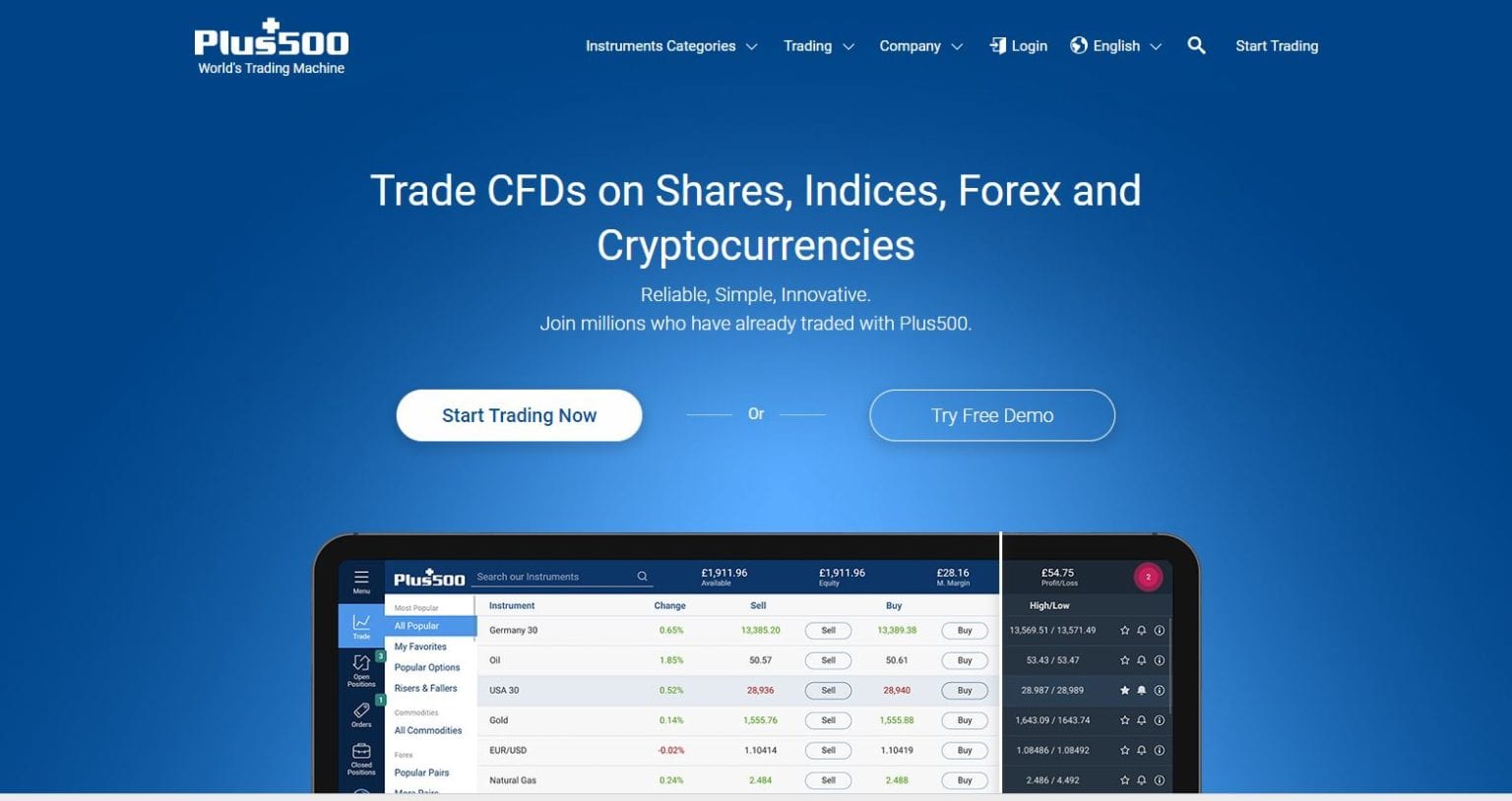
Plus500 is a CFD provider that has been operating for more than a decade. Plus500AU Pty Ltd is based in Sydney and licensed by ASIC to offer CFDs to Australian residents. The platform is designed around simplicity, making it easier to use than more technical trading terminals.
The biggest advantage of Plus500 is its clean proprietary platform. Traders can access forex, shares, commodities, indices, ETFs, options, and other CFD markets depending on region. The platform also includes risk management tools such as alerts, stop orders, and guaranteed stop-losses on selected instruments.
However, Plus500 is not ideal for traders who want MT4, MT5, automated strategies, or deep customization. It is better suited to experienced CFD traders who want a direct, simple platform rather than a fully modular professional trading setup.
- Regulated by: ASIC in Australia
- Highlight: Simple CFD platform
- Best suited to: Experienced CFD traders
- Minimum deposit: Varies by region and payment method
Investor Warning: CFDs are complex instruments and come with a high risk of losing money rapidly due to leverage. You should consider whether you understand how CFDs work and whether you can afford to take the high risk of losing your money.
5. Best for Crypto Market Depth: Binance
Pros
- Deep liquidity across major crypto markets
- Large number of supported digital assets
- Low spot trading fees compared with many platforms
- Useful for crypto traders who also monitor currency markets
Cons
- Not a traditional forex broker
- Australian derivatives access has faced regulatory scrutiny
- Crypto markets are highly volatile
Binance is not a traditional Australian forex broker. It is a crypto exchange, and its relevance comes from its deep liquidity, global brand recognition, and large number of supported digital assets. Traders who move between fiat currencies, stablecoins, and crypto markets may still find it useful.
The platform is best known for spot crypto trading, but derivatives access varies by jurisdiction. Australian users should be particularly careful here, as Binance Australia Derivatives has faced ASIC enforcement action and regulatory scrutiny over its former treatment of retail clients.
For Australian forex traders, Binance should be viewed as a crypto-market platform rather than a replacement for an ASIC-regulated forex broker. It may be useful for digital asset exposure, but traders who want regulated margin FX should generally compare dedicated forex and CFD brokers first.
- Regulated by: Varies by Binance entity and jurisdiction
- Highlight: Crypto market liquidity
- Best suited to: Crypto traders
- Minimum deposit: Varies by asset and payment method
Risk warning: Cryptoassets are volatile and high risk. Binance is not a traditional forex broker, and product availability varies by jurisdiction. Check local rules before trading.
6. Best for Active Crypto Traders: Bybit
Pros
- Advanced crypto trading interface
- Spot and derivatives products available in some regions
- Copy trading and trading bot tools available
- Good fit for active digital asset traders
Cons
- Not a dedicated forex broker
- Crypto derivatives are high risk
- Licensing and access should be checked carefully in Australia
Bybit is a crypto-first trading platform, not a traditional forex broker. It is included here because many Australian traders who follow forex markets also trade crypto, stablecoin pairs, and derivatives-style products. Bybit is strongest for users who want an active trading interface rather than a simplified investing app.
The platform offers spot trading, derivatives products in supported regions, copy trading, trading bots, and a fast mobile experience. These tools make it attractive to more active crypto traders, especially those who want to move quickly between markets.
However, Australian users should check Bybit’s local availability, licensing position, and product restrictions before opening an account. Crypto derivatives are complex, and they do not offer the same protections as trading through an ASIC-regulated forex broker.
- Regulated by: Varies by entity and jurisdiction
- Highlight: Active crypto trading tools
- Best suited to: Experienced crypto traders
- Minimum deposit: Varies by asset and payment method
Risk warning: Digital asset trading and derivatives trading involve significant risk. Product access and regulatory protections vary by jurisdiction.
7. Best for Social Trading: BingX
Pros
- Strong copy trading and social trading tools
- Supports spot and futures-style crypto trading
- Large range of digital assets
- Beginner-friendly trader discovery features
Cons
- Not a traditional forex broker
- Copy trading can create a false sense of security
- Product availability and protections vary by jurisdiction
BingX is another crypto-first platform, but its main point of difference is social trading. Users can follow trader profiles, compare performance, and copy trades across supported spot and futures markets. This gives it a more accessible feel than some advanced derivatives platforms.
For Australian users, BingX may appeal to traders who want crypto exposure and trader discovery tools rather than a classic forex broker. The copy trading system can help beginners understand how other traders approach markets, but it should not be treated as a substitute for risk management.
The main limitation is that BingX is not an ASIC-regulated forex broker. Traders who want regulated margin FX should compare Australian CFD and forex brokers first. BingX is better viewed as a crypto and social trading platform with futures-style products available in supported regions.
- Regulated by: Varies by entity and jurisdiction
- Highlight: Crypto copy trading
- Best suited to: Social and copy traders
- Minimum deposit: Varies by asset and payment method
Risk warning: Trading digital assets, futures, and copied strategies involves high risk. Past performance of a trader is not a reliable indicator of future results.
New to Forex? Check out our Forex guide for beginners.
Is Forex Trading Legal in Australia? 🚓

The Australian Securities and Investments Commission (ASIC) regulates financial services in Australia, including Forex and CFD brokers that offer services to Australian clients. Brokers operating legally in Australia must hold the appropriate Australian Financial Services Licence (AFSL) and comply with ASIC’s rules.
ASIC works in a similar way to the Financial Conduct Authority (FCA), which governs the leading Forex trading platforms in the UK. In Australia specifically, there are a number of ASIC-regulated Forex brokers.
Regulation in the Australian Forex Market 🇦🇺
Regulation plays a crucial role in the Australian Forex market because it helps prevent fraudulent and illegal behaviour. We’ve seen in the past the drastic effects that an insufficiently regulated market can have on traders.
For example, the 2007-2010 U.S. financial crisis showed how weak oversight and poor risk controls can leave consumers exposed. Regulation has since been tightened across many major markets, including Australia.
Reputable authorities help minimize these risks and maintain the integrity and transparency of the Forex market.
📈 Stocks are also popular in Australia. Check out the best stock trading apps in Australia to learn more.
Key ASIC Provisions 🔑
Here we have outlined some of ASIC’s key provisions that regulated brokers in Australia must follow.
A Valid Licence ✅

Top Tip: Holding a valid AFSL licence does not automatically mean a broker is safe or suitable. Further research into the company is still required.
In order to offer financial services to clients in Australia, a broker must hold a valid Australian Financial Services Licence (AFSL). To check whether a broker has a valid licence, search for the broker’s name on ASIC Connect. Don’t assume that just because a broker’s name appears, it is automatically safe and legitimate. This is one of several checks traders should make before opening an account.
An Australian Presence ✅
ASIC-regulated brokers must meet local requirements and maintain appropriate Australian operations, which helps improve accountability and trader confidence.
Periodic Audit Report Submissions ✅
ASIC-regulated brokers must submit regular audit reports and maintain financial transparency to help prevent misconduct and protect clients.
Segregated Funds ✅
Brokers must keep client funds separate from their own operating funds. This helps reduce the risk of client money being misused.
Efficient Platforms and Complaint Resolution ✅
ASIC-regulated brokers must provide reliable trading platforms and have procedures in place to resolve customer complaints in a timely and efficient manner.
ASIC’s requirements, including those mentioned above, help reduce the risks traders face when entering the Forex market.
ASIC-Regulated Forex Brokers ✅
An ASIC-regulated broker has an individual AFSL number that you can verify on the ASIC website. Usually, this is placed on the “About Us” page or homepage of a broker’s website.
You’ll also find a brief regulatory history of licensed brokers through ASIC’s online registers. This can help you get a better understanding of the company before signing up.
How ASIC Can Improve Your Trading Journey 🚀
ASIC regularly monitors its registered members and requires ongoing compliance with financial services rules. This does not guarantee that every broker is risk-free, but it does create a stronger framework than dealing with an unregulated offshore provider.
If misconduct or misleading information arises, ASIC can launch an investigation and take enforcement action. ASIC compliance is therefore a crucial factor when determining Australia’s best Forex broker.
Creating an Enhanced Customer Relationship 👍
Not only does ASIC monitor Forex brokers, it also aims to encourage and promote confidence in traders. It does this through some of the following initiatives and protections.
- Rules requiring brokers to handle client money appropriately and maintain adequate financial resources.
- Educational projects like Moneysmart, an ASIC-run resource that helps consumers improve their financial knowledge.
- Services and registers that help consumers check licences, identify warnings, and understand their rights.
- Strict codes of conduct and financial services obligations that licensed firms must follow.
- A complaints process that allows consumers to report suspected fraud, misconduct, or financial malpractice.
Needless to say, ASIC is one of the most respected financial regulators in the world. While other jurisdictions are more vulnerable to scams, ASIC gives Australian traders tools to check brokers and learn how to spot a Forex scam.
Note: ASIC restricts certain inducements, including some trading bonuses, for retail CFD clients.
A Guide to Legal Forex Trading in Australia
A key strategy for Forex traders to make and increase their earning is through leverage. A leverage offered by a broker is the amount they are willing to loan traders. While leverage can magnify profits, it also increases the potential for losses. Traders should weigh these risks carefully to avoid significant capital losses.
For example, some brokers offer a leverage of 50:1. This means that if you invest $1,000 the broker will give you $50,000 to invest in your position. To receive leverage, you will need to open a margin account with a Forex broker.
There is no straightforward answer to this. Trading is a risky activity and losses could occur. The most popular currency pairs include the EUR, USD and GBP. Therefore, the pairs traded most frequently are the EUR/USD, AUD/USD, GBP/USD, and JPY/USD.
While even the top Forex trading platforms in the U.S. are restricted to a leverage of 50:1, traders in Australia do not have a restricted leverage. However, the majority of Forex trading platforms offer a leverage of up to 500:1.
This can change depending on an individual’s account history and the positions you are looking to trade. This makes it harder for new traders to get a high leverage, but it’s safer this way.
Like any currency, the AUD’s volatility and coverage is what makes the AUD appealing to traders. The exporting of commodities and resources on the Australian commodity can also be easily found, which have a significant impact on the value of the currency, unlike more exotic currencies. When this is combined with price fluctuations of other countries it makes for a strong consideration for Forex traders.
Yes, you will. As of 2003, any money made from Forex trading will be taxed in the same way that taxed is paid on profits you make in any other investments or business. It’s important to note that when you sign up to a broker you are required to submit your banking and personal information.
When you do this, your account activity will be recorded by the broker, making it risky to avoid filing your taxes. The situation is similar to that of other jurisdictions, such as the premier Forex brokers of Canada for example.
Understanding how to access Australian markets is important for foreign investors as well, with some exceptions being made. Some Australian trading platforms will allow individual and institutional investors depending on category, “The three broad categories ASX uses to delineate market actors or participants with regard to ASX market products are either to designate them as a Market Participant, Principal Trader, or Market Maker.”
Only those designated as trading participants can have full access to Aussie markets.
Note: The information on the page is not to be considered as tax advice in its legal form, rather having informative purpose.
You can find all the information you need about this in the Income Tax Assessment Act, division 755 and subdivision 960 C & D. This Act states that all gains must be reported as assessable income and losses as deductibles. However, these are only recognized when realized.
It’s also worth pointing out that unconverted gains or losses are not differentiated between in this act and several exemptions apply that do not consider gains assessable nor losses deductible, for example gains incurred in an earning exempt income. Nonetheless, it is not wise to attempt to categorize these yourself if you do not have a good understanding of the provisions, and so a tax professional is always your best option.
Surprisingly, there is no minimum age required before Australian citizens can begin trading. But hold on, that does not mean you can trade forex at 12, because to trade Forex you need to have a bank account. And you cannot open a bank account until you are 18, without the consent of a guardian.
Therefore, anyone under 18 will not be able to trade Forex. That said, you can open a practice/demo account which is offered by most brokers.

Tim Fries
Tim Fries is the cofounder of The Tokenist. He has a B. Sc. in Mechanical Engineering from the University of Michigan, and an MBA from the University of Chicago Booth School of Business. Tim served as a Senior Associate on the investment team at RW Baird's US Private Equity division, and is also the co-founder of Protective Technologies Capital, an investment firm specializing in sensing, protection and control solutions.